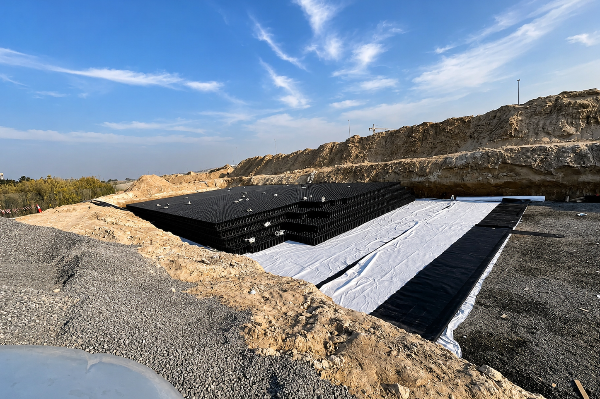
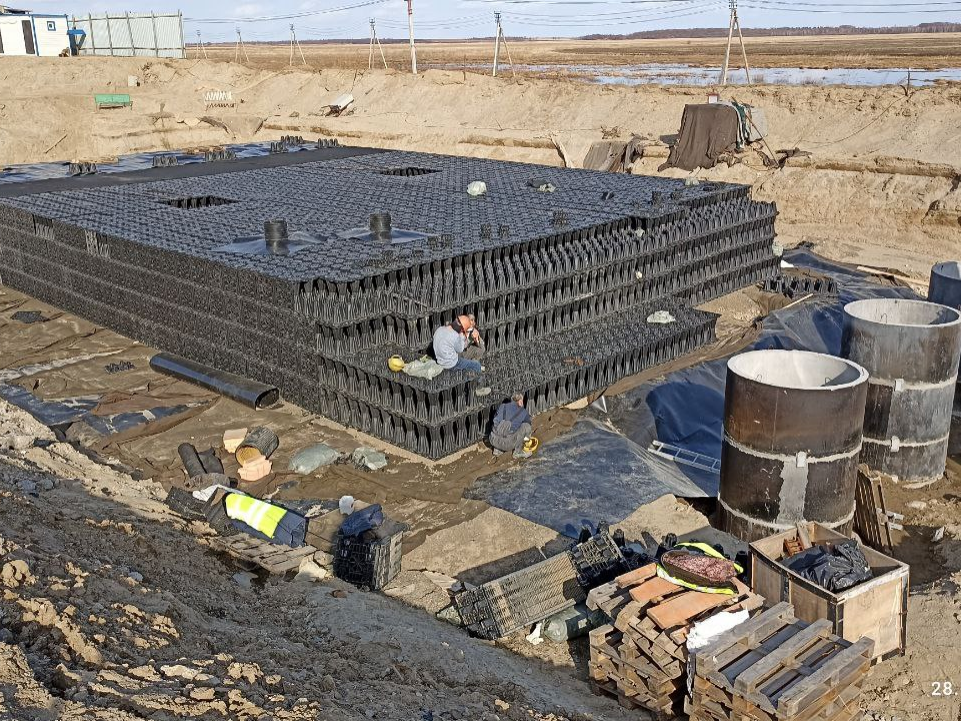
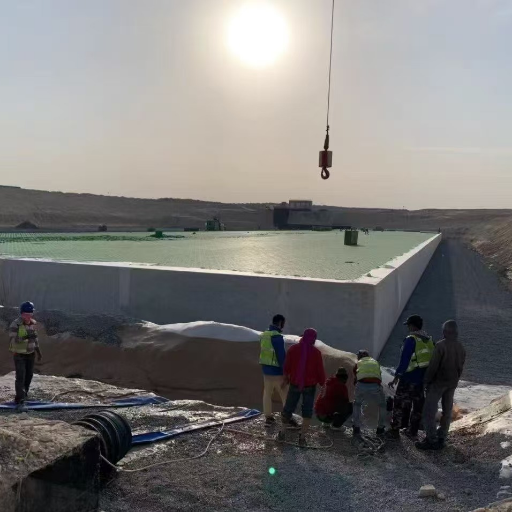
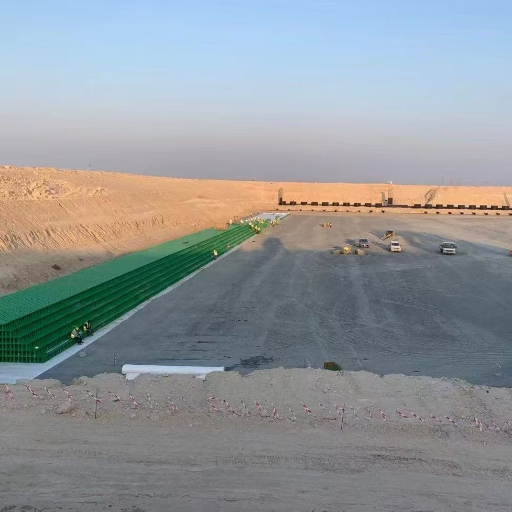
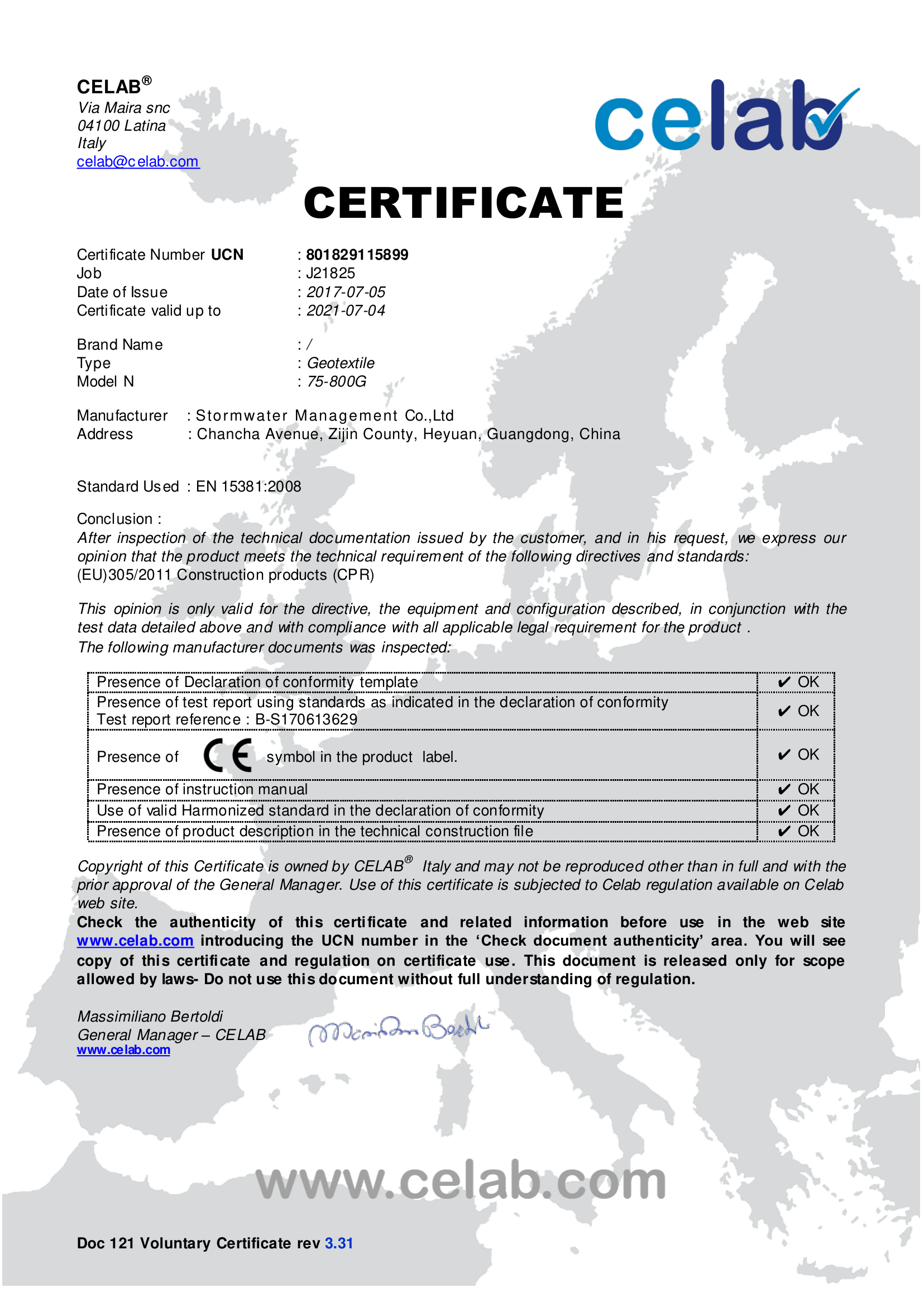
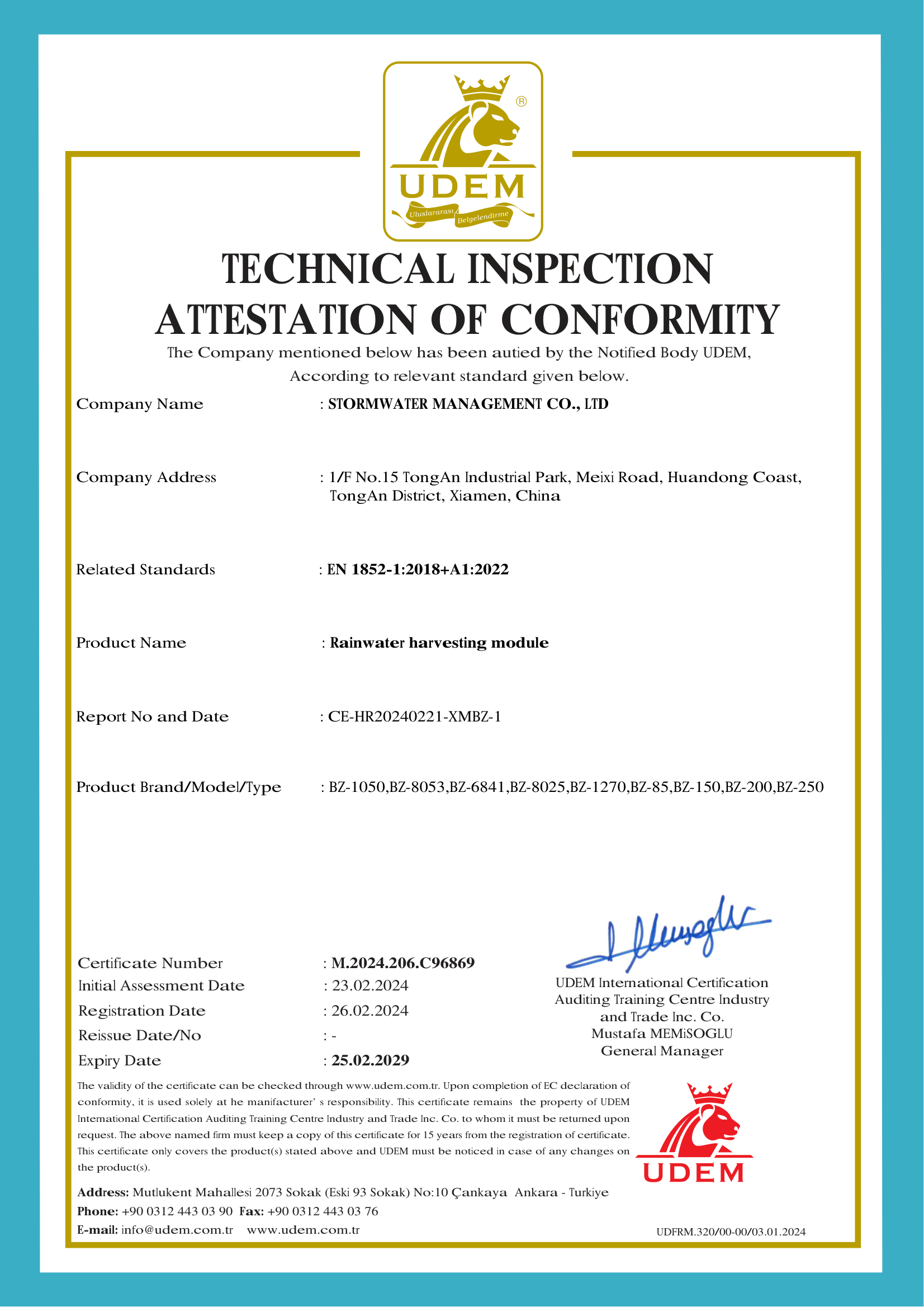
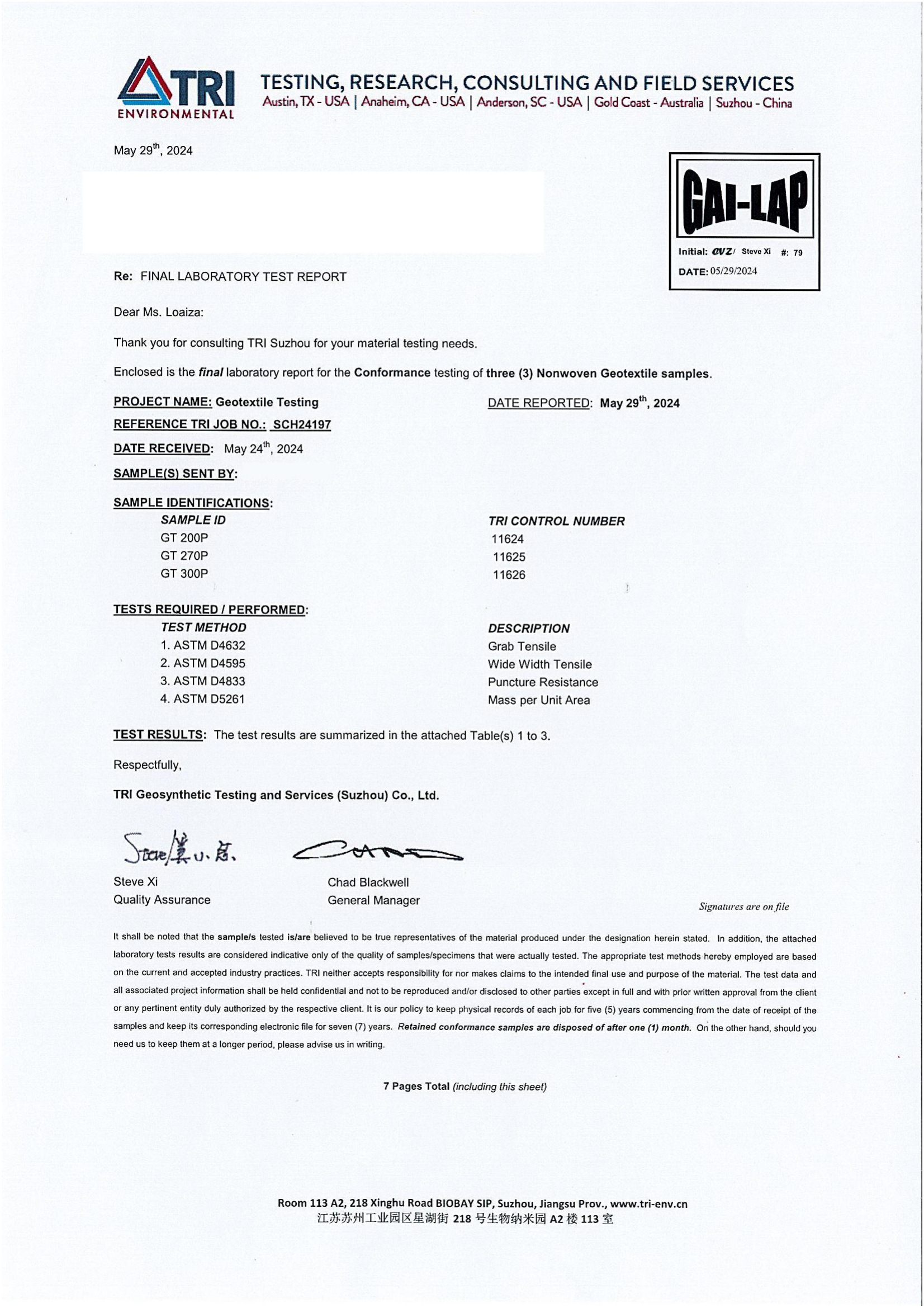
A crate module isn’t, in itself, a working BMP system – it’s just the storage component. Its complete package include parts that the first-time buyer typically prices separately then finds don’t match: geotextile wrap, sized to module footprint; geomembrane, where infiltration is to be avoided; inlet and outlet fittings; inspection chambers, to accommodate the maintenance access highlighted in the honesty note above; silt traps, for pretreatment; and flow-control units, where the permit restricts discharge rate (but not necessarily total volume).
Quoting all that as one system, from one supplier, is why procurement usually reaches out to us when projects recur following approval by the first – one set of supplier relations to manage rather than five; one shop drawing set rather than five; and one point of contact if a required inspection chamber doesn’t fit the installed crate arrangement.
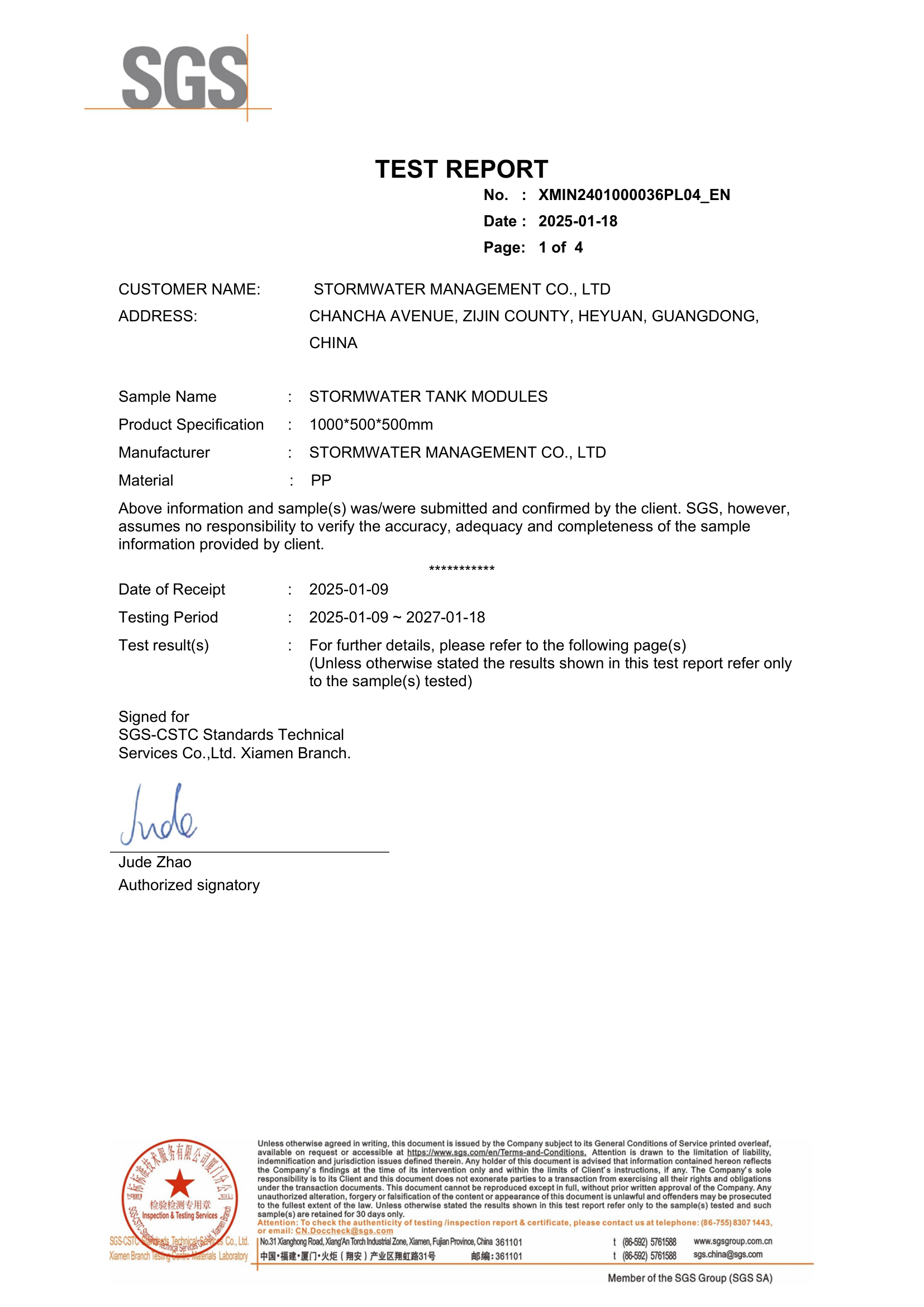
What we don’t supply: a local PE-stamped hydraulic design, or a permit application package for your jurisdiction’s NPDES program. The shop drawings and structural testing data that we provide are built for the review engineer of record, whose professional stamp will appear on the drawings and submittals.
Storm Manager addresses the landed-cost equation as few overseas suppliers dare: with an firm FOB price and the container shipment documentation that your logistics team can directly compare against any domestic supplier’s quoted costs, line by line, versus a vague “we can get you there for less” claim.
Landed cost is where we prefer to wrap up this section. We don’t post an exact, inclusive price of shipping plus duties, since this changes with destination port, container quantity and current tariff schedules – anybody who claims an exact delivered cost before knowing your delivery location is just making a guess. We can pledge a solid FOB quote within the noted delivery lead times, the full customs documentation set for your broker on those containers, and the 40HQ/330 m³ figure above, enabling your own logistics personnel to compare landed costs against a domestic supplier’s offer, on an apples-to-apples basis.