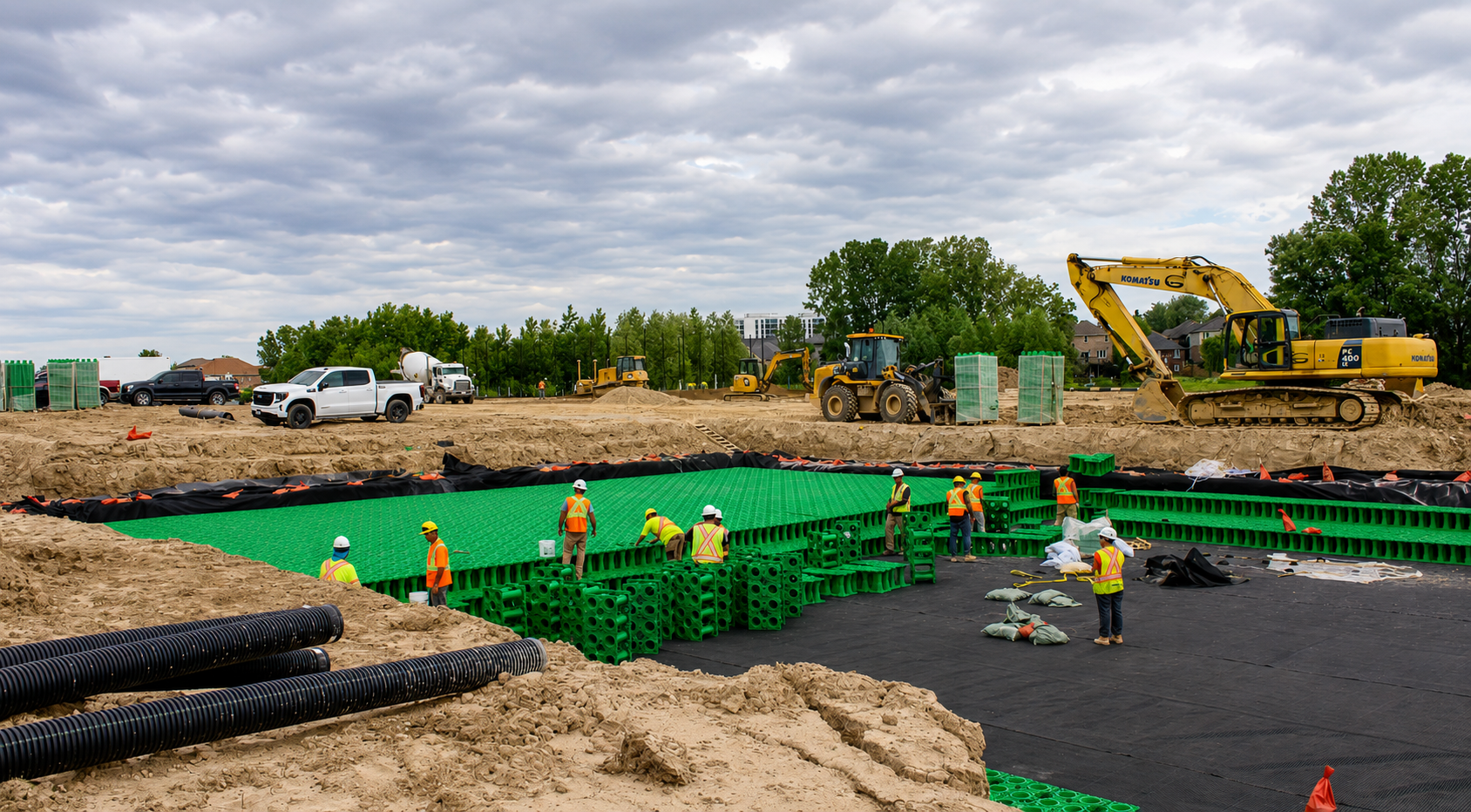
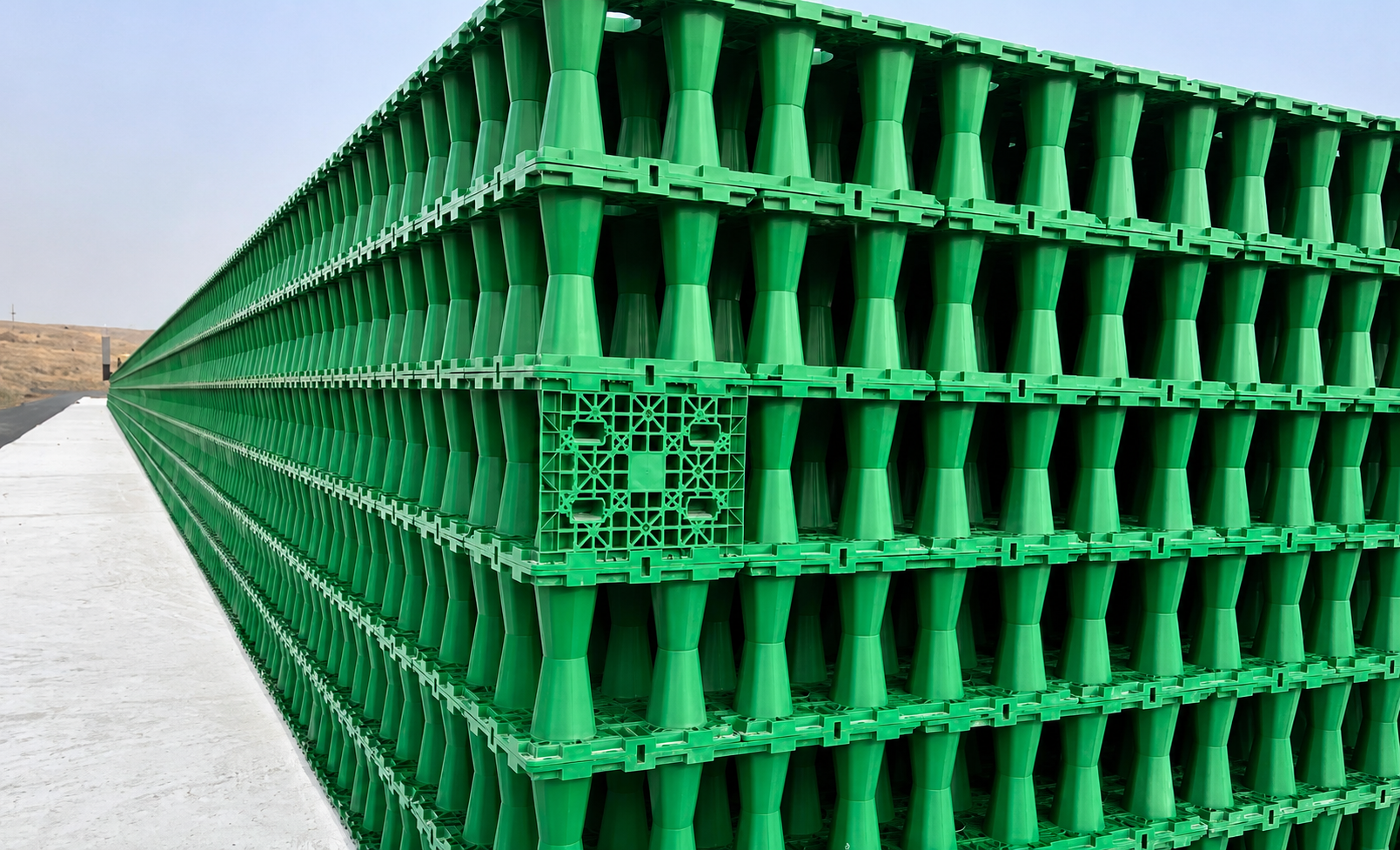
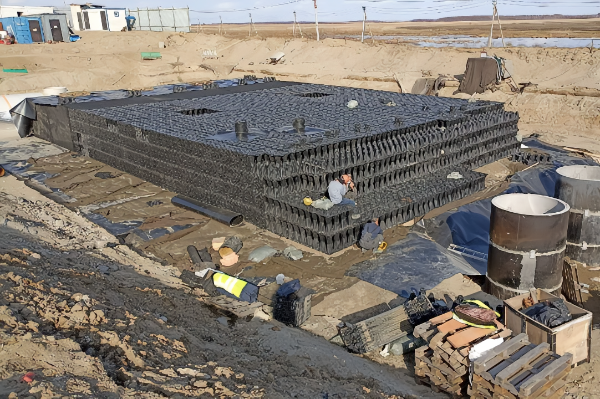
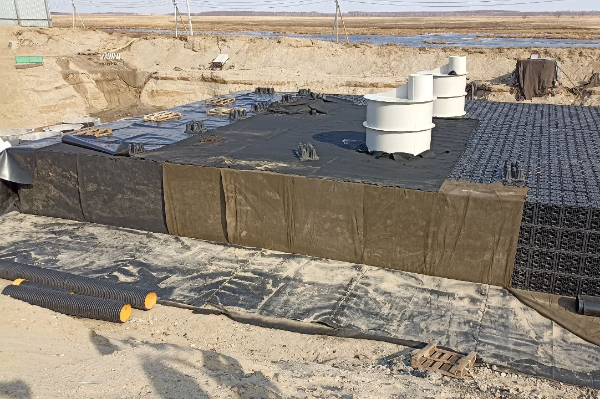
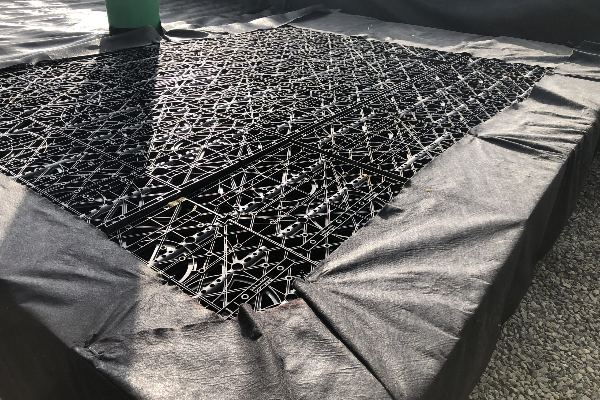
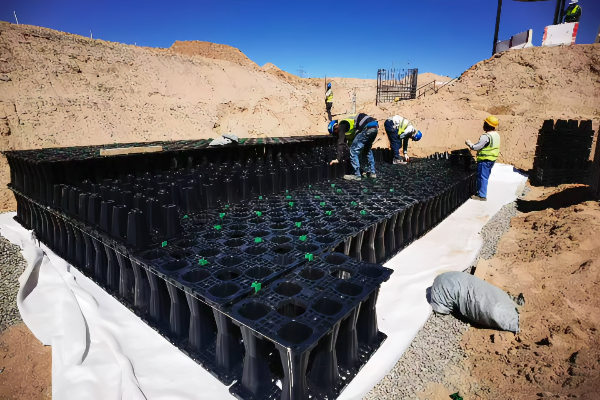
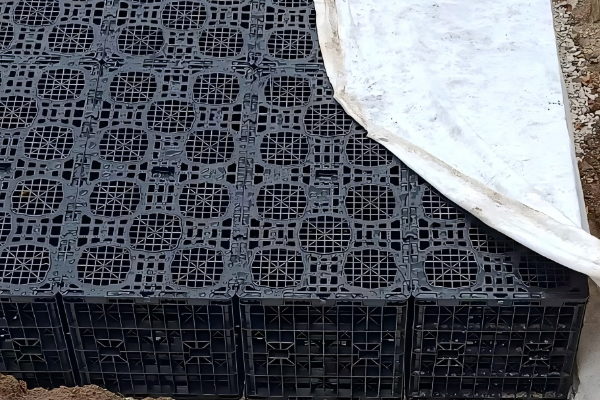
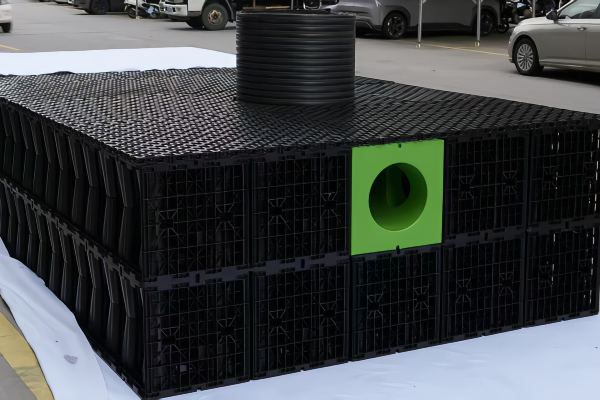
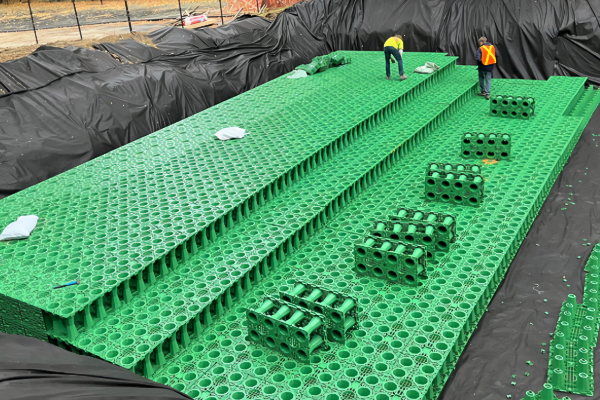
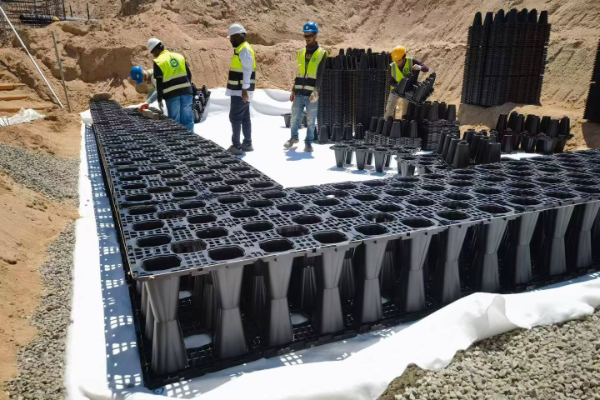
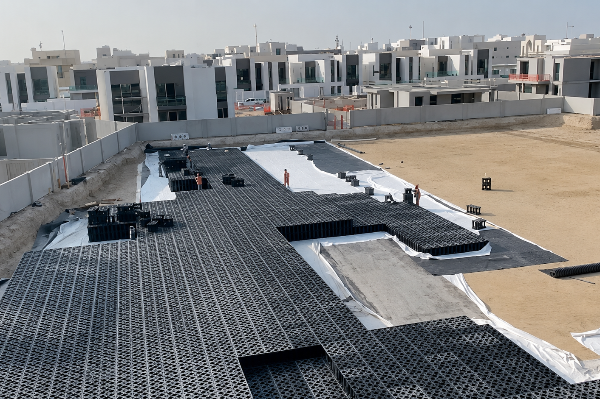
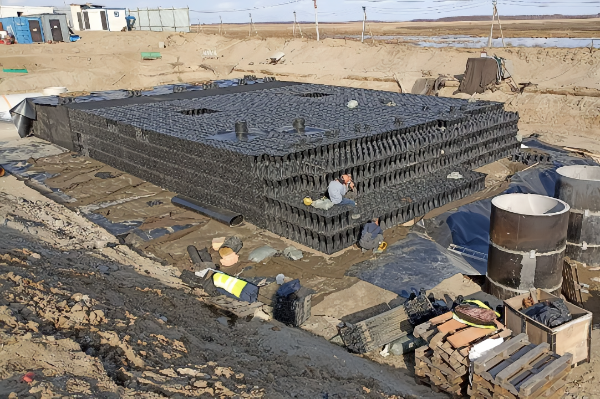
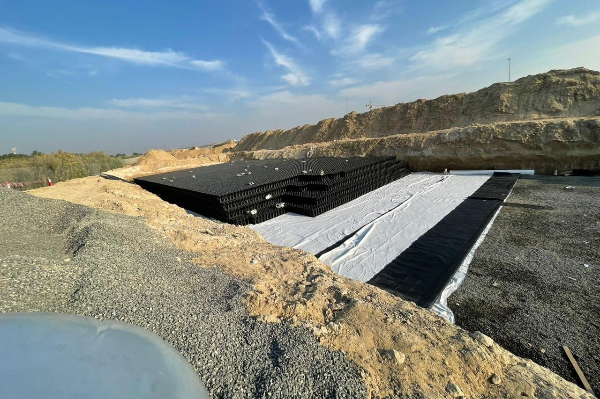
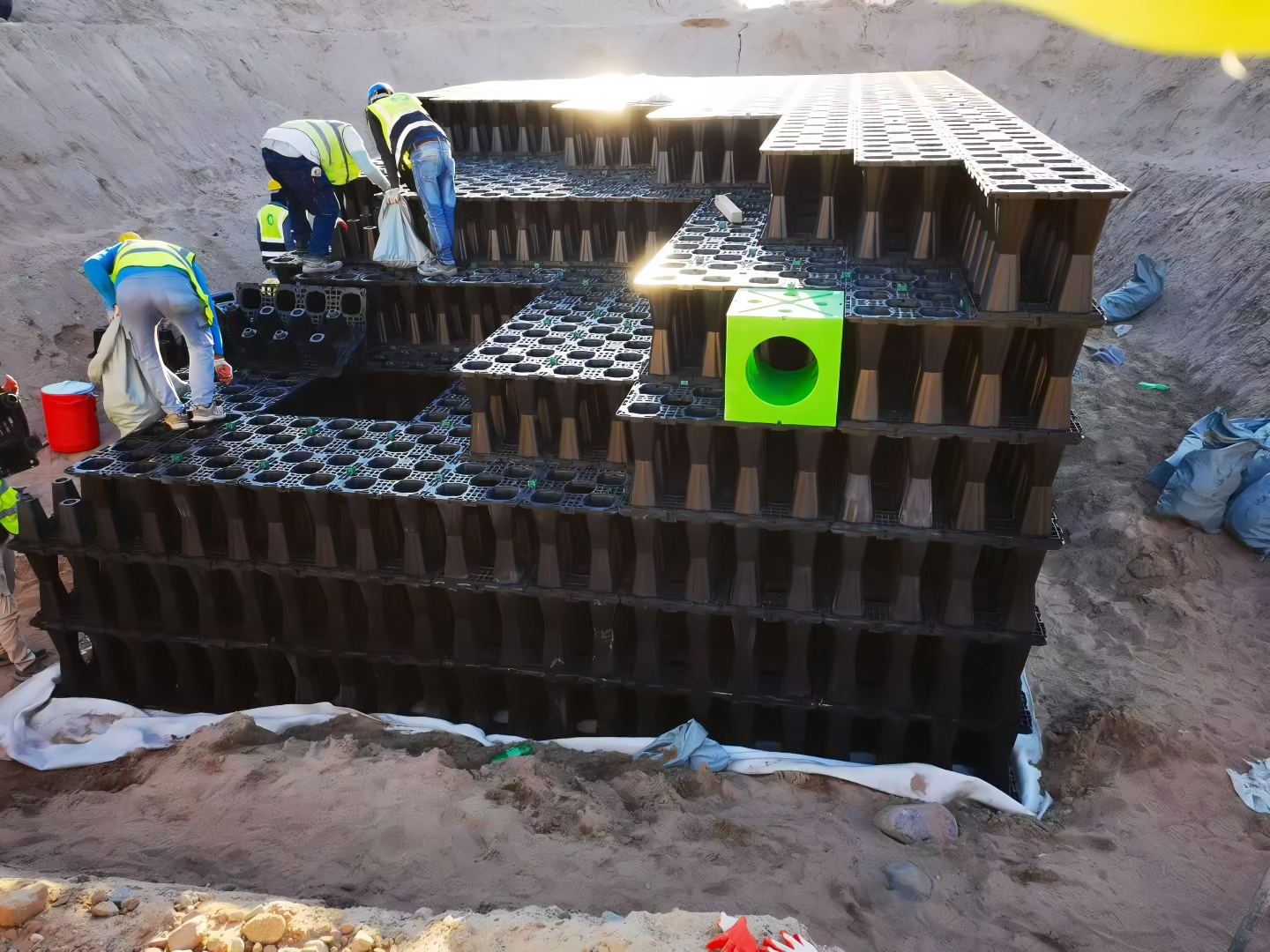
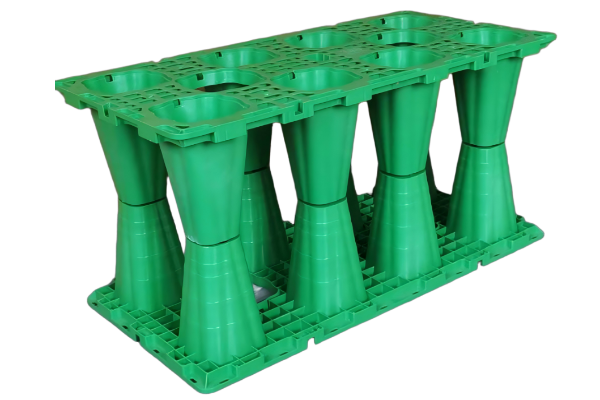
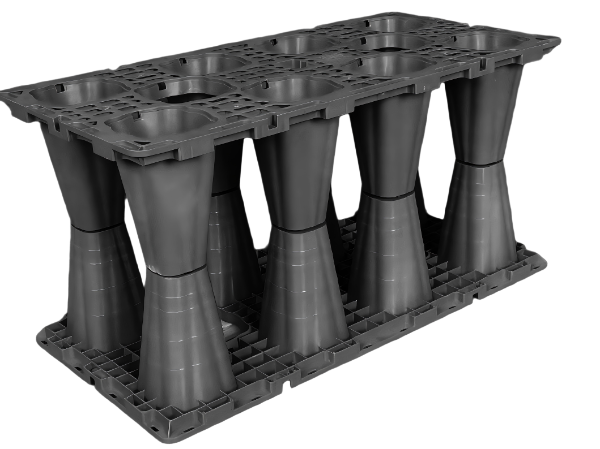
Stormwater management system overview Underground stormwater storage configuration Stormwater management system structural detail Stormwater management system maintenance access

Modular Underground Stormwater Management System for Your Site

Configure underground storage around your hydraulic objective, available footprint, depth, loading, lining, outlet and maintenance access. This platform helps project teams store stormwater and manage stormwater runoff through infiltration, attenuation, detention, on-site detention and non-potable rainwater reuse paths; it is not standalone water-quality treatment or a promise of universal regulatory approval.

Stormwater Management Solutions for Site Runoff and Storage

Managing stormwater starts with the rate mismatch: flooding risk rises when stormwater runoff from a roof, pavement and other impervious surfaces reaches a drain or sewer system faster than the receiving drainage system can accept it. A root cause is not always a lack of storage; rainfall basis, outlet control, downstream timing, soil, groundwater and maintenance can each become the constraint. US EPA Storm Water Management Model guidance connects runoff, drainage networks, storage and control behavior in one analysis framework.

01

Define

Set the storage, infiltration, controlled-discharge or reuse objective.

02

Screen

Review soil, seasonal groundwater, contaminated land and jurisdiction triggers.

03

Configure

Align module height, footprint, envelope, outlet and access with the design team.

04

Document

Obtain the model-specific drawing, test scope, packing plan and quotation.

Stormwater management system engineering layout

Turn site risk into an engineering application brief

Send your project inputs to Storm Manage for a specific drawing request list that a procurement buyer can review.

Start with four decisions

  • Hydraulic objective and design rainfall
  • Ground conditions, water table and pollutant screening
  • Storage layout, structural inputs and envelope
  • Outlet, inspection, sediment and owner responsibility

Groundwater and anti-flotation inputs belong in the first technical conversation, because a buried system is exposed to site forces long after production and delivery. Our engineers build the commercial response around your project inputs and will not claim that one modular layout resolves every risk.

Solution boundary

Storage and water-quality boundaries matter:

  • A modular tank may store storm water, but it does not automatically improve water quality or remove every pollutant.
  • Best management practices, pretreatment and the wider treatment train may include a swale, rain garden, wetland, vegetation, green roofs, permeable pavement, infiltration trenches, a pond or retention basins; the qualified project team decides how those management practices connect.
  • Elsewhere on a site, green infrastructure can use pervious surfaces and natural processes to reduce runoff, especially surface runoff, erosion and pollution before flow reaches storm drains; sanitary sewer connections are separate, and the full network is checked for flooding.
Stormwater control strategy for urban areas and construction sites

For urban areas and construction sites:

  • The stormwater control strategy may also need stormwater pollution prevention and environmental protection criteria.
  • Pretreatment can create residence time for pollutants to settle before discharge to a waterway or other natural water bodies, while a capture and reuse route may reduce demand on water resources.
  • These stormwater management practices sit outside the module itself; the project engineer must coordinate water flow, soil erosion and sediment, and the receiving storm sewer system.
Stormwater management aspects for a development site

For a development site:

  • This is one aspect of stormwater management; it does not replace a rain barrel, lawn grading or other source controls used to address runoff from impervious areas.
  • Where the design objective is to mimic natural processes or protect the natural water cycle, the wider plan may combine infiltration and evapotranspiration, percolation and vegetation outside the module.
  • The project team must also assess water pollution, non-point source pollution, the receiving bodies of water and any municipal separate storm sewer obligations.
  • Those site-wide choices can support sustainable development, but the storage product does not itself prove a site-wide management result.
  • Proper installation and maintenance remain separate responsibilities defined by the project documents.

Move from runoff risk to a reviewable brief

Send your site data and receive a specific engineering drawing request list before the configuration is quoted.

Submit Inputs

Modular Stormwater Management System: Six Configuration Paths

Product-family confusion can send a buyer to the wrong drawing or supplier conversation because infiltration, detention and reuse sound interchangeable. Here is the honest version: Storm Manage uses one StormGrid platform as the storage layer, while the project objective, envelope and controls create six routing paths. The Philadelphia Water subsurface detention guidance is one authority example of why pretreatment, access, outlet and maintenance inputs remain part of the selected path.

Soakaway Crate Configuration Engineering Model

Soakaway Crate

The infiltration pathway should be considered only after an evaluation of soil, seasonal groundwater, and pollutant issues, along with site acceptance criteria.

Review the soakaway path
OSD Tank System Configuration

OSD Tank

Coordinate traffic inputs, authority’s rainfall basis, site detention volume and the controlled outlet as required by the project engineer.

Review the OSD path
Stormwater Detention Tank Infrastructure

Stormwater Detention Tank

Store stormwater temporarily, then connect outlet controls and downstream checks defined by the project engineer.

Review detention systems
Stormwater Applications by Urban Sector

Applications by Sector

Compare requirements for roads, parking, commercial plots, housing, construction sites and other urban areas.

Browse sector applications
Attenuation Tank Engineering Layout

Attenuation Tank

Use a lined storage path where managing runoff and release timing takes priority over groundwater recharge.

Review attenuation inputs
Rainwater Harvesting System Modules

Rainwater Harvesting System

Capture and reuse roof water for an agreed non-potable use, with separate treatment, overflow and owner-operation controls.

Review the reuse path

Underground Stormwater Storage System Configuration Matrix

Wrong assumptions about groundwater, contamination or outlet behavior can lock a project into rework because surface runoff volume alone does not establish suitability. For this reason, Storm Manage built the matrix around questions an engineer, contractor and procurement buyer need before a specific layout can be reviewed.

OP-REVIEW

Make the trade-off reviewable

Get a quote with a specific engineering drawing only after the project team identifies the right call; unlike a generic selector, this step keeps authority inputs visible.

Objective
Screen first
Configure
Confirm before release
Infiltration / retention
Soil permeability, seasonal groundwater, contaminated land, karst or shallow bedrock
Footprint, depth, geotextile, inlet and observation access
Pretreatment, groundwater protection and jurisdiction acceptance
Attenuation / detention
Rainfall basis, discharge limit, downstream-control interaction and flood routing
Storage volume, geomembrane, outlet, overburden and traffic input
Hydraulic model, anti-flotation, bearing capacity and maintenance plan
On-site detention
Plot constraint, receiving storm sewers, authority criteria and emergency overflow
Tank geometry, flow control, access and cleaning route
Approval package, outlet-clogging response and owner responsibility
Non-potable reuse
End use, collection-surface quality, water age and microbial exposure
Lined tank, drawdown, treatment, emergency overflow and reuse equipment
Backflow controls, labeling, water-quality plan and continuing operation
Water-quality treatment
Runoff source, target pollutant and receiving waterbody
Verified upstream or downstream BMPs
StormGrid remains the storage component, not the treatment claim

Conditional US trigger

Some subsurface infiltration configurations using piping or manufactured devices may meet the US Environmental Protection Agency’s Class V definition. An applicable state or primacy authority must classify the actual project.

Project-team checkpoint

This matrix does not replace hydrology, drainage, environmental protection, structural design or permitting. Ask for a project-specific drawing review before the RFQ is frozen.

Stormwater Systems: Model Heights and Structural Inputs

Sustained load and structural documentation are a procurement risk when a nominal model label is treated as final design proof. ASCE’s discussion of underground plastic stormwater detention systems calls for design information that matches material behavior and project loading. Structurally, groundwater uplift, foundation support, backfill, overburden, traffic load and installation conditions operate together, so Storm Manage will not claim universal loading from a product category.

[MATRIX: CONFIGURATION PARAMETERS]

  • SG-E20
    H400/H500
    Application, footprint, groundwater, foundation and loading basis
    Obtain the current model drawing and applicable test scope
  • SG-L30
    H400/H500
    Cover, access, envelope, installation and inspection requirements
    Confirm the exact model and project structural review
  • SG-M40
    H400/H500
    Traffic scenario, bearing input, anti-flotation and backfill sequence
    Compare project conditions with current technical documentation
  • SG-H60
    H400/H500
    Design loads, foundations, long-term material behavior and safety factors
    Obtain professional review; do not infer capacity from the name
  • SG-Custom
    PROJECT DEF.
    Geometry, connection, access, packaging and documentation boundary
    Submit drawings and acceptance criteria with the RFQ
Underground stormwater detention system structure and model heights

Evidence rule for this snapshot

Model and height labels come from local Storm Manage product material. Exact load class, allowable depth, design life, void ratio, temperature range, certification and road-traffic suitability are intentionally absent until the matching test report and scope are available for review.

Match a drawing to a model

Send your plan, section, design load, groundwater level and envelope preference. Choose a specific technical pack instead of relying on a generic web claim.

SEND PROJECT INPUTS

Underground Detention System
vs Traditional Storage

Lowest module price is not lifecycle cost, because excavation, transport, lining, accessories, sediment control, inspection and repair access remain in the installed scope. ASCE’s review of stormwater best-management-practice maintenance costs distinguishes routine, non-routine and major-repair work, supporting an equal-scope comparison. A modular underground detention system may release surface land for another use, whereas a pond or basin has a different footprint and maintenance profile; neither route is automatically the right call.

Underground modular stormwater management system installation
Decision input
StormGrid modular route
Traditional storage route
RFQ evidence
  • Land and layout
    Underground modular footprint shaped around the site grid
    Pond, concrete tank or other geometry set by civil design
    Plan area, depth, easements and future access
  • Installation
    Module assembly, envelope, inlet/outlet and controlled backfill sequence
    Earthworks, formed structure or basin construction sequence
    Method, plant access, ground support and inspection hold points
  • Transport
    Packing density and site assembly influence freight and handling
    Precast, cast-in-place or earthwork route changes logistics
    Destination, container plan, crane/plant limits and schedule
  • Maintenance
    Access, pretreatment, sediment capture, outlet and cleaning route must be designed
    Access and residual management vary by structure and exposure
    Owner, frequency basis, confined-space plan and disposal route
  • Cost review
    Project-dependent: modules are only one line in total installed cost
    Project-dependent: land, structure and earthworks set a different baseline
    Compare equal scope, risk allocation, documentation and lifecycle tasks

An honest commercial comparison fixes the same storage objective, site boundary, inspection scope and acceptance evidence on both quotations. Without that normalization, a lower line-item price can hide a larger installation or maintenance gap.

Build a comparable RFQ

Submit a project brief with the hydraulic objective, storage target, site plan, depth, load basis, lining route, destination and required documents. Our team can then identify the missing inputs instead of guessing.

Modular Stormwater Management System Facility

Manufacturing and Delivery for Modular Stormwater Systems

Trust can fail when a supplier’s factory story is detached from the model, test scope and shipping plan. We separate company-supplied operating facts from third-party verification, because production capacity does not by itself prove project suitability or certification. That boundary is consistent with the ASCE call for stronger product-specific technical information when underground plastic systems are evaluated.

Link the factory claim to the order

Unlike a capacity headline, a useful RFQ shows the trade-off between model, evidence, packing and delivery. Send your order details for a specific engineering drawing list and the right commercial call.

Approximately 8,000 m²
Manufacturing base in Shenzhen reported by Storm Manage for this homepage project.
Approximately 5,000 m³/month
Reported production-capacity context; order timing still depends on model, quantity and schedule.
Up to approx 330 m³/40HQ
Installed storage-volume planning context for one 40HQ loading plan, subject to the selected configuration.

What procurement can audit

Match the quotation to the product revision, packing list, current drawing, inspection points, destination and document set. Ask which facts are company supplied and which are supported by an external report.

What these figures do not prove

They are not evidence of a specific load class, service life, certification, project outcome or guaranteed monthly availability. A trade-off between production, packaging and delivery must be confirmed for the order.

Audit the supplier boundary

Confirm which figures are company-reported and which carry third-party verification before the order is placed. Send your order details for a specific engineering and delivery drawing list.

Stormwater Management System Engineering Support and Quote Process

Installation and backfill quality can undermine a technically plausible layout because the final system includes foundations, connections, envelope, backfill, inspection access and site controls. Philadelphia Water’s subsurface detention manual provides one jurisdiction-specific example of connected design, pretreatment, access and maintenance responsibilities. Our workflow structures the buyer conversation around specific engineering evidence rather than a generic catalogue promise.

Close the evidence gap before production

A missing revision, test scope or maintenance owner creates a risk that can fail inspection because supply and project responsibilities aren’t aligned. The right call is to expose that trade-off early: send your controlled inputs for a specific engineering drawing and quote review.

  • 01

    Send

    Application, rainfall/storage basis, plan, section, loading, groundwater, pipe and destination.

  • 02

    Clarify

    Resolve missing hydraulic, structural, treatment, access, schedule and documentation inputs.

  • 03

    Review

    Align the preliminary configuration with the applicable drawing, test scope, packing and quotation boundary.

  • 04

    Release

    Freeze revisions, acceptance records, delivery plan and responsibilities before production.

Stormwater management system engineering support and layout overview
Stormwater management system structural components and modular details
~330 m³
PER 40HQ CONTAINER

Reference loading figure for RFQ planning; the confirmed installed volume still depends on the model and configuration you select.

Low-friction next step

For further technical evaluation, download a Technical Datasheet & Test Pack or use the Stormwater Tank Calculator to quickly size your early storage, volume and module numbers.

Get controlled documents

Maintenance and safety are project deliverables

Sediment and cleaning access, surface observation, drain-down monitoring, emergency overflow, outlet blockage, repair access and maintenance responsibility must be assigned. Physical access is not authorization for entry; confined-space classification, monitoring, communication and rescue planning belong to the qualified site-safety team under the project jurisdiction.

Stormwater Management System Engineering Tools

What information is needed for a preliminary quotation?

Provide the hydraulic objective, target storage, plan and section, loading basis, groundwater level, soil information, inlet/outlet requirements, envelope preference, inspection access, destination and schedule. Add any authority comments, downstream limits, construction sequence, document expectations and target delivery window. Missing inputs are identified before a specific configuration is treated as quote-ready.

Does StormGrid improve water quality by itself?

No. StormGrid provides underground storage and layout capacity; it is not a standalone pollutant-removal device. The project team must identify runoff sources, target contaminants, receiving-water requirements and the necessary pretreatment or downstream BMPs. Those controls may include sediment capture, filtration or another verified process, with access and maintenance assigned to the asset owner.

Can one maintenance interval be used for every project?

No. Sediment loading, upstream controls, storm events, inspection access, outlet behavior and local requirements affect the plan. Philadelphia’s official subsurface detention manual provides one local example, not a global Storm Manage interval. The asset-specific plan should identify inspection triggers, cleanout access, residual handling, outlet response, safe entry boundaries, recordkeeping and the party responsible for each task.

How should buyers compare modular and traditional storage cost?

Compare equal storage, installation, access, maintenance and evidence scope; the module price alone is incomplete.

Can the model name confirm traffic-load suitability?

No. Obtain the current model drawing and applicable test scope, then confirm groundwater uplift, bearing capacity, overburden, traffic input, foundation, backfill and safety factors through the project structural review.

When can an infiltration path require a Class V check in the United States?

Some subsurface infiltration configurations using piping or manufactured devices may fall within the Class V definition. Actual geometry, operation, state authority and jurisdiction determine the requirement, so contact the applicable authority before treating the route as approved.

What changes for rainwater harvesting?

Define non-potable end use, roof or collection-surface quality, treatment, water age, drawdown, overflow, microbial exposure, backflow protection, labeling and continuing owner operation. Storage does not replace those reuse controls.