OSD Tank Cost & Sizing

What a Modular Detention Tank Actually Costs per m³

Nobody publishes OSD tank cost. Ask four suppliers what an on-site detention tank costs and you’ll get four requests for a site plan. Here’s what we’re able to put on this page: the council formulas that address your detention volumes, the load-test numbers behind our crates, and every A$ that goes into an installed OSD system we can trace back to a source. One number we can’t publish is our own cost price – it is a function of load class, tank volume, and accessories.

Request a Project Quote — 24h response
OSD Tank Cost & Sizing
  • ST-45: 468.5 kN/m²

    SGS-witnessed failure above the 45 t/m² nameplate rating

  • ST-60: ≥600 kN/m²

    Intertek rig limit reached with no break at 23 °C and 40 °C

  • 200 days

    ST-60 sustained-load creep test, Intertek report 200108231GZU-001

  • 330 m³

    Installed storage per 40HQ container

  • USD $4.50–6.40

    Sea freight per m³ of storage, Shenzhen to Sydney

  • 15–30 days

    Production lead time after order confirmation

The Late-Stage OSD Budget Shock — Why Detention Tanks Blow Up Project Costs

A Sydney owner-builder posted their quote to a home-building forum: “quoted $3000 for the drawings … and $46000 for construction of a 27.5 cubic meters of underground tank (under the driveway) … It was shocking to find such a large amount … after the whole tender process bank loans had been finalised.” That translates to approximately A$1,673 per cubic metre of storage capacity. A posting on an Australian property forum read, simply, “I have allowed for up to 50k for mine.”

An OSD tank collects stormwater runoff from roofs and other hard surfaces during heavy rainfall, temporarily stores it underground, and releases it back into the council drainage system through an outlet restricted enough to prevent flooding downstream. It keeps nothing — that is the difference between a detention and a retention system — and it is therefore one of the only assets on a build that never repays its installation cost, unlike a water tank, which at least buys back what it cost by storing rainwater runoff for reuse.

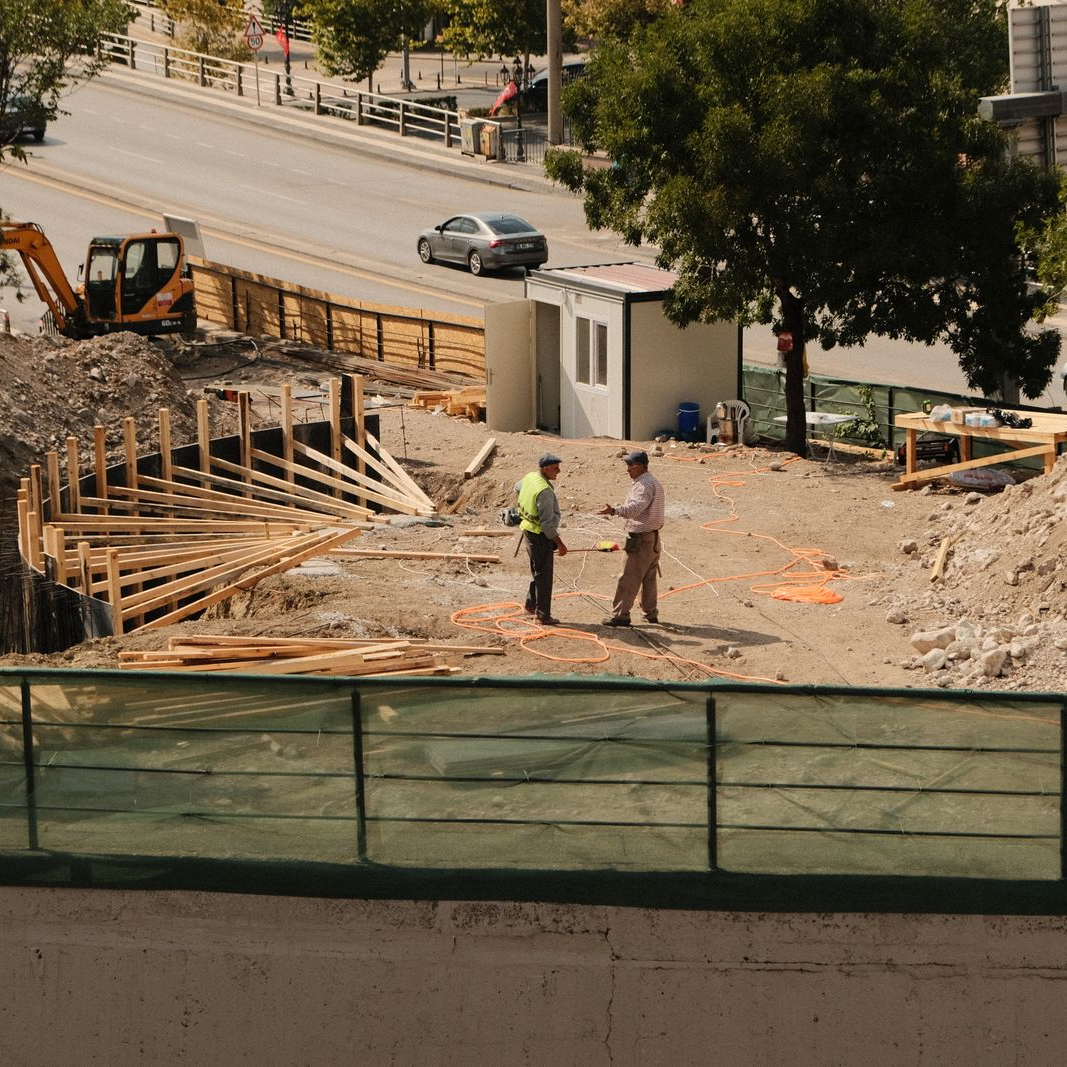
That sticker shock reflects a structural pattern, not misfortune. A requirement for on-site detention stems from the reality that urban development is outrunning the drainage’s ability to absorb run-off, with downstream flooding the consequence. Typically, the demand for on-site detention arrives after DA lodgement, after the builder’s cost estimate is complete and before financing is secured. By then the site is locked, the excavation booked, the price of the tank body largely fixed, and all that’s left to play is how much the other parts will cost – the rock, the water table, service relocation, the discharge pit. As one contractor observed in an Australian property forum discussion, a basic installation could be $10k, a difficult one ten times that amount.

OSD Budget Shock and Project Cost Impact Analysis

So, the operative question is not, “What does an OSD tank cost?” it is, “What components of a compliant OSD system are priced predictably, and which ones depend entirely on site conditions?” Below, we break them down and clarify what’s what.

How an OSD Detention Tank System Works — Inlet, Orifice Plate, Discharge Pit

Whether constructed from pre-cast concrete chambers or modular crate tanks, a compliant on-site detention system will consist of four elements in exactly the same sequence. Knowing what they are clarifies where the financial and compliance risks truly lie.

OSD Detention Tank System Components

Downpipes and surface water are fed into the tank via an inlet and pre-treatment system. A silt pit or gross pollutant trap – what your council might call a storm water pit – gives you the filtration that stops leaves and grit clogging the storage void, because a blocked orifice is the commonest OSD failure of all.

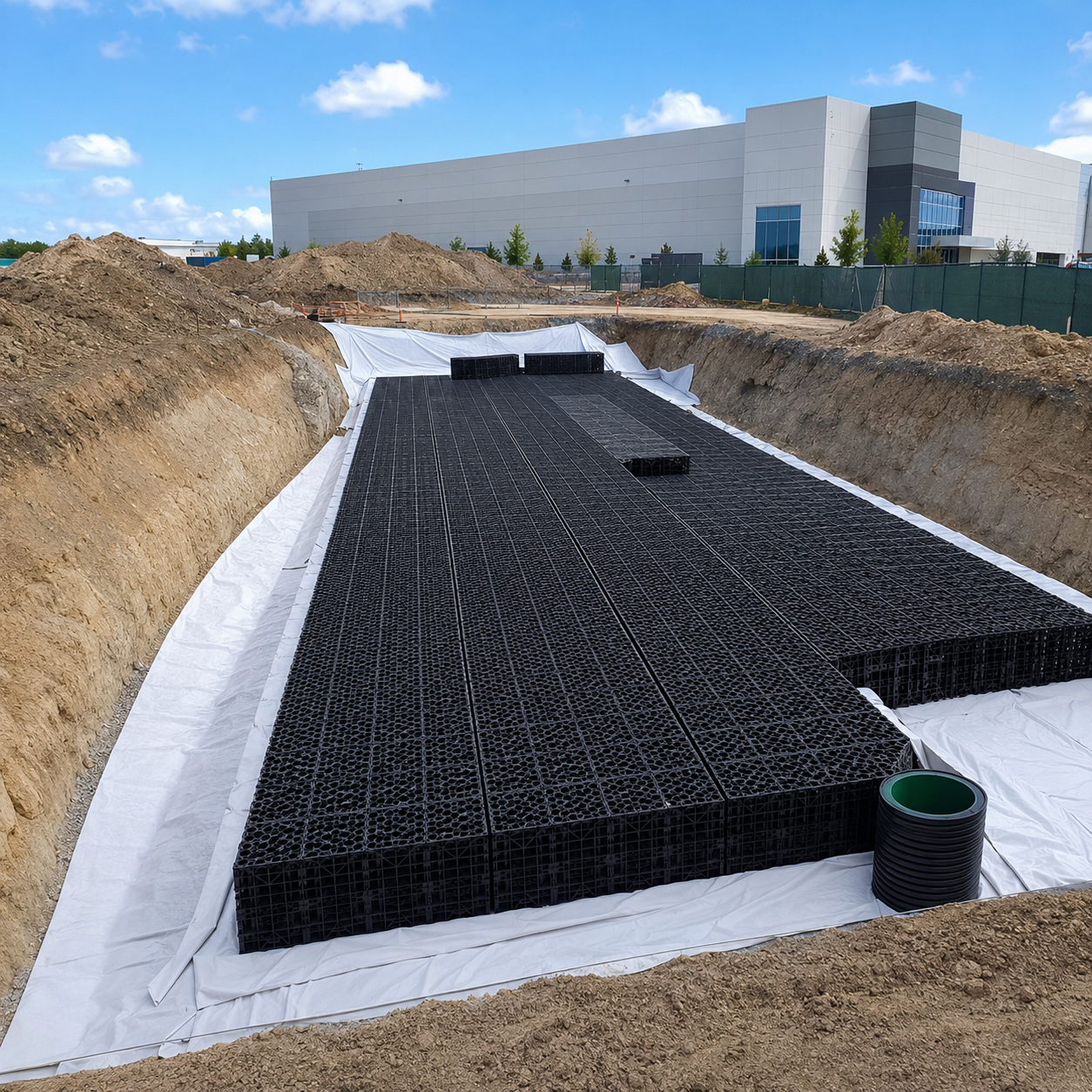
Next up is the storage volume itself: concrete chamber, poly tank, or geocellular crate field wrapped in geotextile. Councils refer to this section as the Site Storage Requirement.

Detention actually occurs at the orifice plate and discharge control pit, a plate with a hole drilled to precisely the right diameter, which throttles outflow down to the Permissible Site Discharge allowed by your council. Get the orifice diameter wrong, and your tank will either flood or drain far too quickly for your engineer’s approval.

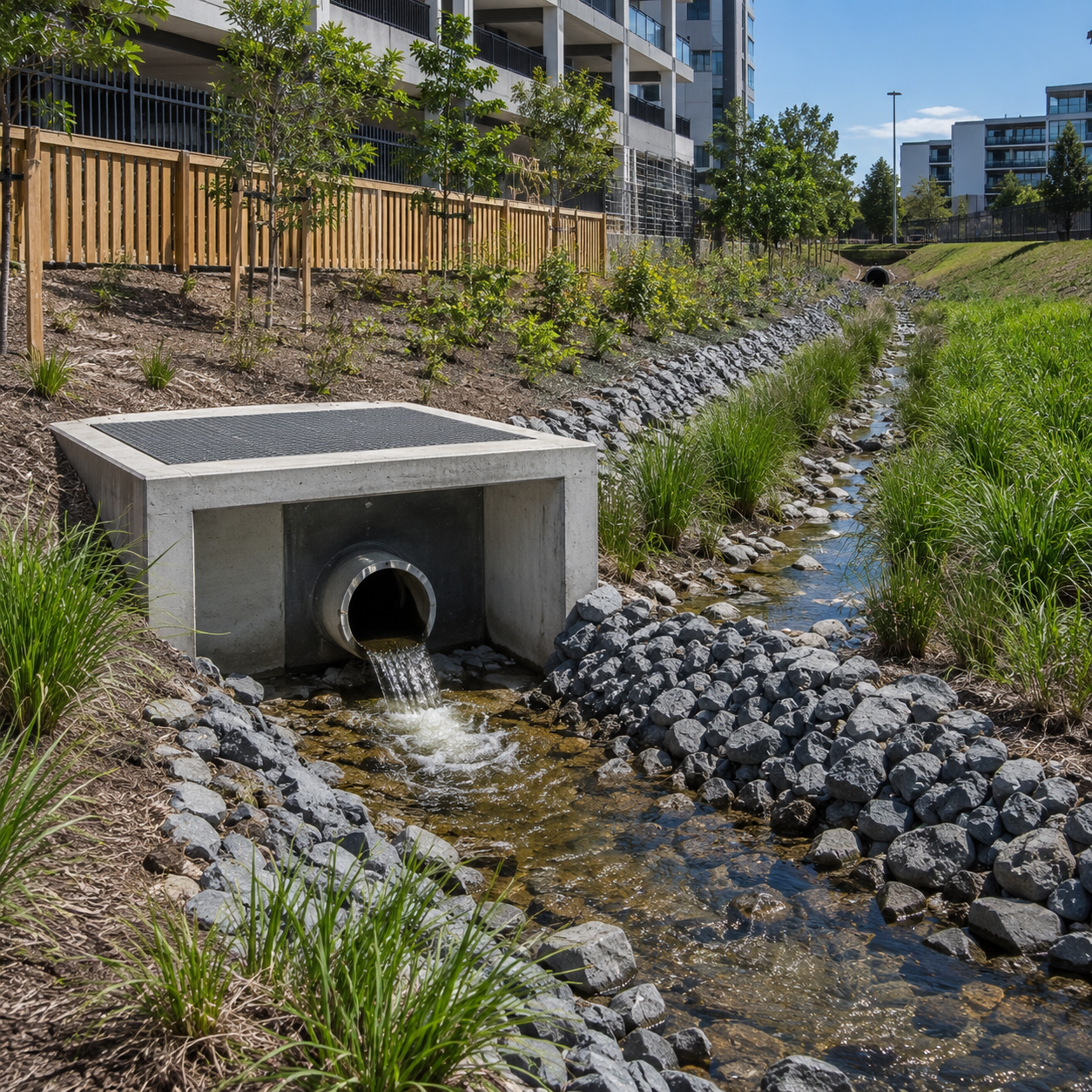
Finally, the outlet and overflow allow a controlled discharge downstream into the local stormwater drainage system, together with an overflow path for storms greater than the design storm event.

It’s the whole system, not just the tank, that councils certify. Your hydraulic engineer signs off on two figures: the stored volume, and the discharge rate through the orifice at maximum head. A geocellular crate field and a concrete chamber holding the same volume, and throttled by the same orifice, perform exactly the same function where they connect to the public stormwater system at your property boundary. It’s precisely for that reason that a material change is a supply matter, not a compliance matter – a topic to which we return below.

These four elements also spell out the maintenance obligation which many buyers never seem to expect. Silt pit and orifice both need cleaning; access points must stay clear; and, in NSW, the tank usually has a plaque, and a positive covenant is attached to title stating that reducing the storage volume is an offence. Detention is a permanent liability on the land, not a construction line item. Which leads us to the issue of volume.

How Councils Size Your OSD Tank: PSD, SSR and the Volume You Cannot Argue With

Begin with the counter-intuitive part: the existence of an OSD requirement does not necessarily entail purchase of a purpose-built detention tank. Most councils will accept a rainwater tank as detention storage if the reuse drawdown and restricted orifice are both incorporated in the design modelling. Buyers on Australian internet forums will typically oversize a BASIX rainwater tank, and install a restricted outlet instead of building two systems. Run this past your engineer before obtaining any prices.

Where a specific tank must be used, two figures determined by the council fix its dimensions, and both are fixed:

Your SSR - Site Storage Requirement
Your SSR - Site Storage Requirement +

is provided in cubic metres per hectare of site area. Multiply by your site area to obtain the detention volume.

Your PSD - Permissible Site Discharge
Your PSD - Permissible Site Discharge +

is provided in litres per second per hectare. Multiply by your site area to obtain the maximum outflow, which sets the required orifice size.

Both are calculated based on a specific design storm, which for the majority of Sydney Water, the Northern Beaches council, and the Upper Parramatta River Catchment Trust is the 100-year ARI event - modern Australian Rainfall and Runoff speak for the 1% AEP event.

Australian Council OSD Sizing Reference Table

Authority SSR (site storage) PSD (permissible discharge) Design storm
Upper Parramatta River Catchment Trust 470 m³/ha (455 m³/ha amended) 80 L/s/ha 100-yr ARI
Northern Beaches Council (single residential, gravity) 200 m³/ha 400 L/s/ha 1-in-100-yr ARI
Ku-ring-gai Council, DCP 47 Appendix 2 (by catchment) 241–414 m³/ha 96–166 L/s/ha per DCP
Baulkham Hills (UPRCT appendix, by slope) 298–412 m³/ha 87–136 L/s/ha 100-yr ARI
Holroyd & Parramatta (UPRCT appendix, by creek) 190–470 m³/ha 80–280 L/s/ha 100-yr ARI

Go back and look at that table. Site storage requirement varies from 190 to 470 m³ per hectare depending on which local council area your property lies within. A single 700 m² lot will require a 14 m³ tank for Northern Beaches Council standards or a 33 m³ tank using the UPRCT figure - 2.3 times higher for exactly the same block due to its address. Councils spell it both ways, on-site detention in one DCP and onsite detention in another, but an onsite detention tank measured to the wrong figure fails at certification in either case. No supplier can give you meaningful figures without knowing that one number.

Two authorities issue no fixed numbers at all. Sydney Water and Wollongong City council have well defined PSD and SSR requirements but instead of issuing look-up values mandate a site-specific hydrologic calculation be performed. If your property is within one of these zones, you will likely need to budget for engineering as the forum user above describes, and this will occur before your tank exists.

OSD Tank Cost per m³: Precast Concrete vs Poly vs Modular Crate

Here is where every other OSD article stops and shows you a contact form. We will tell you what we know based on evidence but we will tell you plainly when that evidence ends.

We cannot tell you our supply cost online and we won’t make up a number for you - our price varies with detention volume, load class, geotextile and accessory package and would be worthless to your quantity surveyor in any case.

However, we can show you all other lines on the cost sheet and link them to their source data, along with a calculated number that’s derived from two published figures.

OSD Cost Anatomy — what a cubic metre of detention is really made of

Cost line Published range Basis
Bulk excavation, NSW A$70–200 / m³ Australian civil cost references
Drainage aggregate, 20 mm blue metal, Sydney A$81–139 / tonne Sydney supplier pricing
Sea freight, 40HQ, Shenzhen to Sydney USD $1,500–2,100 Q1 2026 container rates
Sea freight per m³ of installed storage USD $4.50–6.40 Freight range divided by 330 m³ per 40HQ
Hydraulic engineering drawings and report A$3,000 (reported) Owner-builder quote, Sydney
Precast concrete OSD, constructed, under driveway ≈A$1,673 / m³ A$46,000 for 27.5 m³, owner-builder quote
Crate module supply [Contact for quote] Volume, load class, accessories
Site conditions: rock, groundwater, service relocation [Site-specific] Cannot be quoted from a drawing

USD $4.50–6.40

Ocean freight costs per cubic metre of installed OSD storage from Shenzhen to Sydney - against a reported A$1,673 per cubic metre for a constructed concrete tank under a driveway.

Calculated: 40HQ freight range (Q1 2026 rates) ÷ 330 m³ installed storage per 40HQ container (based on Storm Manage loading calculations). Freight only. Duties, port charges, customs clearance and local delivery costs are not included.

This single division of two numbers addresses the argument most Australian distributors make against containerised OSD solutions - “freight will wipe out any savings.” With ocean freight coming in at roughly US$5/m³ installed storage, it is a relatively small component of overall cost, certainly smaller than excavation volume, craneage requirements or program schedule.

This is where choice of material really pays off. A precast concrete OSD chamber turns up in tonnes requiring craneage, a concrete slab bedding and (for cast-in-place installations) curing time prior to backfill. A crate field arrives flat and is assembled manually. A concrete tank is not expensive because the material itself costs a lot - it costs more because of everything the material forces you to buy.

StormTank Range — Volumes, Load Class and When NOT to Go Underground

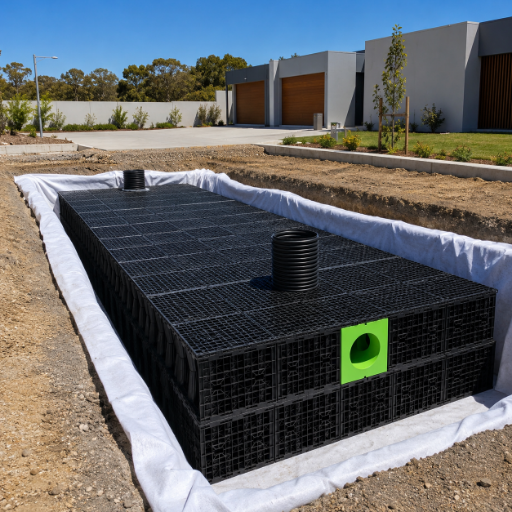
StormTank is one geocellular stormwater tank family, selected by load class and height configuration. H400 and H500 are height options, not separate model names. H400 stores 190 L / 0.190 m³ per module; H500 stores 237.5 L / 0.2375 m³. The void ratio is 95%, and that number is used consistently in sizing, cost examples and submittal text.

Load performance — the numbers, and what they do not mean

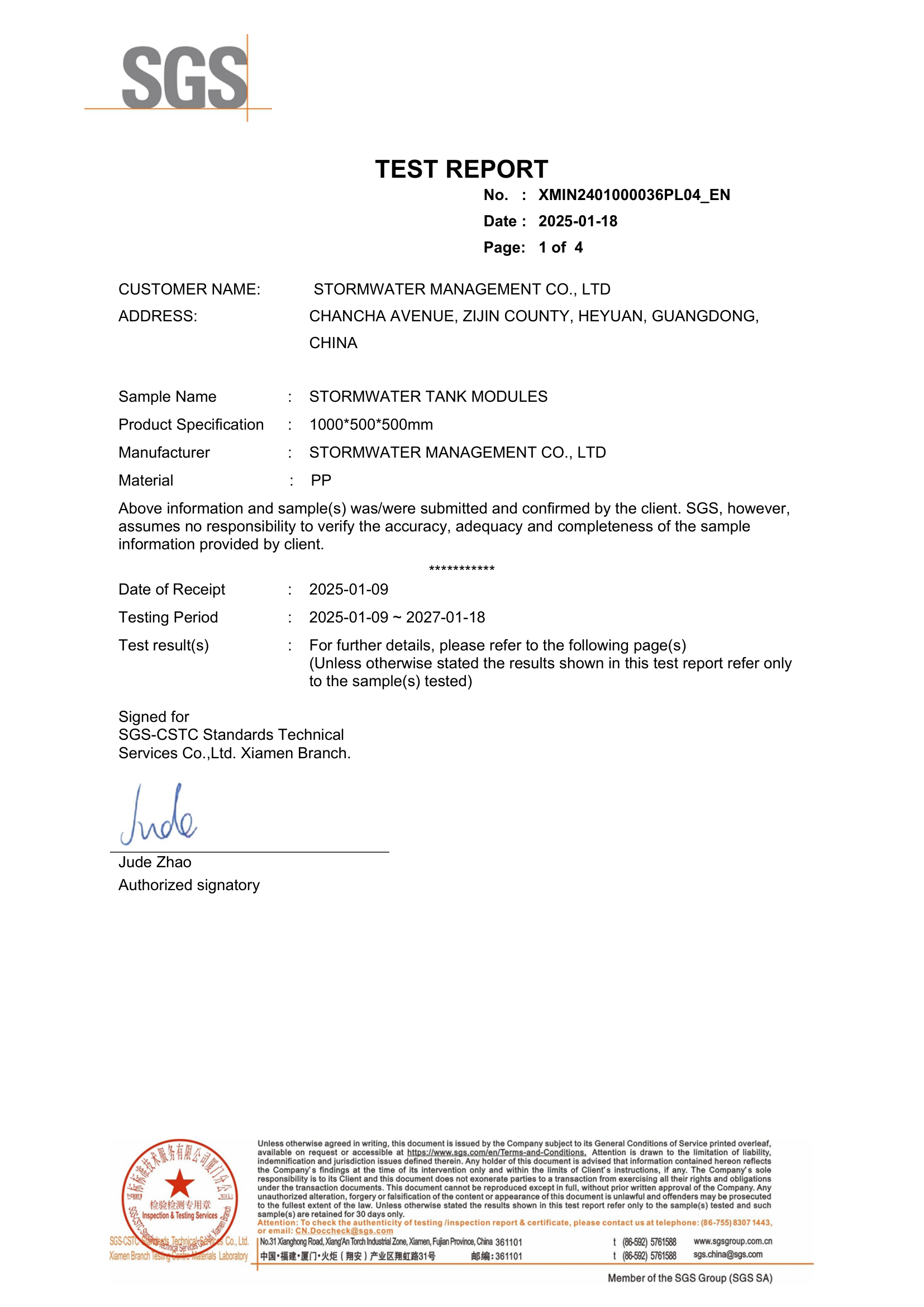
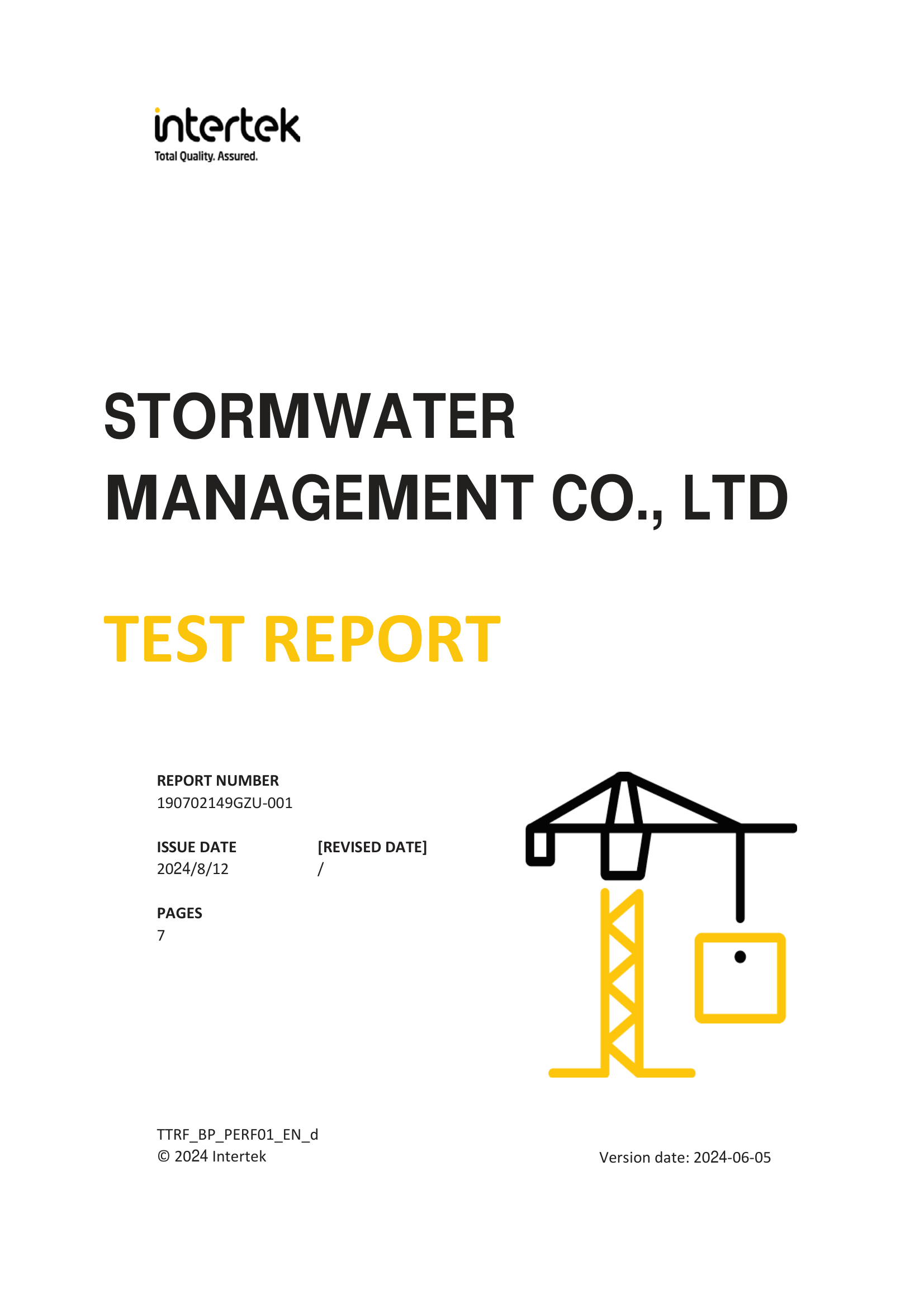
The test evidence now maps to specific StormTank models. SGS XMIN2401000036PL04 is the StormTank ST-45 failure test; Intertek 190702149GZU-001 is the StormTank ST-60 vertical load test. The numbers are unchanged - only the model labels and interpretation have been corrected.

Model Test Laboratory Report Method Result
StormTank ST-45 Top longitudinal compression SGS-CSTC (witnessed) XMIN2401000036PL04, tested 2024, issued 2025 F / S, 0.5 m2 contact area 234.26 kN failure load = 468.5 kN/m2, above the 450 kN/m2 nameplate rating
StormTank ST-45 Lateral compression SGS-CSTC (witnessed) XMIN2401000036PL04, tested 2024, issued 2025 F / S, 0.5 m2 contact area 60.96 kN failure load = 121.9 kN/m2
StormTank ST-60 Vertical load, front surface, 23 °C Intertek 190702149GZU-001, issued 2024-08-12 CIRIA C680-2008 No failure at 300 kN rig limit = >=600 kN/m2
StormTank ST-60 Vertical load, front surface, 40 °C Intertek 190702149GZU-001, issued 2024-08-12 CIRIA C680-2008 No failure at 300 kN rig limit = >=600 kN/m2
StormTank ST-60 Vertical load, section surface, 23 °C Intertek 190702149GZU-001, issued 2024-08-12 CIRIA C680-2008 92.9 kN = 186 kN/m2
StormTank ST-60 Vertical load, section surface, 40 °C Intertek 190702149GZU-001, issued 2024-08-12 CIRIA C680-2008 89.48 kN = 179 kN/m2, a 3.8% reduction from the 23 °C section result
StormTank ST-60 (H400 sample) 200-day sustained-load creep test Intertek 200108231GZU-001, issued 2020-08-13 CIRIA C680-2008 Clause 3.9 + CIRIA C737-2016 Top surface at 480 kN/m2 for 200 days: 4.92 mm total displacement

The 468.5 kN/m² figure is real, but it belongs to StormTank ST-45: a module rated at 45 t/m² / 450 kN/m² that failed above its nameplate rating. It is not the ceiling of the range. StormTank ST-60 is a different moulding in 100% virgin PP, and under Intertek testing it reached the 300 kN rig limit without breaking - >=600 kN/m² at both 23 °C and 40 °C.

The 40 °C result should be read precisely. The top-surface short-term test still reached the rig limit, so the short-term test did not show a lower top-surface failure value. The creep programme used a lower 40 °C yield basis of >=440 kN/m², and the section-surface short-term result moved from 186 kN/m² to 179 kN/m², a 3.8% reduction. That is the honest Australian heat-context statement.

"We asked Intertek to repeat the full CIRIA C680 sequence on modules conditioned at 40 °C, because a load figure measured at 23 °C tells an Australian engineer very little about a crate sitting under a north-facing driveway. Section-surface loss came in under four percent. That is the number we wanted before we sold a single module into this market."

— Storm Manage Engineering Team
Load performance — the numbers and what they do not mean

Long-term creep performance (StormTank ST-60)

A short-term crush test answers only one question. A buried detention tank spends its service life under sustained load. Intertek held StormTank ST-60 modules under constant loads of 20-80% of ultimate for 200 days under CIRIA C680-2008 Clause 3.9 and CIRIA C737-2016, report 200108231GZU-001, issued 2020-08-13. At 80% of ultimate - 480 kN/m2, a sustained load slightly higher than the ST-45 short-term failure point - total displacement after 200 days was 4.92 mm on a 400 mm module.

Test surface Condition Load level Sustained load Applied mass Displacement @ 200 days
Topambient20%120 kN/m2866 kg1.15 mm
Topambient40%240 kN/m21,732 kg1.86 mm
Topambient60%360 kN/m22,598 kg2.63 mm
Topambient80%480 kN/m23,464 kg4.92 mm
Top40 °C80%352 kN/m22,540 kg2.00 mm
Lateralambient80%72 kN/m2520 kg4.22 mm
Lateral40 °C80%68 kN/m2492 kg4.61 mm

The original creep report is not offered as a public raw download. Public submittals should use the Storm Manage 60-ton Creep Test Data Summary; the original laboratory report is available on request for project review.

What these numbers cannot tell you

While the ST-45 failure value of 468.5 kN/m² and the ST-60 rig-limit result of >=600 kN/m² are significant, they do not automatically certify an installed tank for every driveway or traffic case. Wheel and axle loads transfer through cover depth, bedding, backfill compaction and any structural distribution slab. Storm Manage provides tested module data; the civil or hydraulic engineer certifies the installed system.

Landscaped, trafficable — and when a crate is the wrong answer

Under grass or pedestrian pavement, the cover is shallow and the load case is light. Under a car park or driveway, cover depth and the slab overhead become critical design items, and the appropriate load class needs certified for the particular configuration.

Here's how we can talk you out of a sale. If your block is big enough and your council allows it, an above-ground detention tank is simpler, cheaper to test and much cheaper to install - no digging, no backfill, no confined-space access. Where buyers get caught is that councils often prohibit above-ground storage of more than a few thousand litres in residential blocks on amenity grounds and on overland flow path grounds - that is precisely the detention market. Check your DCP before assuming above ground is a go. And if your council is happy to run combined, a large rainwater tank with a restricted orifice is perfectly capable of servicing reuse - toilet flushing and irrigation - as well as detention in a single structure, something no crate field can achieve.

Crates are where they are required because the storage must disappear under a driveway, car park or landscape feature, and where volumes are large enough that the crane costs and curing costs of concrete dominate. That is a much narrower claim than others might suggest, and is the one that is correct.

Installed Cost Breakdown: Excavation, Geotextile, Backfill, Orifice Pit

Consider a 700 m² Sydney lot within a 300 m³/ha catchment area. Required detention storage is 21 m³ - or 89 StormTank H500 modules at 0.2375 m³ of storage capacity per module. Now build the cost from listed items.

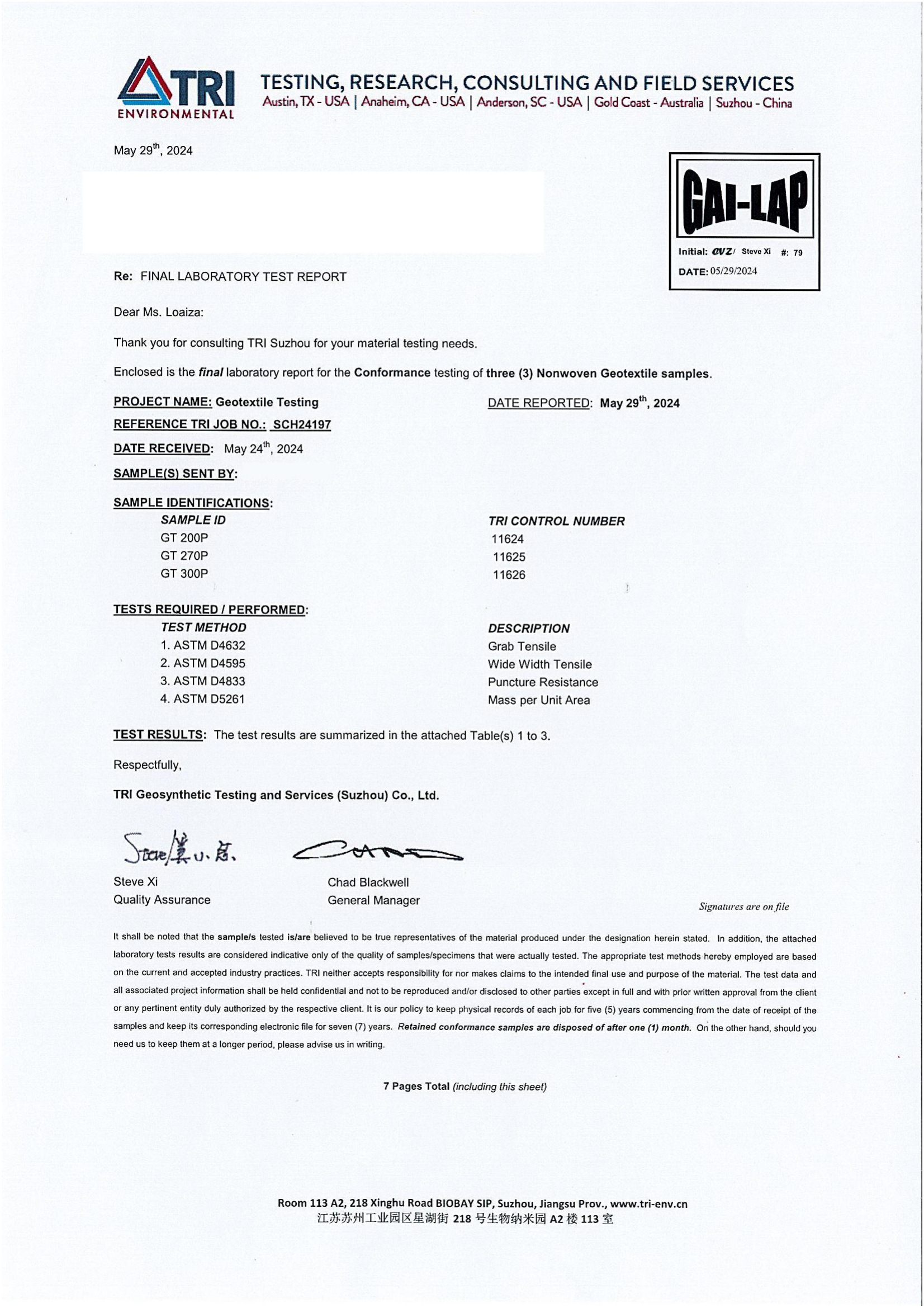
Excavation dominates at once. A 21 m³ crate field likely requires 30 m³ of excavation (bedding, side clearance, geotextile wrap). At A$70–200 per cubic metre across NSW, that single line item lands between A$2,100 and A$6,000 before anyone has priced a crate. It is the one item that is catastrophically affected by finding rock. Bedding and surrounding aggregate require more quantity (eg, 20mm blue metal, A$81–139/t in Sydney). Geotextile wrap is minor by comparison; the TRI ASTM D4632 grab tensile report is used as test evidence, not as an Australia/New Zealand compliance claim.

Next comes the discharge control pit. One Aussie buyer said “$8k for pit and pipe plus the cost of 2 2000ltr tanks” - where the pit and pipe exceed the cost of the tanks. One orifice plate, the only device that enables the entire system to meet the legal requirement, is dirt cheap, and sits in the most expensive component.

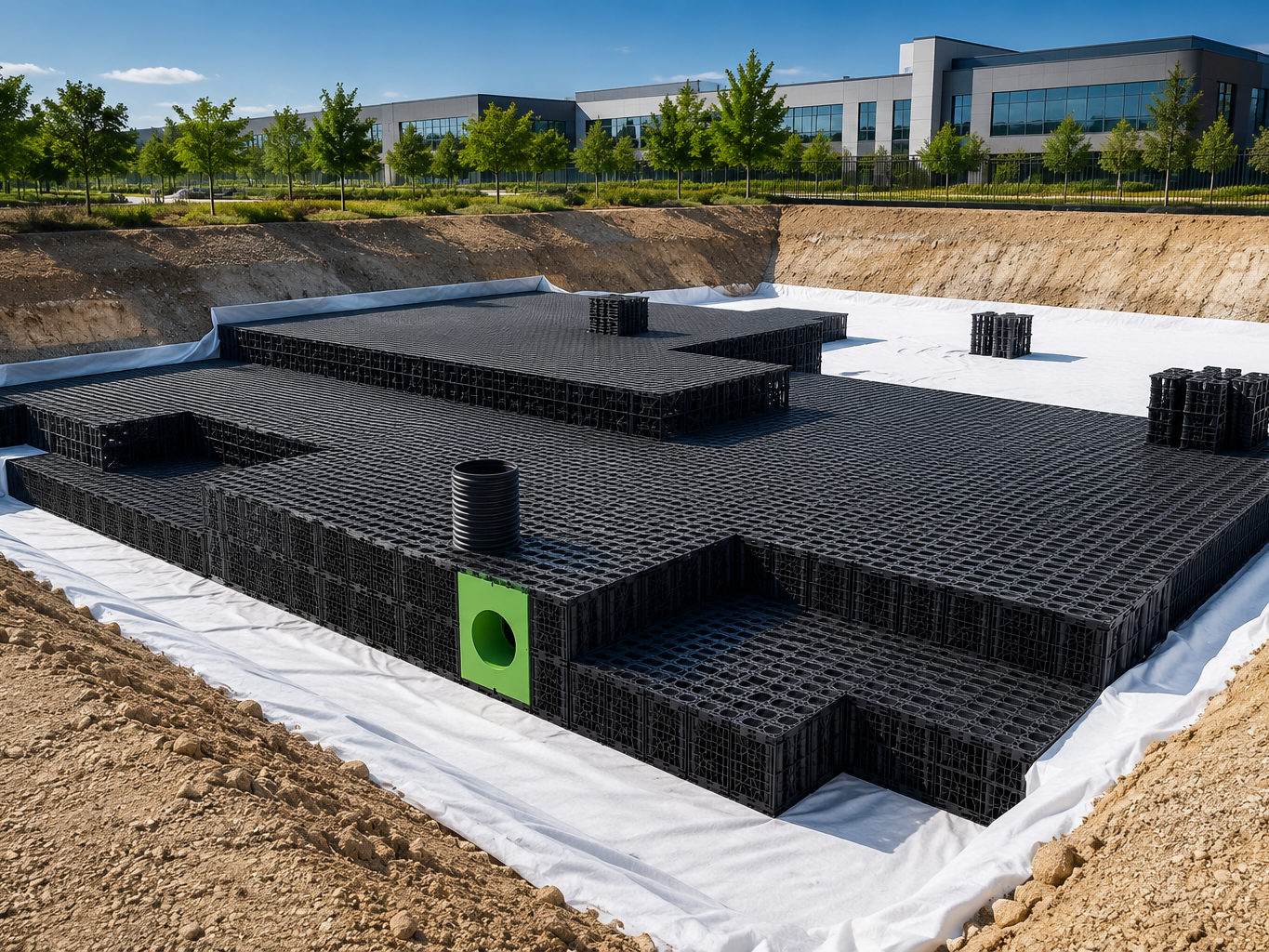
Contrast that with A$1,673 per cubic metre that a Baulkham Hills owner builder recently paid for an under-driveway concrete tank. Concrete itself isn't that expensive - it’s crane hire, the concrete bedding slab, curing time, and the volume of excavation for a rigid box. The flat-packed crate field tackles four out of the five cost drivers. Only excavation remains, which is why we have disclosed our excavation cost range.

This is also why our five-year cost argument is a framework, not a percentage. We have no audited Australian OSD lifecycle study to cite, and we are not going to manufacture one. What we can say is that the recurring costs of an OSD system - silt pit clearing, orifice inspection, confined-space access - attach to the system, not the material, and are effectively identical whether the void is concrete or polypropylene.

Buyer advisory — the three lines that decide your OSD budget

  • Excavation risk. Get a geotechnical opinion before you fix a price. Rock and groundwater are the difference between a routine job and a six-figure one.
  • Discharge pit and connection. Price it separately. It is frequently larger than the tank supply.
  • Program time. Crate assembly by hand versus crane hire and, for cast-in-place concrete, curing time before backfill. Days on a critical path cost more than they look.

Will Your Council and Certifier Accept an Imported Crate Tank?

This is the objection that kills imported crate sales in Australia, and it rests on a claim that does not survive contact with the actual council documents. We went and read them.

Every council in the country regulates how you manage stormwater on your own land. None of them, as far as we can establish, regulates what an on-site stormwater detention tank is moulded from. Australian stormwater management policy is written around performance, not materials.

Northern Beaches council's on-site stormwater detention specification states it plainly:

"These systems can be constructed from reinforced concrete, prefabricated units or proprietary systems provided they can operate to the requirements of this Specification ... The structural adequacy of the system must be checked and certified by a suitably qualified Engineer."

— Northern Beaches Council, on-site stormwater detention specification

The Upper Parramatta River Catchment Trust handbook, which governs on-site detention across Baulkham Hills, Blacktown, Parramatta and Holroyd, lists proprietary products in its appendices. Ku-ring-gai permits proprietary devices subject to certification. Across every primary NSW council specification we could obtain, the gate is a certified design, not a prohibited material. We could not find a single council document banning plastic geocellular detention. That claim traces back to supplier marketing, not to a development control plan. If a certifier tells you otherwise, ask them for the clause. What the councils do demand is the thing most importers cannot supply: evidence a qualified engineer can put their name to. That is the entire purpose of the reports below.

CIRIA C680-2008

Vertical load test, Intertek report 190702149GZU-001, ISO 17025 laboratory. Tested at 23 °C and 40 °C.

SGS Compression

Report XMIN2401000036PL04. StormTank ST-45 failed at 468.5 kN/m² vertically and 121.9 kN/m² laterally, above the 450 kN/m² nameplate rating.

Factory credential

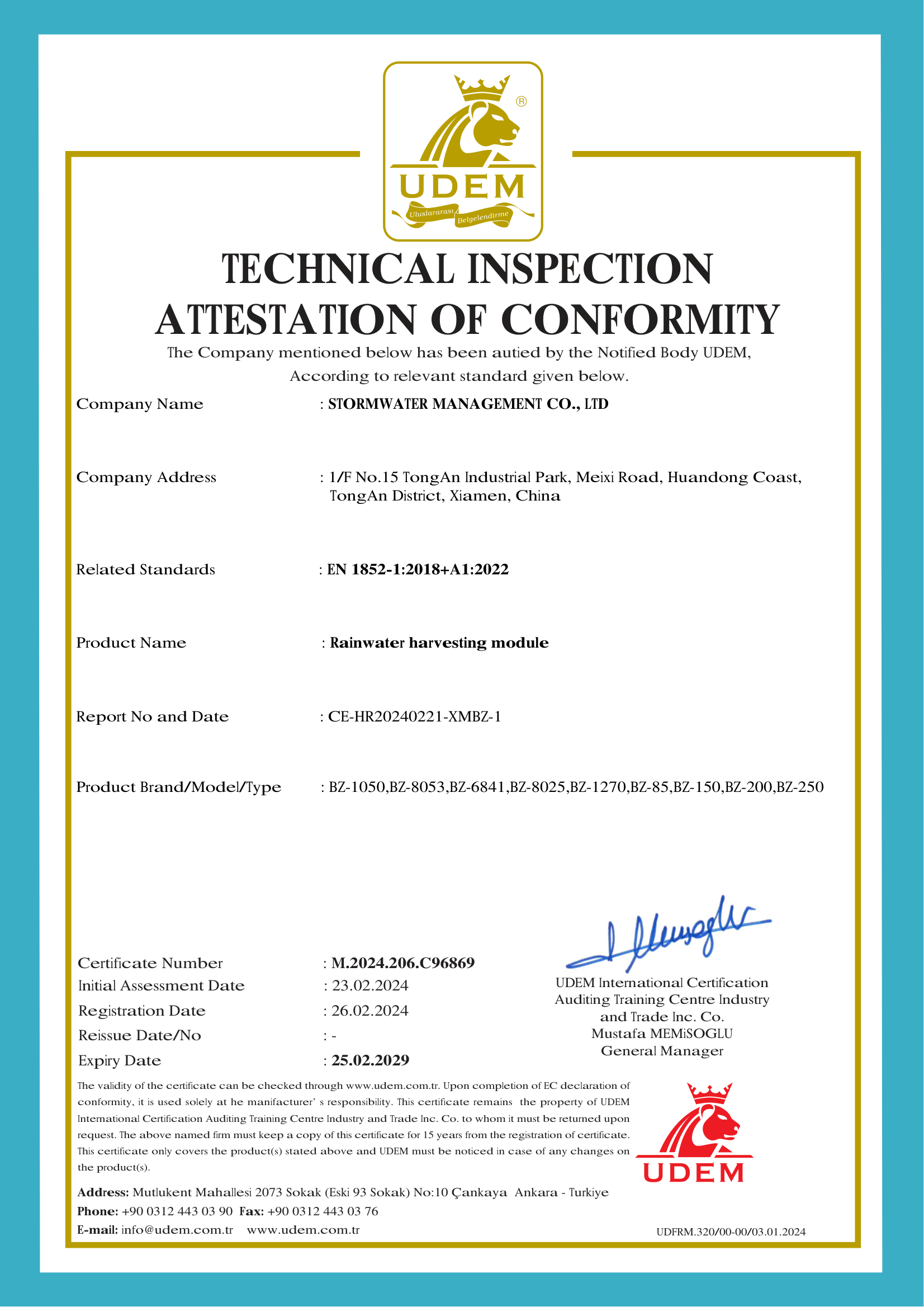
UDEM EN 1852-1 certificate is kept as factory credential evidence only; it is not presented as StormTank module performance evidence.

TRI ASTM D4632

Geotextile grab tensile test report on file. For Australia/New Zealand, ASTM D4632 is cited as test-method evidence, not as a local compliance framework.

Compliance in Australia and New Zealand is reviewed at system level. Councils and certifiers typically ask for SSR/PSD sizing, drainage plans, structural certification, product dimensions, load-test evidence, geotextile data, maintenance access and an overflow path. Storm Manage provides StormTank dimensions, ST-45 and ST-60 test data, TRI geotextile test evidence, layout support and submittal documents. Local design language should use WSUD, ARR 2019 and AS/NZS 3500.3, while CIRIA C680/C737 appears only as the laboratory test-method reference.

Two further liabilities your certifier will raise, which most suppliers never mention. In New South Wales an OSD system is normally secured by a positive covenant and a restriction on title, with a plaque warning that reducing the storage volume is an offence - a permanent encumbrance that prospective purchasers do notice. And maintenance access to a buried tank is confined-space work. Neither is a reason to avoid on-site detention. Both are reasons to size the system once, correctly.

Procurement: MOQ, Container Loading, Lead Time, Landed Cost

Our injection moulding plant is located in Zijin County, Heyuan, Guangdong Province with load-out port being Shenzhen - Yantian and Shekou, so FOB Shenzhen is quoted by default. Qingdao and Ningbo can be arranged when a project's shipping schedule demands it.

8,000 m²Facility Area
8 Units1000T-2000T Moulding Machines
5,000 m³Monthly Output
>60,000 m³Annual Capacity

Container loading — the number that decides your landed cost

A 40HQ container carries up to 330 m³ of installed storage volume with optimised stacking. Direct import is only economical for civil and commercial projects where the detention volume measures into hundreds of cubic metres. Quality control procedures involve assessing compression, dimensional tolerances, and virgin/recycled PP proportions.

Lead-time of production is from 15 to 30 days after receiving the confirmed order.

OSD Volume & Cost Calculator

OSD Tank Cost & Sizing — FAQ

How much does an OSD tank cost in Australia?

Without the dimensions of your site and your engineer's council report, no supplier can offer a definitive cost. What we can offer are the following known inputs: excavation in NSW runs A$70–200 per cubic metre, one Sydney owner-builder was quoted A$3,000 for hydraulic drawings and A$46,000 to construct a 27.5 m³ concrete tank under a driveway, and sea freight for modular crate systems typically falls in the range of USD $4.50–6.40 per cubic metre of storage volume. Crate supply costs are based on the required volume, load capacity and accessories.

How much does a stormwater detention vault cost?

Only one Australian data point is citable here: A$46,000 for 27.5 m³ constructed beneath a driveway, or about A$1,673 per cubic metre, reported by an owner-builder in the Baulkham Hills region, although this should be considered a rough benchmark rather than a firm quotation. Actual cost is driven by soil conditions, groundwater levels, and the location of the discharge pit, far more than by the tank material itself.

What size OSD tank do I need?

Two numbers, one multiplication. Take your council’s Site Storage Requirement in cubic metres per hectare, multiply it by your site area in hectares, and that product is your detention volume. Worked through: a 700 m² block sitting in a 300 m³/ha catchment needs 21 m³. Move that same block into Northern Beaches and it needs 14 m³; move it into the Upper Parramatta River Catchment Trust area and it needs 33 m³. Find your council’s SSR before anything else — every other number in your underground detention design follows from it, and council requirements differ street by street. Some councils size on impervious surfaces rather than total site area, so read the DCP itself, not a summary of it.

What are OSD requirements, and how is PSD calculated?

How is SSR different to PSD? Both numbers come from your development control plan. The SSR sets your total stored volume (in m³ per hectare). Your PSD (Permissible Site Discharge in litres per second per hectare) sets the maximum flow out of your site - at the outlet pit, the PSD value is used to size your orifice plate pipe. The 100-year ARI storm event, or 1% Annual Exceedance Probability (AEP) event as per Australian Rainfall and Runoff.

Is a plastic crate OSD cheaper than a precast concrete tank?

Are crate fields less expensive than underground storage tanks? Not necessarily. A flat-packed crate field takes out the need for a crane, bedding slab, concrete curing time and some excavation of a pre-fabricated concrete chamber. This benefit is diminished where there is easy site access and shallow cover but it becomes significant when the tank must be located beneath a driveway in a tight urban residential lot.

Can I install an OSD tank under my driveway?

Can I install my tank under a driveway or car park? Yes, provided the installed system is certified for the project load case. The SGS 468.5 kN/m² value belongs to StormTank ST-45, and StormTank ST-60 reached >=600 kN/m² at Intertek without breaking. Those module test results are inputs to the design; cover depth, bedding, backfill compaction and any structural distribution slab remain part of your civil engineer’s certification.

Is OSD mandatory for all developments?

Is an on-site detention (OSD) system mandatory? Yes, when your development control plan mandates it (typically on new buildings and major refurbishments that increase impervious area). A growing number of councils now permit a combined rainwater and detention tank in lieu of a dedicated OSD. This is a useful detail to inquire about before you start budgeting.

Can I combine an OSD tank with a rainwater tank for reuse?

Can an over-size rainwater tank act as an OSD system? In many cases, yes. An over-size rainwater tank with a restrictor at the outlet can hold the required detention volume above the reuse draw-down level and supply lower volumes to toilet flushing and irrigation. However, the hydraulic modelling for this arrangement is more complex because the volume in the rainwater tank below the detention draw-down is modelled as already being in use. Crates cannot simulate this.

What happens if my OSD fails during a storm?

What causes failures of underground storage systems? Almost always blockages in the orifice (inlet to the tank) or silt in the inlet pit. In these cases, water fills the tank and flows over the overflow outlet. This is why a clear and unobstructed overflow path must be incorporated into the certified system design and why responsibility for maintaining it typically remains with the land titleholder.

Does an OSD tank affect resale?

Will a tank affect resale value? Some purchasers will raise concerns about the OSD system. However, in NSW the OSD system is secured by a positive covenant and restriction on the land title, and a plaque clearly indicating that reducing storage capacity is an offence. That OSD obligation then sits on the title document, a documented part of owning the land. It is not a defect, though your civil engineer or purchaser’s solicitor will no doubt want details.

What is the difference between stormwater detention and retention?

Detention temporarily stores stormwater runoff and lets it out slowly through a restricted outlet, protecting the downstream drainage network. Retention keeps the water on site for reuse or infiltration. An OSD tank detains; a rainwater tank retains; a combined tank does both.

How many cubic metres of OSD storage fit in a 40HQ container?

Up to 330 m³ of installed storage with optimised stacking since modules are shipped flat-packed, not assembled. Delivery takes 15 to 30 days following order confirmation. We normally deliver FOB Shenzhen at Yantian or Shekou.