Fixed-geometry attenuation punishes an awkward site. On rock-shallow or irregular ground a one-piece concrete or GRP tank forces deep excavation or wasted storage, and the fix is a late redesign that can add weeks to a programme and thousands in abortive groundworks, the worst kind of cost, because it lands after the dig has started and the flooding risk is already live.
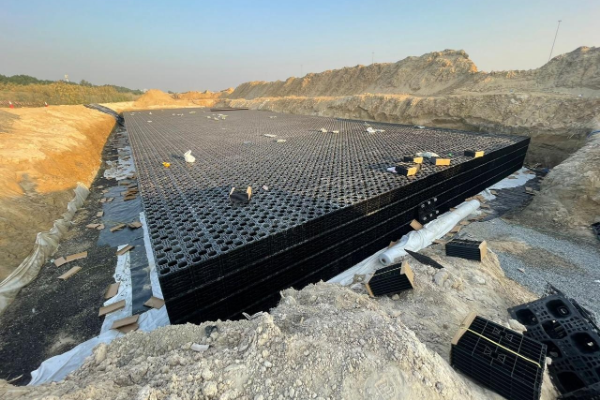
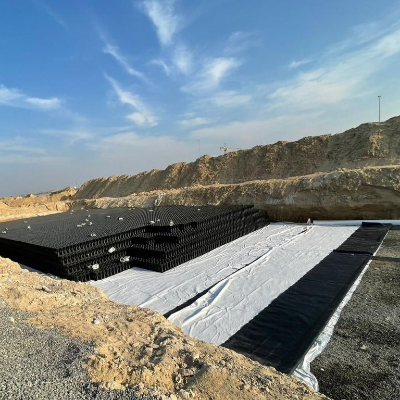
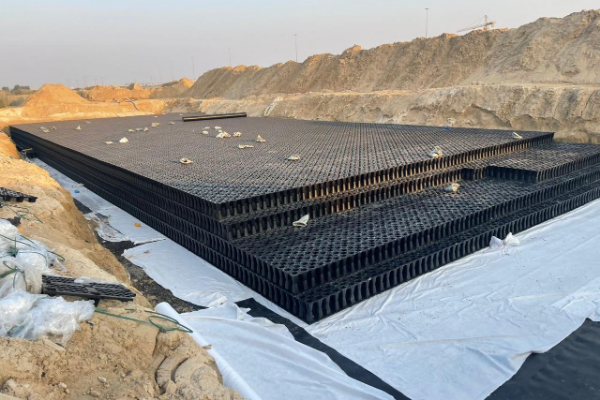
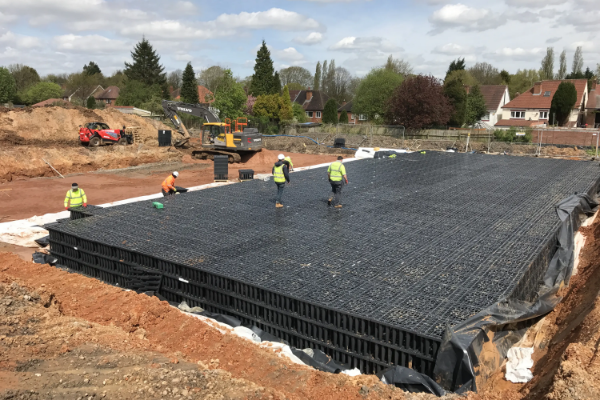
StormGrid sidesteps that. On the Palm Desert golf-course scheme in California, a 99,000 ft³ (≈2,800 m³) storage duty fit a shallow, wide modular layout the site’s rock depth ruled out for a concrete tank; in Brampton and Calgary, Canada, large underground modular banks served community and highway-adjacent development where the footprint was tight and the discharge rate capped.
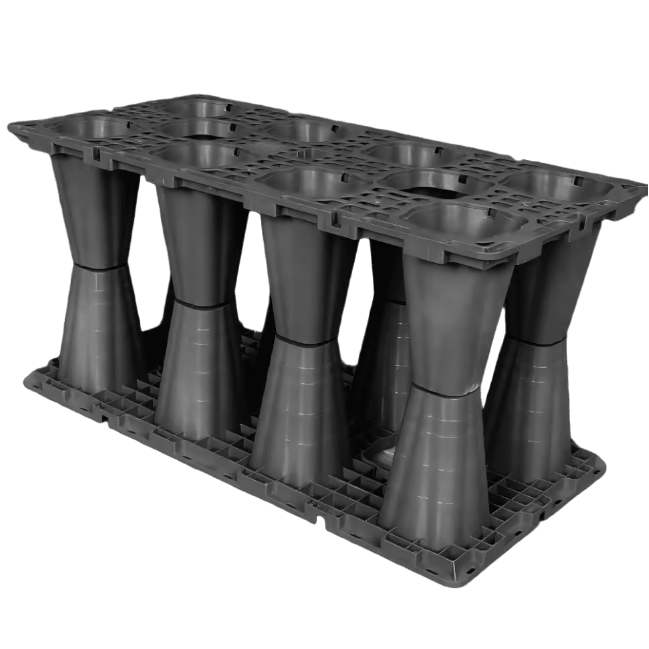
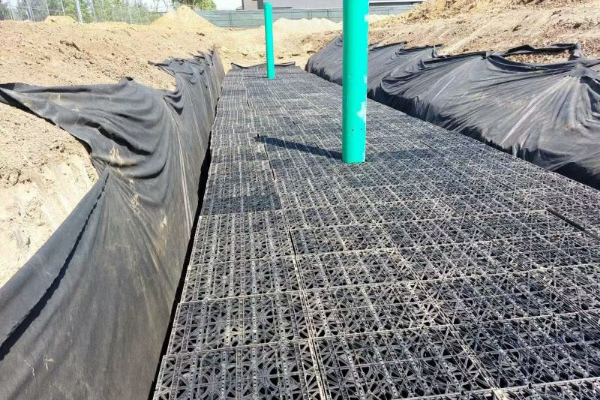
Unlike a fixed-geometry structure, the modular cell holds its 95% void ratio while bending around services and boundaries, which is how these overseas SuDS and stormwater projects, across Europe, North America, the Middle East and Australia, hit their storage duty without a bespoke design. Each was sized to the permitted discharge rate the drainage authority set for the site, the way UK flood-risk planning requires (gov.uk, flood risk and coastal change).