Modular Underground Stormwater BMP Systems, LID, NPDES & SuDS-Compliant Storage

A stormwater BMP that meets a site’s volume control needs without sacrificing parking capacity.

Storm Manager’s geocellular crate modules have a 95% void ratio, fit within LID, SuDS, WSUD, Estidama, and Vision 2030 frameworks under a single supplier relationship, and include engineering drawings, container logistics, and OEM tooling.

Request a Compliance-Ready Quote
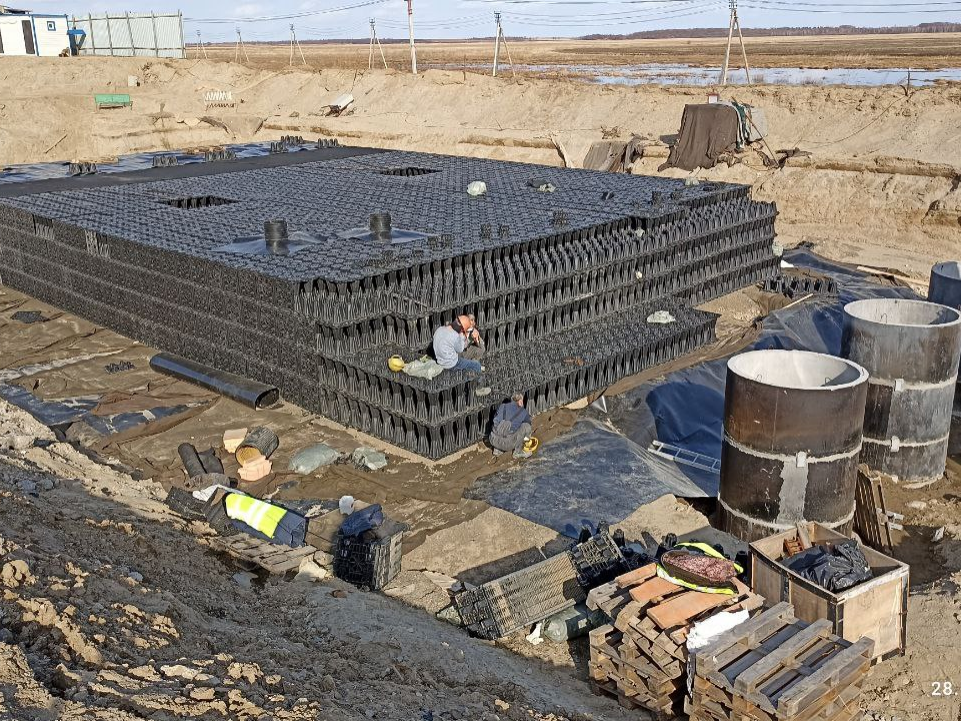
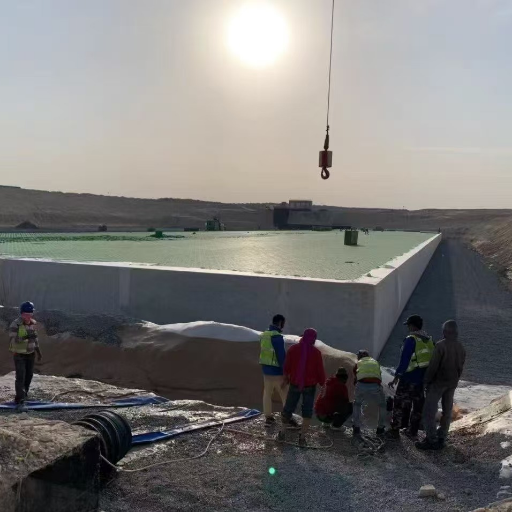
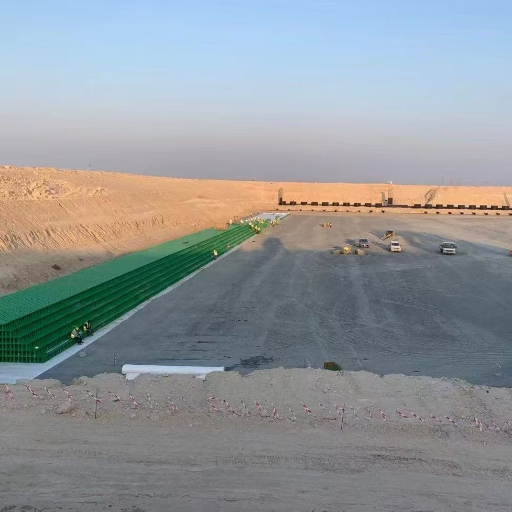
Storm Manager geocellular crate modules installation at construction site
95% Void ratio
per module
HS-20–D400 Load class
range
15–30 days Lead time
after order
330 m³ Storage per
40HQ container
50+ yrs Underground
design life
4 Regulatory frameworks served: US LID, UK SuDS, AU WSUD, ME Estidama

Meeting Stormwater BMP & LID Requirements Without Land-Hungry Basins

A stormwater best management practice (BMP) is a structural or non-structural technique for regulating the flow rate, volume, or quality of stormwater runoff discharged from a site and minimizing the quantity of pollution conveyed by runoff to neighboring waterways. Most sites satisfy this requirement through NPDES/MS4 permits or a regional low-impact development (LID) ordinance that restricts post-development runoff volume to pre-development levels.

Storm Manager’s modular geocellular crate system fulfills the structural, volume-control aspect of this requirement by acting as a below-ground detention or infiltration chamber scaled to meet the site’s water quality volume (WQv), assembled from interconnected polypropylene modules rather than a poured concrete structure.

Modular Stormwater System Installation
  • Meets detention/retention/infiltration BMP categories outlined in the EPA National Menu of BMPs for Stormwater
  • Located beneath parking lots, landscaping, or hardscape, eliminating the need for a separate detention pond.
  • Consistent with LID (US), SuDS (UK), WSUD (AU), and Estidama/Vision 2030 (Middle East) sizing methods – the volume calculations for storage remain the same regardless of regional terminology. If your project sits under WSUD, see our on-site detention (OSD) tank design and installation guide for the AU-specific sizing and PSD/SSR methodology.

Sizing commences with the water quality volume (WQv) for your site or the comparable design-storm volume stipulated by your local guide. This calculation is based on factors such as impervious area, soil type, and the target rainfall event (typically the water-quality storm, or 1-year storm, distinct from the larger flood-control design storm). Once this volume is established, the number of modules can be calculated. With a 95% void ratio, approximately 1.05 m³ of excavation are needed per cubic meter of required storage, which is the figure your civil engineer incorporates into the grading plan before module shipment. Moreover, the strategy of subterranean storage preserves regional water resources and watershed health by retaining stormwater on-site rather than overwhelming the local storm sewer system-aligning with the same LID practices and principles underpinning all regional frameworks presented here.

Where This Shows Up in the Field

Underground modular storage is no longer a niche detail – it’s your go-to solution when the site has no surface footprint to accommodate an open detention pond. For instance, a commercial warehouse development in Toronto installed five modular tank systems to achieve more than 645 m³ of stormwater storage beneath a parking lot with no capacity for a surface pond, combined with debris rows and a geomembrane liner for retention.

The same logic apply internationally: geocellular underground storage has been specified for station locations on the Al Haramain Mecca-Medina high-speed rail project in Saudi Arabia, where surface footprint was equally constrained. Neither project is using a Storm Manager system; they’re provided here as evidence that the core technique is well accepted practice, not a novel or experimental method, in both Western and Vision 2030 compliant markets.

Sizing a site right now? Talk to an application engineer about your water quality volume

Consult Engineer →

Storm Manager Modular BMP Crate Systems, Void Ratio & Load Class Selection

Each module is injection-moulded from virgin or recycled polypropylene as a single unit – there are no weld seams at the weak points. Each standard module measures 1000 × 500 × 500 mm and stacks to whatever storage volume your water quality volume calculation calls for.

“Buyers ask us for a single void-ratio number and stop there. The number that actually determines whether a module survives 30 years under a delivery-truck lane is the load class and the backfill spec, we walk every RFQ through both before we quote.”

— Senior Application Engineer, Storm Manager

Choosing the correct load class is where most spec revisions happen after the fact. For example, under a landscaped courtyard, a site plan can specify HS-20 loading just fine, until a fire lane added to the site plan matches the same footprint. That’s a redesign, not a spec change, because the backfill compaction and cover depth change with the load class. Load class ratings on this page are validated against CIRIA C737, the current UK guidance on structural and geotechnical design of modular geocellular systems.

We raise this issue during the shop-drawing review, prior to container loading, because a load-class change after installation means excavation twice. One honest maintenance note worth stating up front: the crate structure of geocellular systems can make vacuum cleaning less efficient than an open concrete vault, because sediment can settle in cell space that isn’t directly accessible from the surface, pairing the system with an upstream silt trap (part of our full system kit) reduces how often that matters.

Storm Manager won’t claim the highest void ratio in the industry – that exact number is matched by at least one competitor’s product line, because the honest differentiator is what happens after the compression test, not the compression number by itself.

Void ratio 95% Matched by leading modular systems industry-wide — not a Storm Manager exclusive, see comparison below
Load class HS-20 / HS-25 / SLW60 / D400 Pedestrian through highway/HGV-rated, select per surface loading
Module size 1000 × 500 × 500 mm Stacks in any combination for target volume
Material Virgin PP / Recycled PP Virgin PP recommended for state DOT road/bridge specs that restrict post-consumer recycled content — verify with your local jurisdiction
Working temp −100°C to +80°C Below-grade thermal range, not surface exposure
Design life 50+ years Precast concrete vaults are rated longer (75+ years) — modular’s advantage is installation speed and footprint, not raw material lifespan
Landscaped / pedestrian only HS-20 Green space, walkways, low-traffic courtyards
Standard parking, light delivery HS-25 Commercial parking lots, retail sites
Fire lane, heavy delivery access SLW60 Warehouse yards, loading docks
Highway shoulder / arterial road EN124 D400 Roadway, motorway drainage, port/airport pavement

Structural BMP vs Bioretention & Filtration BMPs, Where Underground Storage Fits

The Three BMP Categories

The term “stormwater BMP” spans three practically distinct practice types under the EPA’s National Menu of BMPs classification, and the simplest category error we observe on early-stage site plans is conflating them.

Note too that this is a post-construction strategy-distinct from the temporary erosion and sediment controls (silt fence, inlet protection) a site uses only during active construction. A common mistake when site owner’s design teams start discussing BMPs with them. If your permit minimum controls include pollutant removal in addition to volume control, you’re going to want to specify two distinct BMPs to address the problem; you won’t find one product that does both things. Indeed, the two most active, credible commercial players in this space-a manufacturer focusing on filtration and an LID media provider-are in the water quality category and both sell water quality BMPs, not one that directly compares itself to other structural volume controls in a table like the one below (which we put together partly because nobody else did).

Category Function Example Storm Manager fit
Structural / volume-control Detain, retain, or infiltrate a design storm volume Underground crate/chamber, concrete vault, dry pond This product
Non-structural / soft LID Reduce runoff at the source via vegetation or grading Rain garden, bioswale, permeable pavement Not sold — often paired upstream
Water-quality / filtration Remove sediment and pollutants before discharge Catch basin filter insert, media filtration cartridge Not sold — pairs with our silt trap/flow-control accessories
The Three BMP Categories Comparison Diagram

Modular Crate vs Precast Concrete Detention

Void ratio-the leading specification-isn’t the entire picture. Conventional, gravel-filled infiltration trenches offer 30-40% void ratio. Arch chambers offer about 60% void. Geocellular crates offer 95%.

Whereas a filtration product page will tell you the BMP’s pollutant-removal capabilities, the Storm Manager page is framed differently. We talk about cost of excavation and service life as a tradeoff and don’t take a side.

Precast concrete is the fourth viable product type-a cast-in-place vault, like a basement, has close to 100% void, and the material itself will likely last 75+ years versus 50+ for a geocell, but will cost more per cubic foot in most markets and takes months to form, pour and cure-as opposed to a couple of days to assemble geocells with two people. Storm Manager is in the business of speed and excavation footprint. We aren’t selling material performance or void ratios.

Metric Gravel trench Arch chamber Geocellular crate
Void ratio 30–40% ~60% 95%
Excavation vs storage volume 2.63× ~1.5× 1.05×
Typical install rate Slowest — full trench dig Moderate 3,000–4,000 CF/day, 2-person crew
Underground design life N/A (backfill only) 50+ years 50+ years (precast concrete vaults rated 75+ years)

Industry costs for reference only-not what Storm Manager charges: installed costs generally range from $8.50-$13 per cubic foot (CF) for geocells to $12.50-$17 per CF for arch chambers. Excavation cost ($18-$55 per CY) is the largest variable.

Modular Crate vs Precast Concrete Detention Installation

Comparing crate vs concrete for a specific site?

Get a Load-Class & Void-Ratio Comparison Chart →

Compliance Documentation, LID, SuDS, WSUD, NPDES & the Standards Behind Every Module

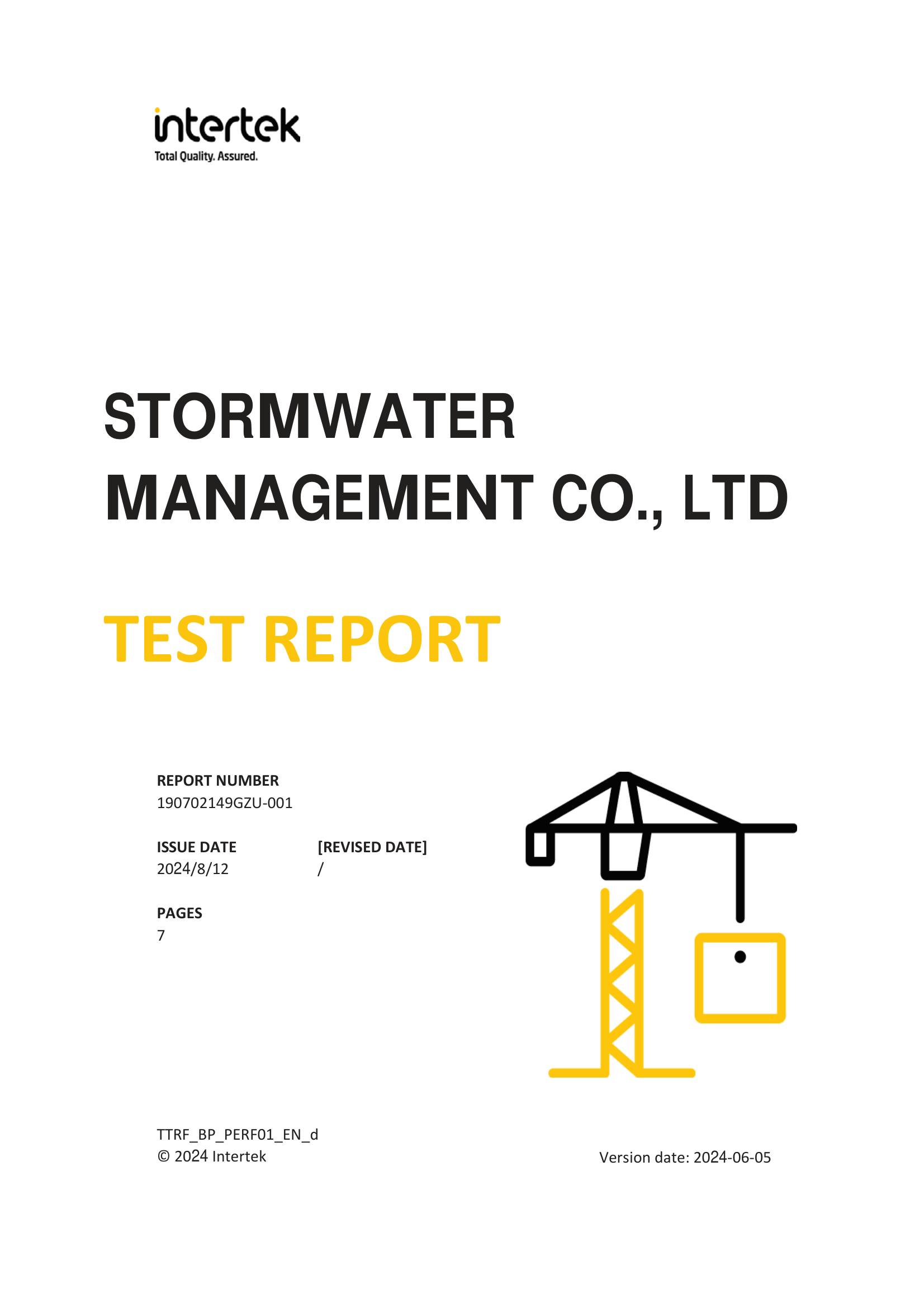
Structural performance was analyzed using CIRIA geocellular structural design methodology (Intertek, 2019). Currently in the UK, CIRIA C737 (2016) governs this category; it superseded C680, with a more conservative approach to structural capacity design, and included mandatory creep and deformation testing against the resin’s actual material property data-details of which can be important to confirm with suppliers using old C680 reports as justification.

CIRIA C737

Geocellular structural design methodology, tested Intertek 2019

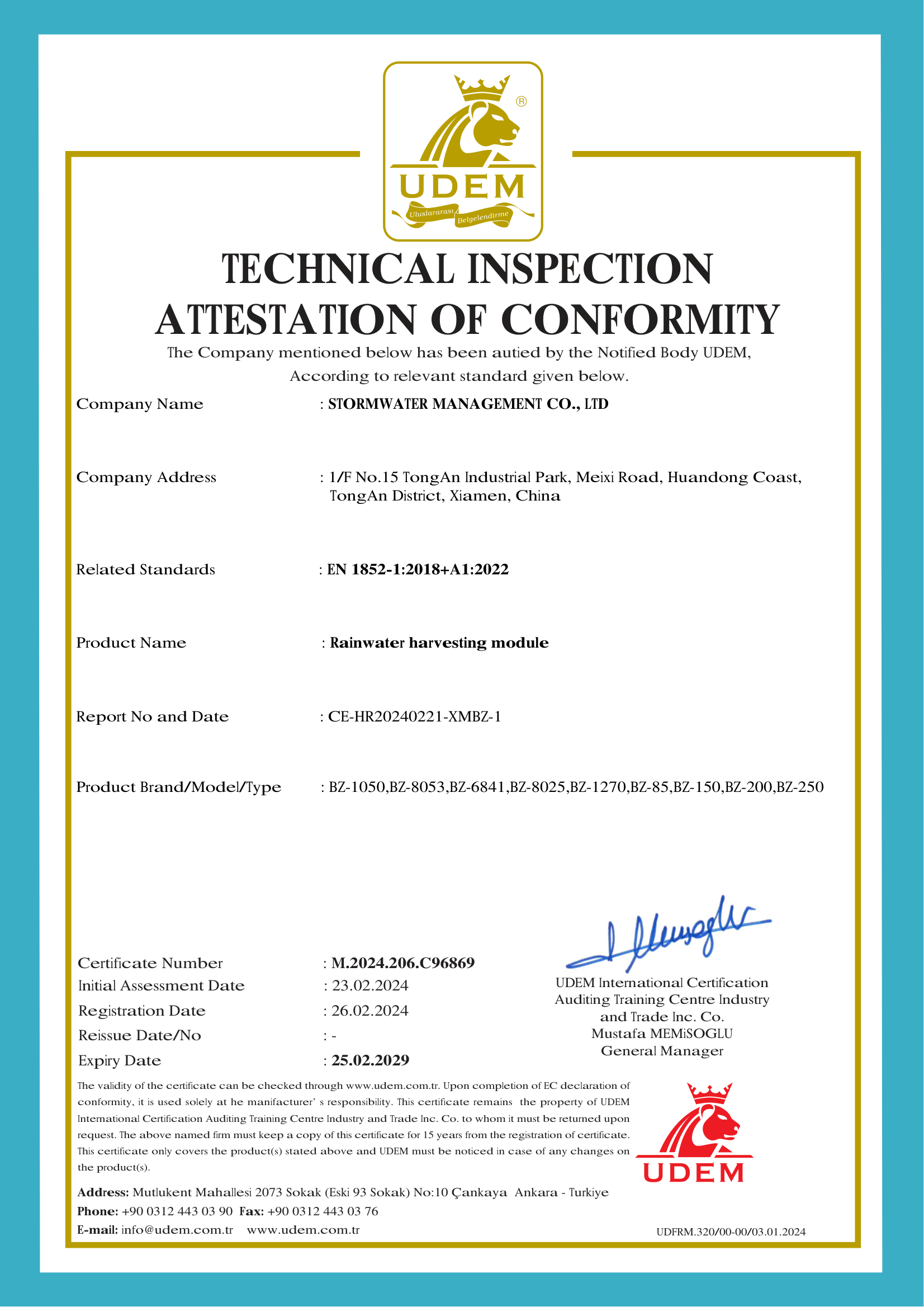
CE EN 1852

Rainwater module, UDEM 2024

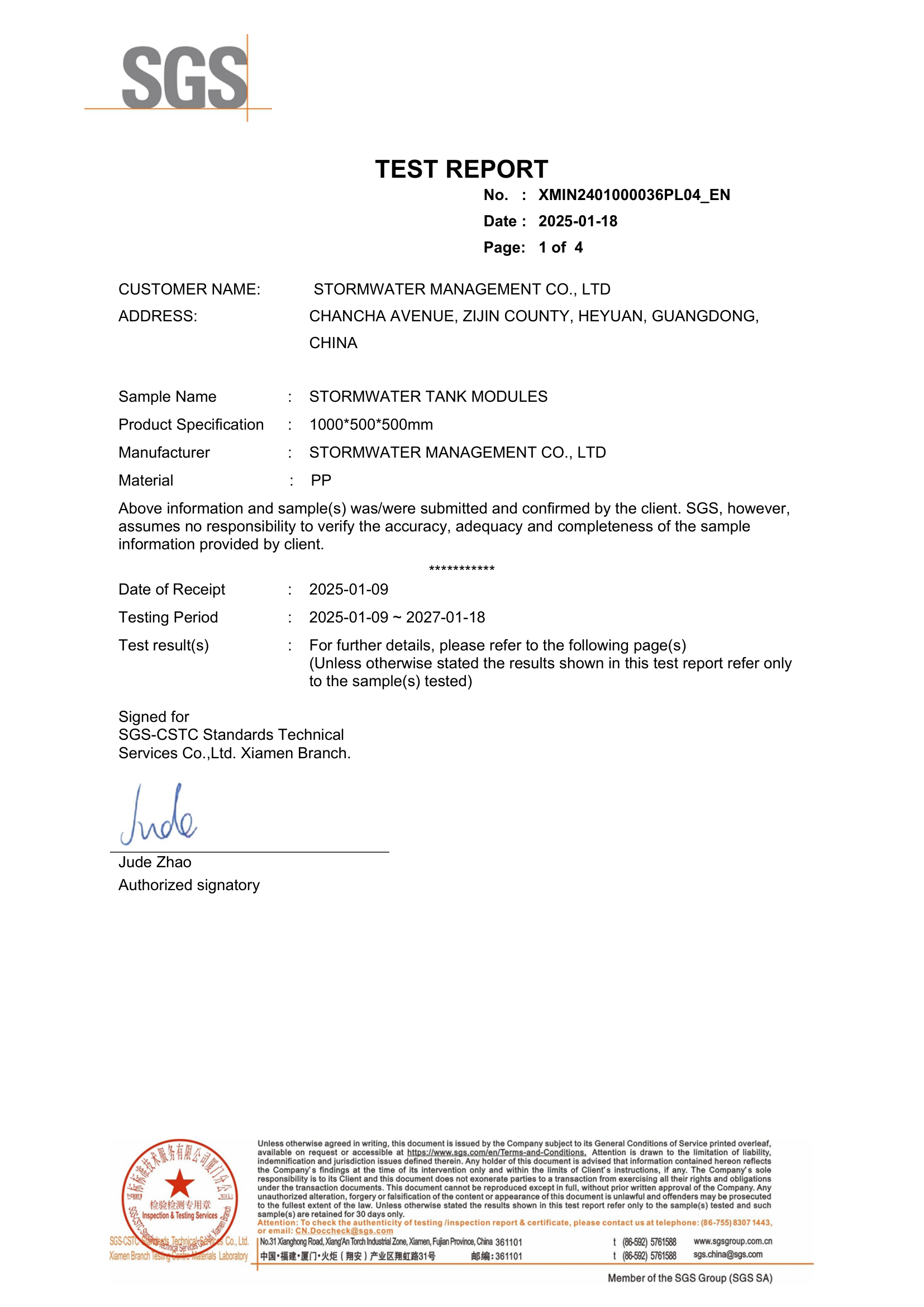
SGS Compression

Batch compression test, 2024

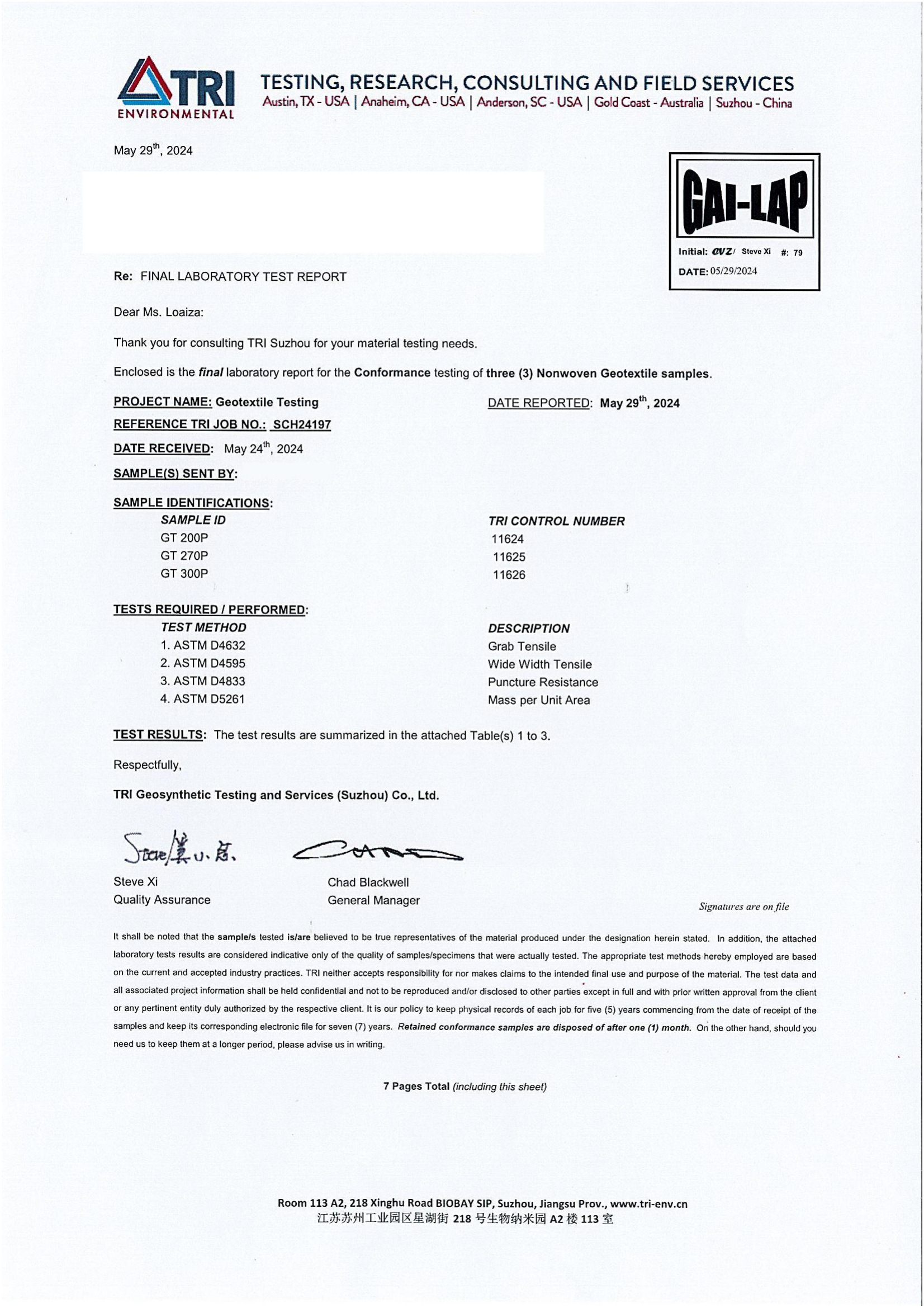
ASTM F2418

PP resin, tested TRI

ISO 9001 / 14001 / 45001

QMS / EMS / OHS

In October 2024, ASCE’s Committee on Claims Reduction and Management documented four real failure cases tied to thermoplastic creep, permanent deformation under sustained load, not a manufacturing defect, in underground plastic stormwater detention systems. The committee’s own conclusion: “not discouraging plastic detention systems, only encouraging engineers to pay more attention to the design and specification of thermoplastic products.” Engineers should demand better technical data from manufacturers on creep behavior and construction tolerances before specifying any thermoplastic BMP, a bar we’d rather clear than avoid.

Separately, industry commentary has noted there is no structural design method available in the United States for buried plastic crate systems specifically (an ASTM working item is in progress but not yet finalized) — a gap that applies to every plastic crate supplier in this market, domestic or imported, not to any one manufacturer’s country of origin.

Here’s how we address both of these root causes: pre-sale shop drawing engineering (catches incompatible load-class issues before installation), available paid installation supervision (addresses on-site construction failure modes), and published test data so your reviewer has a valid creep/deformation test to review (not just an average compression test value).

FDOT Section 948 restricts post-consumer recycled plastics on road/bridge projects in Florida, and other state DOT specifications carry similar restrictions, verify against your specific jurisdiction before ordering. For any project governed by this class of restriction, specify the virgin-PP module configuration; recycled PP remains available as the lower-embodied-carbon option for private commercial and residential SCM installations where no such restriction applies. Jurisdiction-specific approval steps vary by region, Australian projects under a council DA process can reference our NSW on-site detention council compliance guide for the local documentation sequence.

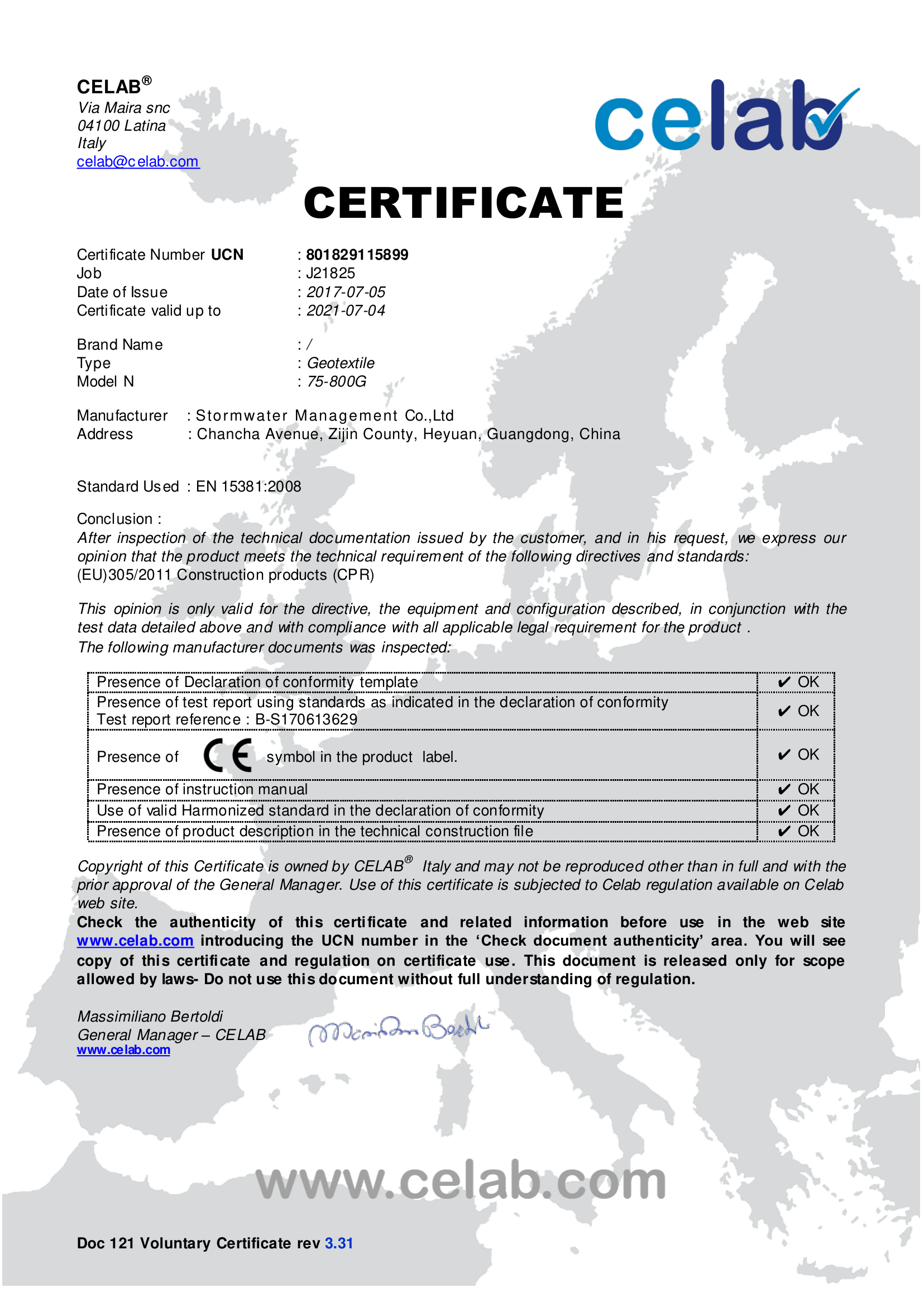
In the field, many highway-shoulder and parking structure reviewers want to see this test report first thing; that’s the #1 thing a structural reviewer want to see when they first get a submittal from a plastic crate manufacturer. The truthful part of this story-the part some suppliers leave off-is that the testing done vary. Please don’t assume equivalence. Ask us to confirm if your desired system’s test has been performed according to the standard(s) shown in the certification below.

None of this replaces your own engineer’s judgment on a specific site, and it shouldn’t. What it should do is give your reviewing agency something more substantive to evaluate than a compression percentage and a CE logo, a documented methodology, a named test body, and a year, on every certification claim on this page. That’s a low bar competitors in this category have mostly left unfilled, per our own review of the two active suppliers serving structural stormwater BMPs and a third erosion-control contractor whose published BMP guidance cites no dated third-party test at all.

Sourcing a Compliant BMP System, Lead Time, Container Loading & OEM Support

Typical delivery time 15-30 days post-order. In-stock buffer quantity typically 3,000+ m³, so many urgent project demands can be met. FOB Shenzhen/Yantian/Shekou, with Ningbo/Qingdao available for custom-logistics. A 40HQ container typically carries ~330 m³ installed volume (optimized stacking).

LOGISTICS & SUPPLY
68%

less excavation volume vs a gravel-filled trench delivering the same stormwater storage — the primary cost lever on sites where excavation rate, not material cost, drives the budget

DATA BENCHMARK Industry benchmark, not project-specific data — excavation multiplier 1.05× (crate) vs 2.63× (gravel). Request a site-specific take-off for your project.

A crate module isn’t, in itself, a working BMP system – it’s just the storage component. Its complete package include parts that the first-time buyer typically prices separately then finds don’t match: geotextile wrap, sized to module footprint; geomembrane, where infiltration is to be avoided; inlet and outlet fittings; inspection chambers, to accommodate the maintenance access highlighted in the honesty note above; silt traps, for pretreatment; and flow-control units, where the permit restricts discharge rate (but not necessarily total volume).

Quoting all that as one system, from one supplier, is why procurement usually reaches out to us when projects recur following approval by the first – one set of supplier relations to manage rather than five; one shop drawing set rather than five; and one point of contact if a required inspection chamber doesn’t fit the installed crate arrangement.

What we don’t supply: a local PE-stamped hydraulic design, or a permit application package for your jurisdiction’s NPDES program. The shop drawings and structural testing data that we provide are built for the review engineer of record, whose professional stamp will appear on the drawings and submittals.

Storm Manager addresses the landed-cost equation as few overseas suppliers dare: with an firm FOB price and the container shipment documentation that your logistics team can directly compare against any domestic supplier’s quoted costs, line by line, versus a vague “we can get you there for less” claim.

Landed cost is where we prefer to wrap up this section. We don’t post an exact, inclusive price of shipping plus duties, since this changes with destination port, container quantity and current tariff schedules – anybody who claims an exact delivered cost before knowing your delivery location is just making a guess. We can pledge a solid FOB quote within the noted delivery lead times, the full customs documentation set for your broker on those containers, and the 40HQ/330 m³ figure above, enabling your own logistics personnel to compare landed costs against a domestic supplier’s offer, on an apples-to-apples basis.

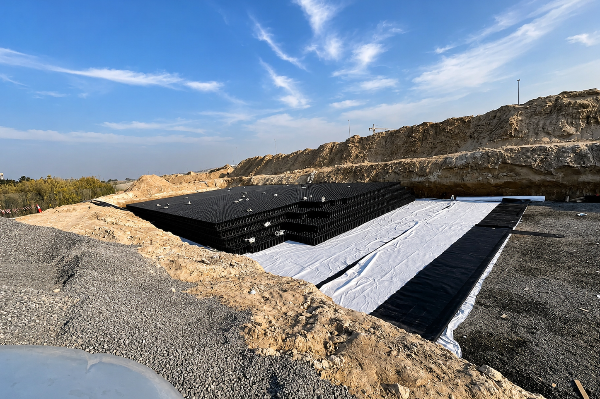
What “compliant sourcing” actually includes

  • Engineering shop drawings included, prior to you committing to container purchase.
  • OEM/ODM custom logo development – 45-60 day turnaround for production after tooling is completed.
  • Flexible MOQ; minimum single-order volume of 1 m³ to large-scale, ongoing annual programs up to 100,000+ m³.
  • On-site installation supervision (paid); on-site investigation and compensation for material defects if confirmed.

FAQ, Structural BMP Systems

Expert answers regarding performance, sizing, and applications for Storm Manager underground systems and LID compliance.

What is a BMP in stormwater management, and which kind does this product satisfy?

A BMP is any structural or non-structural facility, or practice, that manages stormwater rate, volume, or quality. This is a structural volume-control BMP – detention, retention, or infiltration – not a water quality/filtration BMP. See the table distinguishing the three categories, above, if both are required on your project.

Is underground modular storage considered a low impact development (LID) practice?

Yes, provided it functions as a structural volume-control or infiltration BMP within an LID design; most state LID manuals include some form of underground storage/infiltration as an accepted structural practice, alongside soft approaches like bioretention. By itself, however, it’s not a soft LID approach in the sense of a rain garden.

What’s the real difference between structural and non-structural BMPs?

Structural BMPs are manufactured and built items – including the crate systems, vaults, and filter inserts – whereas non-structural BMPs are design or behavioral practices, like grading, vegetative cover, and maintenance routines. A typical review for a permit will look for evidence of both types of approaches within the project’s stormwater management plan.

Why does the ASCE creep warning matter for a project I’m specifying today?

This means that the review engineer should always inquire about a plastic crate supplier’s creep and deformation test data (not just compression resistance), and ensure that the facility’s construction is to tight tolerance. Ask for a testing methodology that aligns with CIRIA C737 if you’ll have a site that experiences long-term, high loads, such as a parking area or roadway shoulder; installation supervision may also be requested.

Does Storm Manager handle NPDES/MS4 permit submission?

No – we provide the product, shop drawings, and structural testing data for your Engineer of Record to incorporate into the submittal. Permit applications and PE stamping are the responsibility of your local design team.

Can recycled PP modules be used on a state DOT road or bridge project?

Certain state DOT road and bridge specifications restrict post-consumer recycled plastic content. Please verify the specific requirement with your state before placing an order. Virgin PP modules are available and aren’t affected by this restriction. Recycled PP is still a viable, low-embodied carbon option for private commercial and residential developments not bound by this requirement.

How does a geocellular crate system compare to precast concrete on total cost?

This varies widely depending on your local excavation rate. In areas with high excavation costs, the crate system’s smaller footprint typically offers the best installed cost (compared to concrete’s dig-and-form profile, we’re about 1.05 to 1 by excavated volume). In areas where excavation is inexpensive, and you can accommodate a multi-month construction period, concrete’s much longer 75-year+ design life may be the better long-term value proposition. Request a side-by-side cost comparison for your project parameters.