Storm Manage export supply | Modular underground stormwater storage

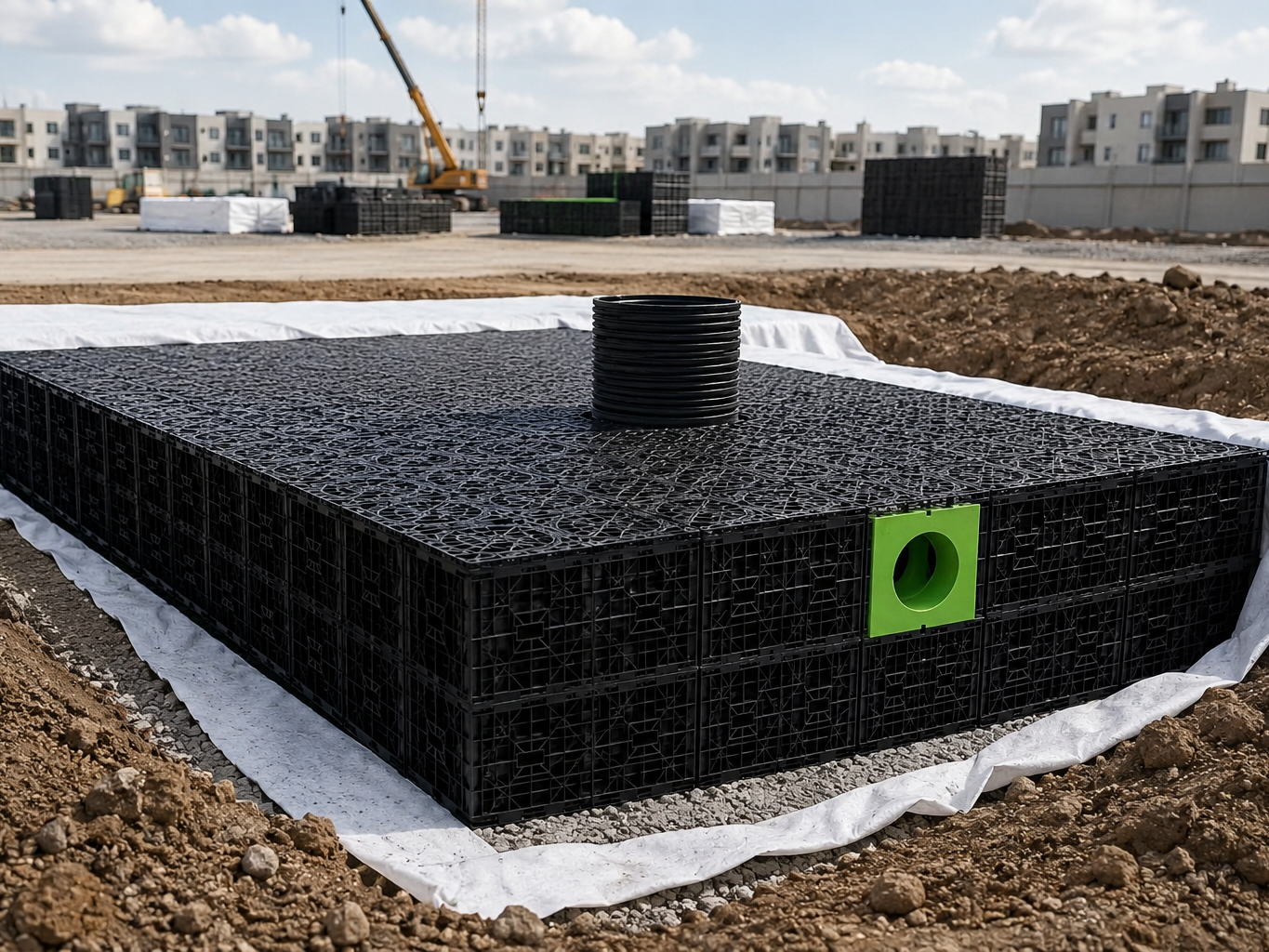
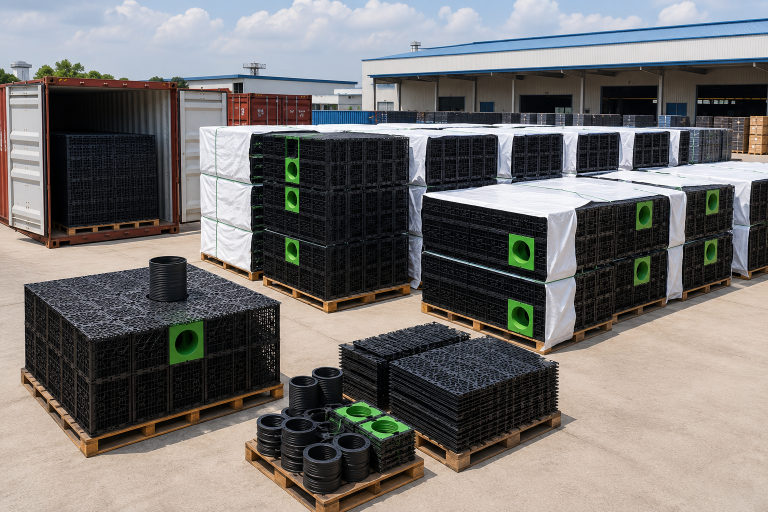
Rainwater harvesting system projects get more complicated when the site moves from a small tank to commercial storage volume, vehicle loading, inspection access, and export supply. Storm Manage supplies modular underground rainwater harvesting systems assembled around geocellular storage modules, matching accessories, technical drawings, and container loading support.

Request A Project Quote
Modular underground stormwater storage export supply

Export & Supply Capacity

8,000 sqm Injection-moulding base
5,000 m³/month Finished modular crates
15-30 days Standard lead time
330 m³ 40HQ installed volume target

When Rainwater Harvesting Becomes A Civil Engineering Storage Problem

Commercial rainwater harvesting is not just roof runoff collection. The harder questions are underground storage volume, load above the tank, inspection access, and how the system ties into the wider stormwater plan.

Project Pressure Points

  • 01 //

    Storage volume target from roof or hard-surface catchment area.

  • 02 //

    Vehicle or non-traffic loading above the storage zone.

  • 03 //

    Membrane, liner, geotextile, inlet, outlet, vent, and inspection access plan.

  • 04 //

    Export packing, local approval review, and site drawing package.

Rainwater Harvesting Storage Planning

Storm Manage only makes one category: project-ready modular underground stormwater storage systems. The real value of this focus becomes clear to the buyer team when it wants ready-to-install crate supply, integrated accessories, OEM/ODM project support, and container loading specifications, not a broad, general catalog.

Pain – Cause – System – Proof

If the first request is for tank volume only, access and load specifications arrive too late and the redesign cost rises. The common reason is that a rainwater harvesting tank is not a stand-alone tank; it is part of a drainage system. Storm Manage needs the volume, cover depth, traffic loads, inlet/outlet locations and export packaging details at the start, so the quote matches the actual project file.

Modular Underground Rainwater Harvesting System Options

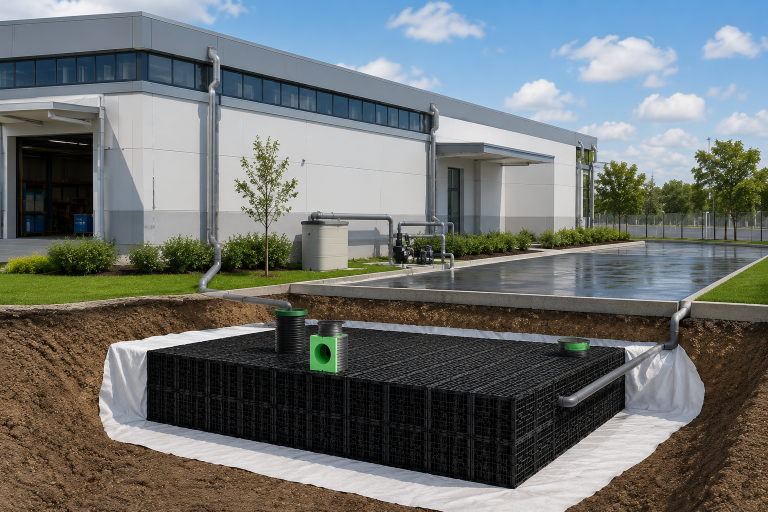
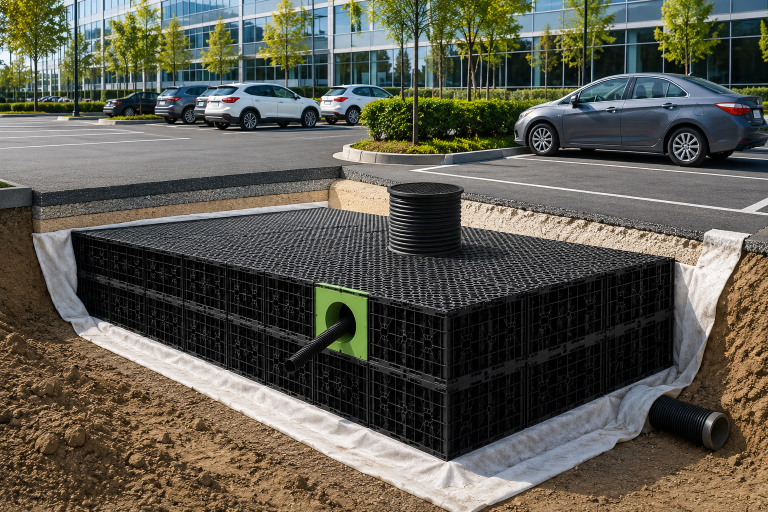
Modular underground rainwater harvesting works well when existing tanks require more site area or fixed underground units don’t fit the space. The modular geocellular storage can be adapted to fit excavation depth, usable area, inlet position, inspection access and loading requirements.

Project Input What We Check Buyer Output
Storage volume Target m3, catchment area, rainfall basis, reuse demand, overflow route. Preliminary module quantity and tank footprint.
Load exposure Pedestrian zone, landscaped area, car park, access road, or heavier civil load case. Standard, heavy-duty, or shallow crate direction.
Water control Impermeable liner, geotextile membrane, pretreatment, outlet control, and pump connection. Accessory list and drawing notes.
O&M access Inspection ports, sediment capture, cleaning route, and handover package. Access plan for contractor review.
Export pack 40HQ target, port, stack plan, accessory packing, and project batch schedule. Container loading review before order release.
Buyer Phrase How We Route It Project Risk To Check
underground rainwater harvesting tank Review whether a fixed tank or modular geocellular layout fits the site better. Access, cover depth, tank footprint, and installation sequence.
stormwater harvesting system Treat the request as capture, underground storage, reuse, and overflow control. Surface water source, heavy rainfall basis, and outlet route.
underground water storage tank Compare rigid tank geometry against modular storage volume and export pack. Usable volume, shipping density, and local tank standard needs.
soakaway crate system Confirm whether the project is infiltration, attenuation, reuse storage, or a hybrid scope. Soil infiltration, stormwater attenuation duty, membrane boundary, and maintenance access.
attenuation crate Separate temporary stormwater storage from rainwater reuse storage before quoting. Discharge control, liner choice, and consultant approval route.

Engineering Source Boundary

According to Susdrain, geocellular systems are modular units used for collecting or storing stormwater and surface water runoff. They provide as much as 96% usable storage volume through void ratios. United Utilities also tells buyers to check structural design, performance data, sediment capture, and inspection access.

Commercial & Underground Rainwater Harvesting Project Paths

Buyers arrive with different project language. Some ask for a commercial rainwater harvesting system, while others ask for underground rainwater storage tied to Estidama, Vision 2030, SuDS, LID, or WSUD files.

Commercial Underground Rainwater Harvesting
PATH 01 / Commercial

Commercial & Underground Rainwater Harvesting

Choose this route if the inquiry begins with commercial reuse, underground storage, project volumes, and a need for a complete quote package. This is the preferred entry point for contractors, drainage distributors and developers.

Best fit: commercial buildings, car parks, campuses, logistics sites
Open Project Path
Middle East Estidama Vision
PATH 02 / Regional

Middle East Estidama/Vision

Use this entry point if the project team is working with a Middle Eastern team on sustainability and requires a consultation regarding design, stormwater goals, storage modules and export coordination.

Best fit: UAE and Saudi regional project framing
Open Regional Path

Geocellular Rainwater Storage Vs Conventional Underground Tanks

When you have a small, stocked, free-standing rainwater harvesting job, a conventional tank may be the cleanest option. Geocellular rainwater storage is stronger when the buyer must create underground volume around site limits, civil drainage details, and export packing.

Decision Factor
Modular Geocellular Storage
Conventional Underground Tank
Footprint
Module layout can be adjusted to available plan area and excavation depth.
Tank shell size is fixed once model and capacity are chosen.
Storage efficiency
Authority guidance cites high void-ratio geocellular units, with Susdrain listing up to 96% void ratio.
Usable volume depends on stocked tank geometry, connection height, and dead volume.
Maintenance access
Access must be planned with inspection ports, pretreatment, and cleaning routes.
Access is simpler on some one-piece tanks, but large systems still need sediment and pump planning.
Export packing
Storm Manage can load up to 330 m3 installed storage volume into a 40HQ with stacking plans.
Large rigid tanks may ship with lower density unless nested tank geometry is available.
Standards context
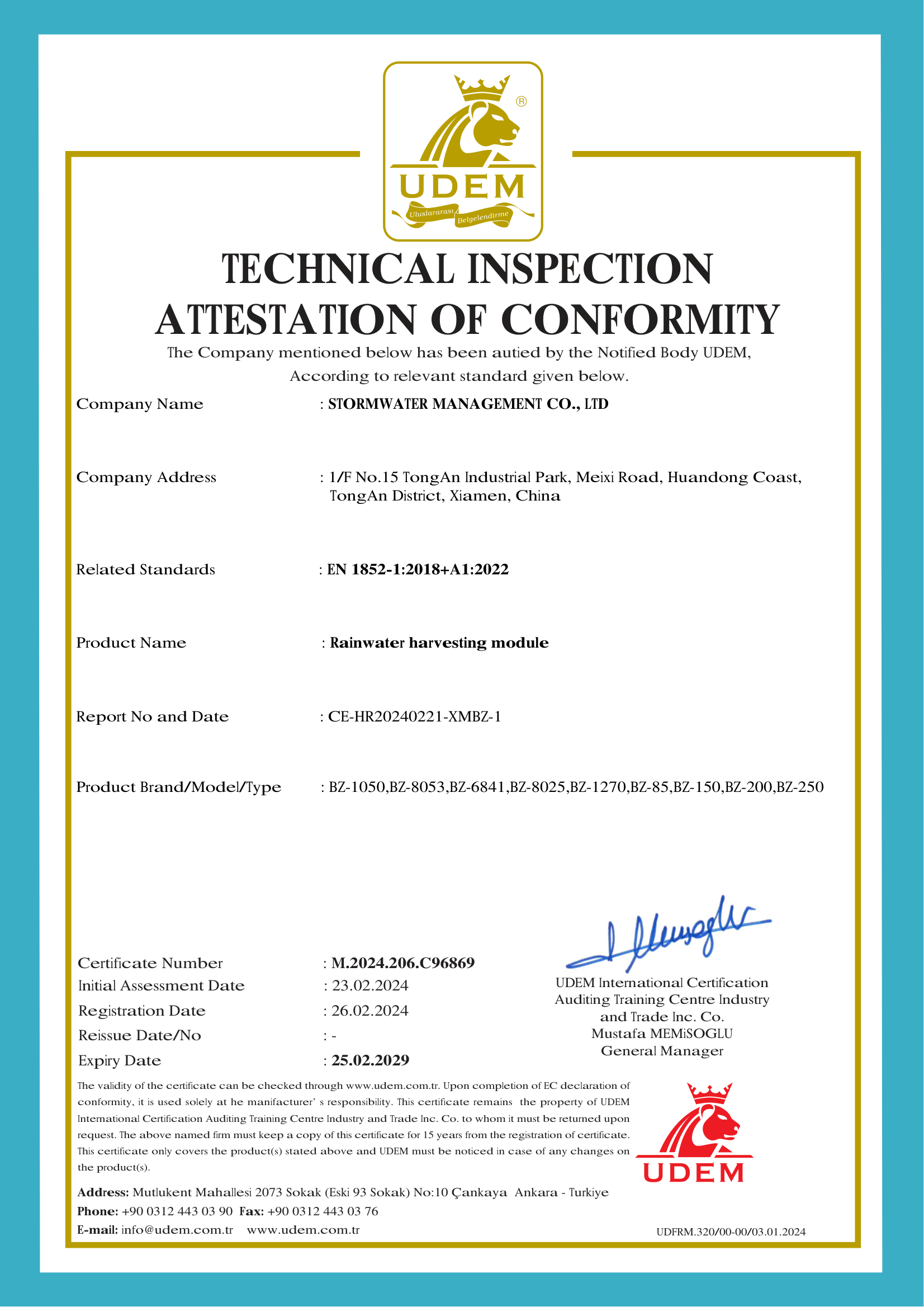
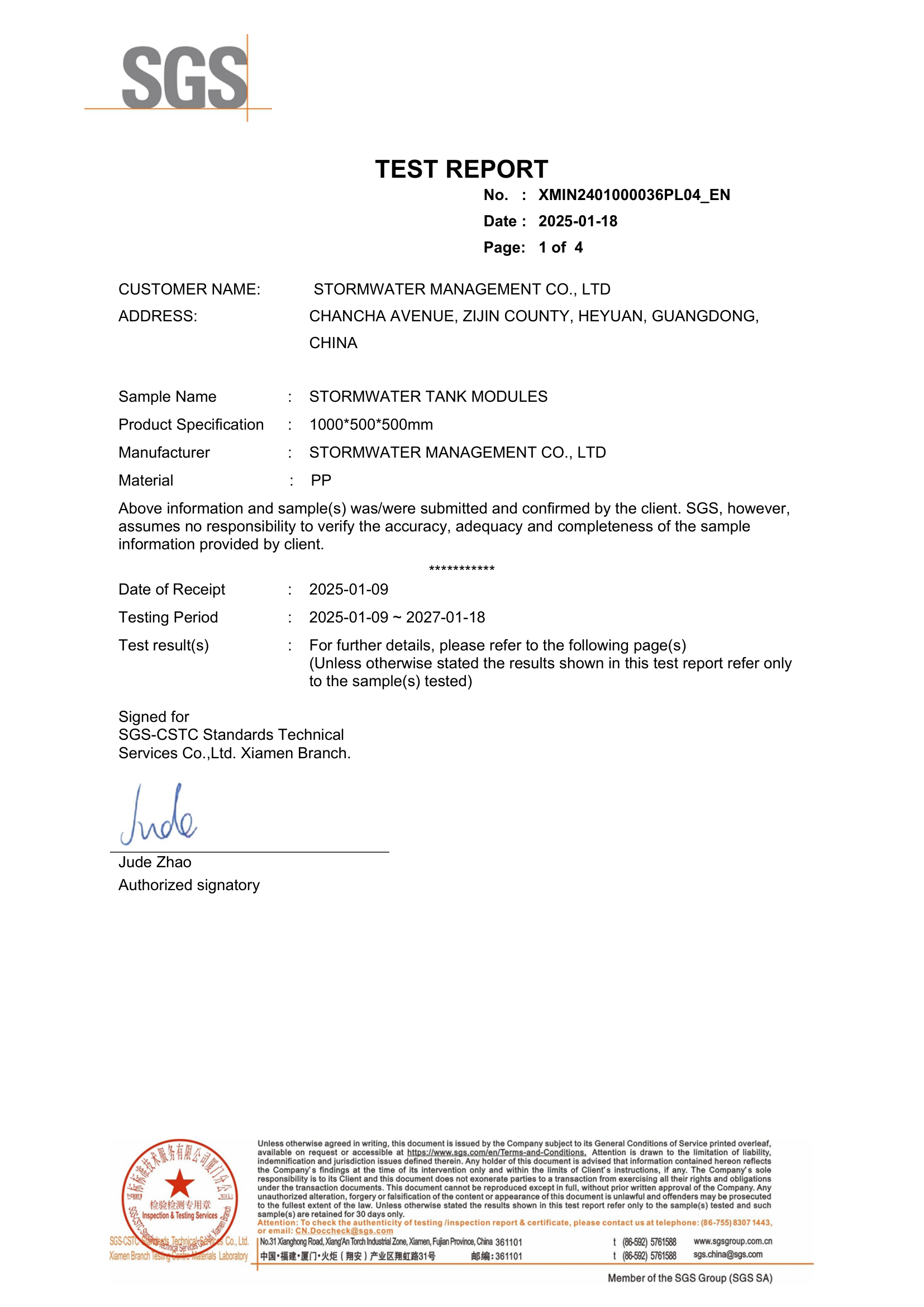
PP/PVC-U stormwater boxes have European standard context under EN 17152-1:2019 for underground non-potable water storage, infiltration, and attenuation.
Tank standards vary by material, market, and end use.

Bronze ROI Card | No unsupported payback claim

Project-fit TCO

The safe commercial claim is not a fixed savings percentage on this page. Buyers compare net volume, civil work cost, access provision, density of shipment, local installation risk and project document maturity.

No direct ROI evidence found on Phase B, this card stays on Bronze.

Where Modular Storage May Not Be The Right First Choice

A fixed tank can be easier when the scope is small, above-ground area is available, and the buyer needs an off-the-shelf drinking-water package. Modular geocellular storage also needs a clean access path; if the project cannot protect inspection points or pretreatment, the quote should pause before hardware is ordered.

  • Use the standard tank route for smaller single-building systems with clear access.
  • Keep local code and water-quality review with qualified professionals.
  • Do not take crate volume as final storage design without inputs on runoff, reuse, overflow and maintenance.

Commercial Roof Reuse Demand

Commercial Roof + Reuse Demand

A roofed facility (e.g. shopping mall, school, warehouse or office building) can harvest rainfall for non-potable use. The quotation is based on the collection area, rainfall data, the anticipated draw on reuse and any provision made for overflow and pumping equipment.

Buyer signal: the utility of a storage tank is dependent on known demand and overflow patterns.
Car Park Or Access Road Storage

Car Park Or Access Road Storage

On a hard-surfaced development, placing tanks above ground can be difficult. Pre-analysis should address the cover level, live load, pre-treatment system, examination points, and whether the storage location is above trafficked or un-trafficked land.

Buyer signal: the way the module is oriented is determined by the load on the ground before it is decided by price.
Export Distributor Stock Plan

Export Distributor Stock Plan

A drainage reseller might prefer standard batch deliveries to individual project bids. This scenario should consider packaging efficiency, accessory count, available moulds, port choice, and future ordering schedules as part of the purchasing decision.

Buyer signal: container planning reduces quote noise across projects.

Want the comparison applied to your site depth and load case?

Request A Custom Comparison

Factory, QC, And Export Supply Support For B2B Buyers

Storm Manage is supported by an injection-moulding production base established in 2014 near Yantian Port and Shekou Port in Shenzhen, Guangdong. That export position matters when your project needs batch supply, accessory matching, and a loading plan before purchase order release.

8 sets

High-tonnage injection moulding machines from 1000T to 2000T.

12+ mould sets

Standard, heavy-duty, shallow crate, connector, end-cap, and accessory variants.

60,000+ m3/year

Annual production capacity for finished modular crate modules.

Procurement Advisory

Ask any supplier for load evidence, material basis, installation guidance, lead-time reality, written warranty terms, and O&M access notes. A commercial buyer guide for underground detention systems lists those checks as supplier-screening questions, and they translate well into rainwater storage procurement.

  • QC Check
    Why B2B Buyers Ask For It
    Storm Manage Supply Response
  • Compression performance verification
    Project engineers need load evidence before accepting underground storage modules.
    Batch checks are part of the factory quality process.
  • Dimensional tolerance checks
    Module fit affects assembly speed, connector alignment, and site waste.
    Finished goods are checked before warehousing and loading.
  • Virgin PP / Recycled PP ratio control
    Material mix affects strength, cost position, and buyer specifications.
    Material ratio control is included in batch QC.
  • Per-unit weight consistency
    Unexpected weight drift can signal material or moulding changes.
    Per-unit weight is checked as part of routine control.
  • Stage
    Buyer Sends
    Storm Manage Reviews
  • 1. Fit screen
    Volume target, site plan, load zone, and preferred port.
    Module family, accessory needs, and missing inputs.
  • 2. Quote file
    Drawing, membrane preference, inlet/outlet points, and delivery schedule.
    Batch plan, QC scope, packing logic, and FOB option.
  • 3. Order release
    Approved specification, PO, label needs, and container target.
    Production slot, finished-goods check, warehouse release, and loading record.

Project Fit For SuDS, LID, WSUD, Estidama, And Vision 2030 Contexts

Storm Manage systems are supplied for project teams that use SuDS, LID, WSUD, Estidama, and Vision 2030 language in drainage and water reuse scopes. We do not claim local approval for your project; the correct route is to support your engineer with product data, layouts, and export-ready supply files.

Contexts and Compliances
Market Language What The Buyer Usually Needs Storm Manage Support
SuDS | Europe Surface-water control, attenuation, infiltration, and maintenance planning. Geocellular storage modules, accessories, and drawings for project review.
LID | North America Runoff control, reuse discussion, and integration with civil drainage design. Underground storage layouts and supply data for contractors and distributors.
WSUD | Australia Water-sensitive design, runoff capture, reuse, and site-specific engineering review. Modular storage crates with accessory and packing support.
Estidama | UAE Stormwater drawings, calculations, O&M plan, and qualified civil engineer involvement. Project-language alignment and product data for consultant review.
Vision 2030 | Saudi Arabia Water security, environmental progress, and infrastructure development framing. Export support for regional underground storage and rainwater harvesting applications.

Document Pack Buyers Can Ask For Before Order Release

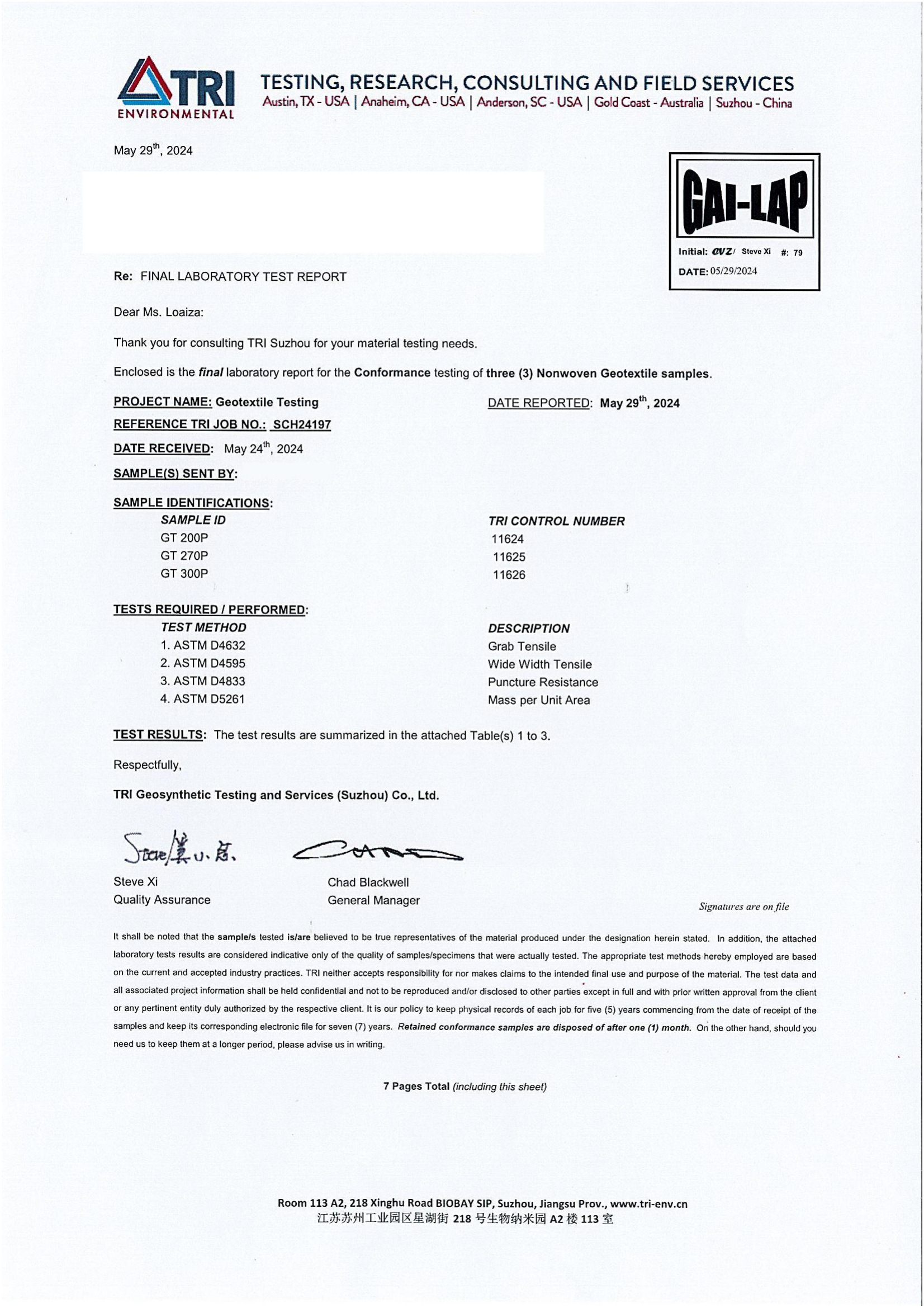
The fastest quote is not always the safest quote. When purchasing an underground modular rainwater harvesting, the buyer should request product drawings, material basis, loading assumptions, installation instructions, O&M access guidance, packing specifics and batch quality control checks before release.

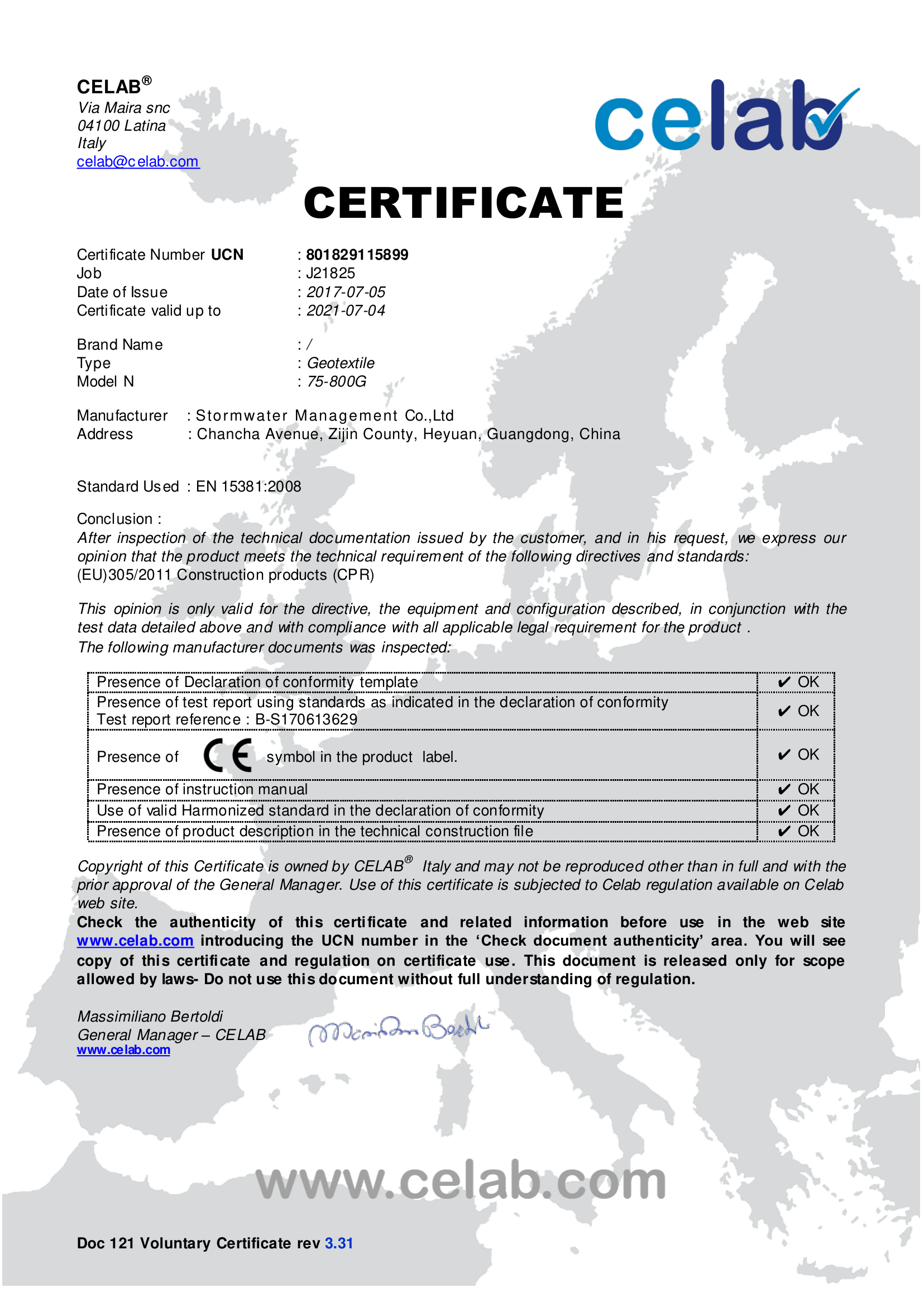
EN 17152 Context PP/PVC-U stormwater boxes
CIRIA C737 Context Geocellular design guide
Batch QC Compression, dimension, material ratio
Export Pack 40HQ loading review
Drawings Layout and accessory support

RFQ Inputs, Drawings, Accessories, And Container Loading

An RFQ for a commercial rainwater harvesting system should provide the supplier with more than just a target for storage capacity. Submit your catchment area, rainfall basis, reuse requirement, site load case, excavation limits, water control preference, access plan, destination port, and target order schedule.

RFQ Checklist

  • Required storage volume in m3 and project drawing if available.
  • Roof or hard-surface catchment area and rainfall basis.
  • Vehicle load exposure, cover depth, and excavation limit.
  • Impermeable liner, geotextile membrane, vent, inlet, outlet and pump needs.
  • Inspection, sediment control, cleaning access, and handover expectations.
  • FOB Shenzhen, Yantian, Shekou, Qingdao, or Ningbo preference.

Sizing Basis To Share

The U.S. DOE FEMP review uses catchment area, rainfall, conversion factor, and collection factor as core sizing inputs for rainwater harvesting calculations. That is a useful early-screening basis, but final tank sizing should reflect site demand, overflow path, and local engineering review.

FOB
Shenzhen / Near Yantian / Shekou preferred
OEM / ODM
Project cooperation support
ACCESSORIES
Connectors, end-caps, membrane support
Buyer Need Storm Manage Output Best CTA
Early concept with rough storage target Module direction, preliminary layout questions, and missing-input list. Ask For A Modular Layout Drawing
Procurement comparison across suppliers QC scope, production capacity, loading plan, and accessory list. Download Rainwater Storage RFQ Checklist
Ready-to-order export batch Lead-time review, packing plan, FOB port coordination, and OEM/ODM discussion. Request A Project Quote
Score Item Ready Signal If Missing
Storage basis Volume target is tied to catchment, rainfall, demand, or authority requirement. Ask for a sizing discussion before price comparison.
Site load Traffic, cover depth, and ground use above the tank are named. Do not lock the module family yet.
Water control Liner, geotextile membrane, pretreatment, pump, outlet, and overflow route are listed. Expect accessory and drawing revisions.
O&M access Inspection ports, sediment control, and cleaning route are on the drawing. Send a revised access note before final supply review.
Export pack Destination port, Incoterm, accessory count, and 40HQ target are known. Request a loading review instead of a final quote.

FAQ For Commercial Rainwater Harvesting System Buyers

Can a rainwater harvesting tank be installed underground?

Yes. Treat it as underground civil works, rather than loose tank components.

How is a modular underground rainwater harvesting system different from a standard tank?

Standard tank volumes are selected based on a specified size and tank volume. A modular underground system comprises numerous similar crate modules that can be assembled to accommodate site footprint, depth of excavation, access points, load requirements and export packaging. That is advantageous if the underground space is irregular or if the project requires incremental supply.

What information is needed to quote a commercial rainwater harvesting system?

Provide the storage volume, catchment area, rainfall basis, site load exposure, depth of excavation, membrane or liner preference, position of inlet/outlet, access plan, accessory requirements, destination port and target delivery schedule. A drawing is more useful than a long e-mail because it allows for early identification of incompatibilities.

Can Storm Manage support OEM / ODM project cooperation?

Yes. OEM and ODM projects can be undertaken.

Which markets does Storm Manage support?

Core markets include Europe, North America, the Middle East, and Australia. The same product category can be discussed in SuDS, LID, WSUD, Estidama, or Vision 2030 project language. Final drawings, calculations, site sign-off, and approval are still controlled by a local engineer.

Do Estidama or Vision 2030 requirements change the system design?

Local consultants may change stormwater strategy, reuse planning, water-efficiency practices, and O&M methods. In Estidama projects, for example, a stormwater chapter can require drawings, calculations, maintenance planning, and qualified civil engineer involvement. The supplier can provide product data and layouts, but cannot replace local engineering design.

How much storage volume can fit in a 40HQ container?

Up to 330 m3 installed storage volume, based on Storm Manage’s stated 40HQ loading capacity with optimized stacking.

Should buyers compare only the tank or module unit price?

No. Unit cost misses site fit, net storage volume, load capacity, access requirements, accessories, container density, and rework cost. For export purchasers, a cleaner comparison is quote-ready landed volume with detailed drawings and a packing list.

Does Storm Manage provide final engineering approval?

No. We support the buyer with product data, layout advice, drawings, accessories, QC records, and export supply information. Local code review, final engineering approval, water-quality review, and site sign-off remain with qualified local professionals because below-grade storage is shaped by ground conditions and local authority expectations.

What maintenance questions should be asked before purchase?

Start with sediment, access or inspection points, pretreatment, overflow and discharge behavior, and post-handover cleaning. Most late problems are not caused by the crate; they come from unclear water access and maintenance details.