Infrastructure Storage Systems

Soakaway Crate Kits & Sizes, Standard, Shallow & Small

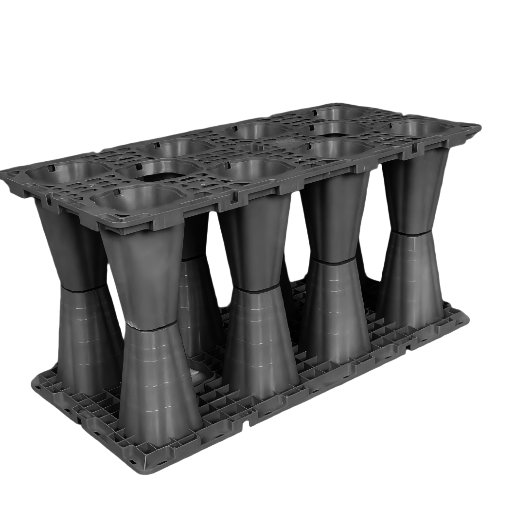
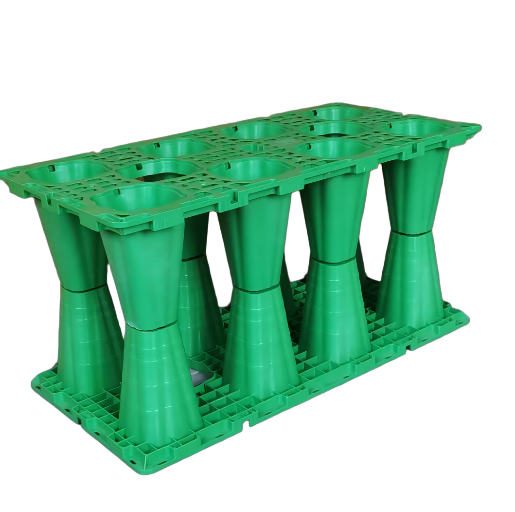
Geocellular Soakaway Crate Kits from the Factory: Built For Your Project’s Volume and Soil. No “One-Size-Fits-All” SKUs: from a 1 m³ garden kit to a 100,000+ m³ scheme, each kit contains the complete package: soakaway crates, non-woven geotextile membrane, connectors and silt traps.

Standard geocellular soakaway crate kits and sizes Shallow and small soakaway crate modules detailing
95% Void ratio (storage per m³)
1000×500×500 Standard module (mm)
50+ yr Design life
1→100,000+ m³ Flexible MOQ
CIRIA C680 Structural reference
15–30 days FOB lead time
CRITICAL DEPLOYMENT RULES
  • 01 These soakaway crates should only be used to manage run-off from roofs, driveways and yard areas. That means clean surface water only; foul water or waste water from septic tanks should never be discharged into a soakaway. We explain how to deal with those separately.
  • 02 How many soakaway crates you need depends on the total impermeable run-off area and the result of a BRE Digest 365 percolation test, never a rule of thumb. Size to a required volume, then prove your soil will drain.
  • 03 Available in standard, shallow, and small modules to suit varying depths, ground conditions, water tables and loads, depending on your particular plot.
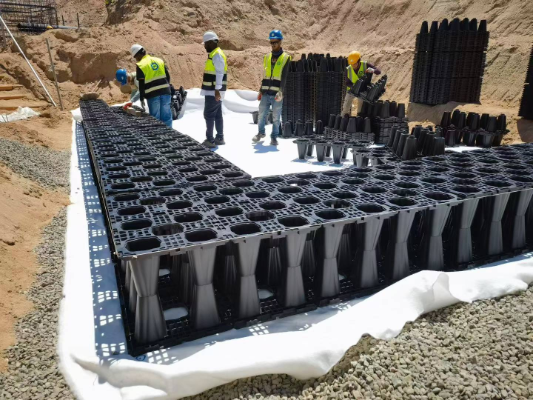
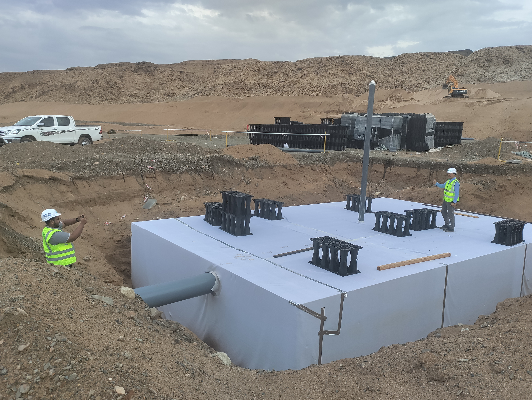
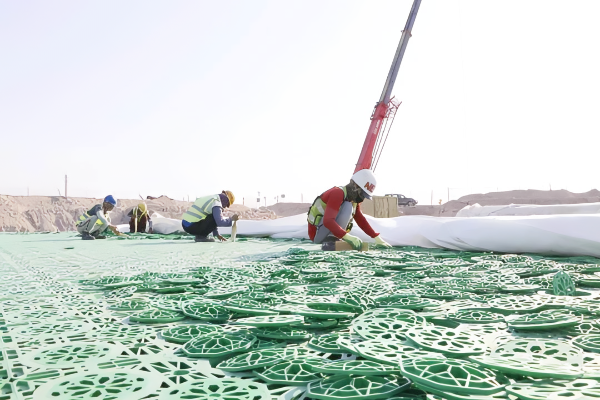
Underground Soakaway Crate Installation
CLICK TO LOCK DATA PANEL
SYSTEM METHODOLOGY

Waterlogged Site, Wrong-Sized Soakaway?
Start With Storage, Not the Shelf

Soakaway crate sizes are set by the volume of water your site must store and by the soil’s ability to absorb itnot by what’s in the merchant’s shed. A soakaway crate is a hollow plastic box moulded from polypropylene; it sits below ground, holding surface water briefly and letting it seep into the surrounding earth. With a void ratio of 95%, these containers maximise storage capacity.

Two factors typically undermine the successful function of domestic soakaways: the size of the crate has been calculated from guesswork, or the soil wasn’t tested and won’t drain properly. Either of these oversights will result in standing water, an inability to get building control approval, or having to do the work all over again.

Storm Manage sizes your system to your project’s specific impermeable area and soil. This is in stark contrast to off-the-shelf listings that just sell you a box and hope for the best. Making a mistake that require re-doing the test or re-digging can double your cost, potentially leaving you with standing water for days.

Soakaway Crate Sizes & Dimensions: Standard, Shallow & Small

All of our soakaway crates share a common construction of VirginPP/RecycledPP and a 95% void ratio, with differing heights and footprints to enable you to accurately match the cover depth and the dimensions of the dig. Our plastic soakaway crate size range is below, with the market-standard 400 mm module shown for reference against our 500 mm standard.

Because our standard soakaway crate modules are 500mm in depth, approximately four of these provide one cubic metre of storage, whereas you would need five of the narrower, 400mm-deep units – fewer components to install and join on-site. Custom-made shallow modules can be produced, so always check the precise height specified on your quotation.

Unlike most UK suppliers, who stock a single size of soakaway crate depth, Storm Manage has its own tooling for producing standard, shallow, and small profiles in-house. This lets us tailor the product to your dig rather than force one size across every application.

Soakaway crate standard, shallow and small dimensions comparison
Configuration
Module (L×W×H mm)
Storage / module
Modules ≈1 m³
Best-fit use
Standard
1000×500×500
~0.24 m³
≈4
Extensions, driveways, general roof run-off
Shallow
1000×1000×~150
~0.14 m³
≈7
Low cover / high water table / patios
Small / box
500×500×500
~0.12 m³
≈8
Sheds, porches, tight domestic plots
Market ref (0.2 m³ crate)
1000×500×400
~0.19 m³
5
The common “5 crates = 1 m³” shelf unit
SYSTEM COMPONENTS

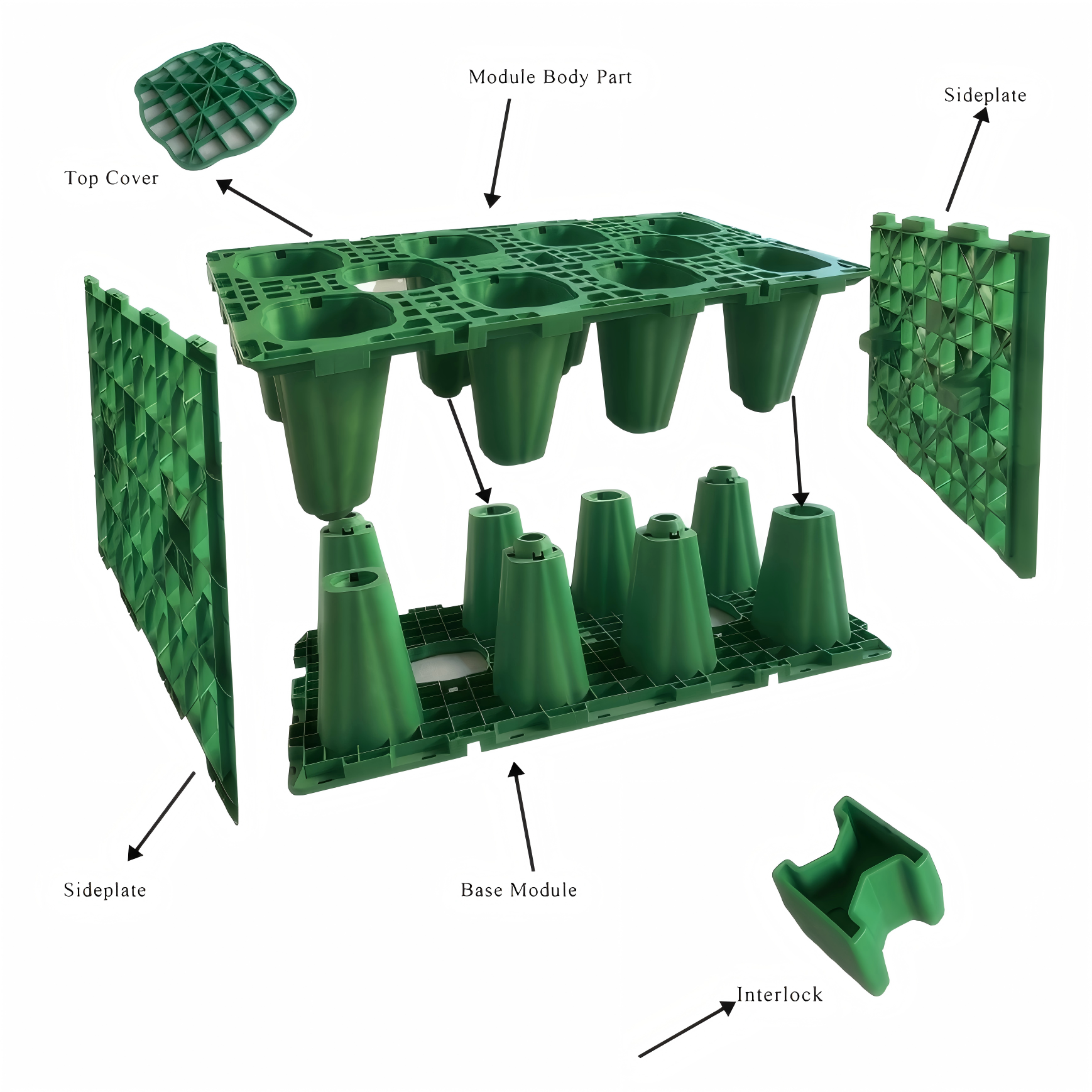
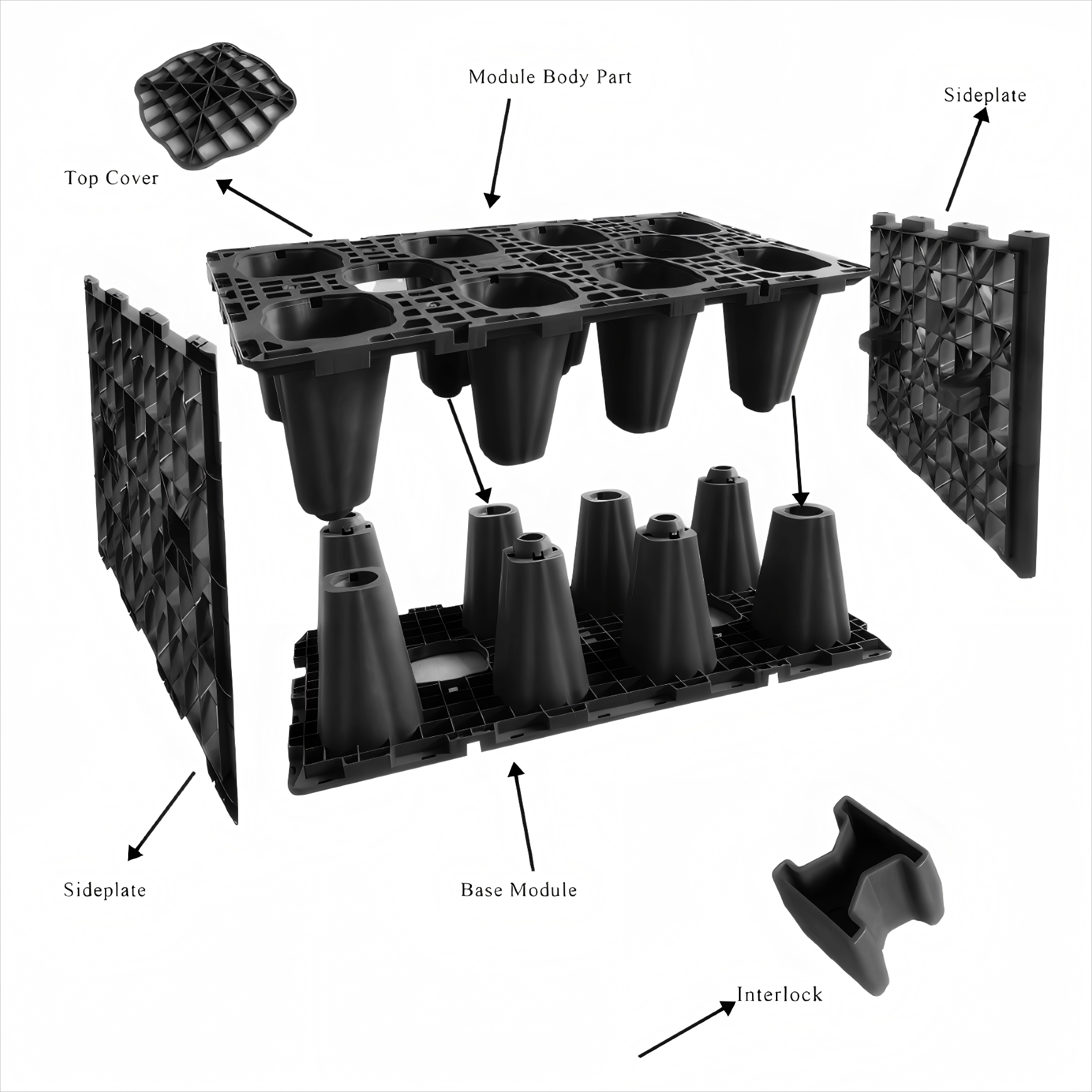
What's in a Complete Soakaway Crate Kit: The Complete Soakaway Kit Stack

A crate isn't a soakaway by itself. Often the first issue encountered is silting, which is frequently the result of a soakaway kit lacking its wrap or its silt trap. This is why we supply the soakaway crate in a five-piece stack, not as a bare box.

  • 01
    Geocellular crate modules the 95% void storage core, interlocking to any footprint.
  • 02
    Non-woven geotextile membrane wraps the whole block to keep soil out while letting water through. Plastic sheet isn't a substitute; it stops the water draining.
  • 03
    Locking connectors and clips fix the modules into a rigid block that resists lateral load - the part shallow "crate + tape" kits often leave out.
  • 04
    Inlet / silt trap a catch-pit on the feed pipe traps silt and debris from gutters before they reach the crate; empty it periodically.
  • 05
    Built-in inspection access lets the system be checked and jetted after installation, so it keeps its storage capacity over the years.
Five-piece Soakaway Crate Stack Components
HOVER TO REVEAL DATA
HIDDEN LAYER INSIGHTS

Every part in the stack has a job in keeping silt out and infiltration flowing: a crate with no membrane, or a feed with no silt trap, is the fast route to a blocked soakaway and a discharge that backs up.

Unlike "crate + tape" bundles that skip the connectors, Storm Manage runs the geotextile, connectors and inlet components in production in-house - because the trap on most failed jobs is a missing part, not a weak crate.

"Nine failures in ten that we're called to aren't the crate, it's a bag of gravel where the geotextile should be, or no silt trap on the inlet. We ship the wrap, the connectors and a silt catch as one kit precisely so the site can't skip the parts that make it last."
— Storm Manage Engineering Team

Sizing Your Soakaway:
The Roof-Area-to-Crate Sizing Ladder

Use this ladder to calculate a first estimate, then prove it with a soil test. It converts impermeable area to a rough stormwater storage volume and a standard-module count at 95% void - the number you feed into a percolation test and, if infiltration works, a final design.

Impermeable area Indicative storage* ≈ Standard modules Typical project
20 m² ~0.4 m³ 2 Shed roof / small patio
30 m² ~0.6 m³ 3 Garage / porch
50 m² ~1.0 m³ 4–5 House extension roof
80 m² ~1.6 m³ 7 Large roof or driveway
100 m² ~2.0 m³ 8–9 Driveway + roof
150 m² ~3.0 m³ 13 Light commercial / forecourt
Soakaway System Sizing and Dimensions
GEOCELLULAR ARRAY

Engineering Note — Sizing is a soil test, not a rule of thumb

*Treat this ladder as a rough screening estimate only (impermeable area × a nominal design rainfall ÷ 3000). It's not a design method.

Real UK sizing follows a BRE Digest 365 percolation test: dig a ~300mm pit, fill and drain three times, then time the water falling from 75% to 25% and take f = 300 ÷ (t × 50) m/s. Soils around 10⁻⁴–10⁻⁵ m/s support a sensible soakaway; below ~10⁻⁶ m/s infiltration is impractical. The system must discharge from full to half-volume within 24 hours.

Where merchant guides stop at the rule of thumb, Storm Manage won't claim a fixed crate count - the honest version is that soil decides, and getting it wrong over-constrains the design or floods the site. Request an engineering sizing check against your percolation result and a stamped drawing.

Skip the manual maths — use our soakaway size calculator: enter area, rainfall and soil rate and it returns the storage in cubic metres and a crate count.

Small & Shallow Soakaway Crates for Domestic, Patio, Driveway & Low-Cover Sites

Small and shallow crates exist for real site constraints, not just to fill a size chart. A shallow profile buy you cover depth when the water table is high or when there's little room above the crate; a small box suits tight domestic plots.

Shallow and Small Soakaway Crate Installation
CLICK TO REVEAL TECH WARNING

When a soakaway is the wrong tool

For a soakaway to be effective, the ground must drain. The soil need to be sufficiently pervious to accept the stored water; a soakaway in made ground or high water table situations is point less - water won't drain away. If the ground conditions fail the BRE365 tests, choose a Storm Manage attenuation tank, which holds water in a sealed chamber and releases it to the sewer at a controlled rate. We supply both and will honestly tell you which is appropriate for your site.

CRITICAL SITING RULES
  • 01
    Where the water table is high, keep the base of the crate at least 1.0m above it - the use of a shallow module usually makes this possible where a 500mm module doesn't.
  • 02
    When installed on driveways and in trafficked areas the cover depth and load class determine suitability - not the crate itself. If the application require HGV, car-park or D400 duty please see our heavy-duty D400 soakaway crates for the load-and-cover details.
  • 03
    Keep rainwater soakaways at least 5.0m from any building or road, and 2.5 m from any boundary (Approved Document H3).

A common mistake is to treat small and shallow as marketing jargon: where depth is determined by the load and water table, Storm Manage sizes for cover according to use (driveway, low cover garden or patio) because a crate sited 300mm too low may be filled with water for days. In contrast to a merchant that supplies whichever products are in stock, we'll inform you when a soakaway won't function.

Our range include small soakaway crates for restricted sites, shallow soakaway crates for low-cover installations, and driveway soakaway crates for light wheel loads, all built on the same 95% void core.

Manufacturer-Direct Kits: Flexible MOQ, Container Loading & Trade Supply

Storm Manage manufactures by injection moulding and isn't a distributor or resaler. This allows the price to be factory-direct and cost-effective across any scale, from a single kit to a complete project.

~3×

storage per excavated m³ vs a rubble soakaway — 95% void (~950 L/m³) against ~30–35% for gravel, so roughly 68% less digging for the same capacity.

Industry-average comparison (geocellular vs gravel-fill). TCO benefit, not a fixed payback.

How project pricing is built (factors, not a shelf price)

Quotes are determined by: total stored volume (m3), configuration (standard/shallow/small), contents (geotextile type, connectors, silt traps, inspection), load duty, and container fill.

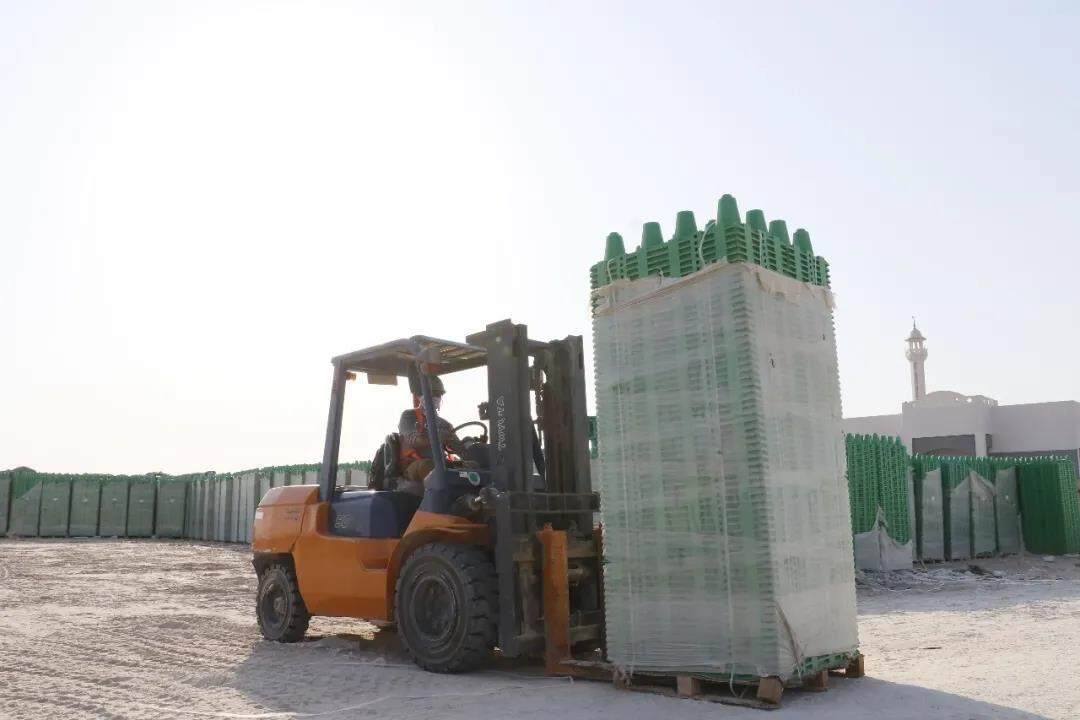
A standard 40HQ container will transport approximately 330m3 of completed soakaway with efficient stacking. MOQ is flexible from a single 1 m³ kit and lead times are typically 15–30 days ex works, with buffer stock for phased programmes. Unlike a UK distributor adding a mark-up on a brand it buy in, we supply direct ex-works, so container loads win on cost and delivery for project supply and trade.

Request container-load / trade pricing
Container Loading and Factory Direct Supply

Certifications & UK Compliance: CIRIA C680, ISO, Building Regs Part H3 & the Foul-Water Rule

As a relatively new supplier of this product in the UK market, Storm Manage can demonstrate product quality, and show that we comply with the legislation for soakaways.

MANUFACTURING & DESIGN STANDARDS
  • CIRIA C680 Geocellular structural design reference
  • ISO 9001:2015 Quality management
  • ISO 14001:2015 Environmental management
  • ISO 45001:2018 Health & safety
  • ASTM D4632 Geotextile grab-tensile test report

We’ll issue per project test reports for compression performance, vertical load, and the geotextile to give the specifier the product-level evidence they require. We've 400+ projects delivered across 30+ countries as evidence too. The trap for a new brand is a slogan instead of a document, which is why Storm Manage issues per-project reports, because a “SuDS compliant” line with nothing behind it adds days to a plan-review application every time. Unlike a bare merchant claim, this is testable evidence for your submission.

Compliance point What it requires Source
Surface-water route Infiltration ranks first in the AD-H3 drainage hierarchy Building Regs Part H3
Siting ≥5 m from building/road; ≥2.5 m from boundary Building Regs Part H3
Foul water Rainwater soakaway banned for sewage; foul needs a drainage field EA General Binding Rules

The Foul-Water Rule — get this right

A soakaway crate isn't allowed for septic tank or treatment plant discharges since 2015. Rainwater is clean enough to soak away untreated, but sewage would saturate the ground and kill the bacteria that treat it. Foul water must be drained to a drainage field of perforated pipes covering a wide area. Our crates are for surface-water/rainwater drainage only.

KNOWLEDGE BASE

Frequently Asked Questions About Soakaway Kits

Start from your impermeable (roof, driveway, patio) area. As a rough first guide, allow about 1 m³ of storage for every 50 m² of that area, which works out at roughly four to five standard modules per cubic metre. That number is only a screening estimate, though — you then confirm it with a BRE Digest 365 percolation test, because low-permeability ground needs more storage and some soils won't take a soakaway at all. Our calculator runs the first pass, and we shop-drawing the final volume for a project.

The common UK shelf crate is 1000×500×400 mm (~0.2 m³, "5 crates = 1 m³"). Our standard module is 1000×500×500 mm at 95% void (~0.24 m³), so roughly four make a cubic metre, with shallow and small variants for low cover and tight plots.

About four of our standard 0.24 m³ modules, or five of the thinner 0.2 m³ market crates.

Often not. Heavy clay or a high water table means the ground won't absorb the water and the soakaway just fills up. If a BRE 365 test fails, use an attenuation tank — sealed storage with controlled release — instead. We supply both.

Yes. A non-woven geotextile wraps the whole block so soil can't wash in and silt up the void, while water still passes through. Plastic sheet is not a substitute — it stops the crate draining — and a silt trap on the inlet protects it further.

Yes, for rainwater. Under Building Regs Part H3 a soakaway must sit at least 5 m from a building or road and 2.5 m from a boundary, and it must never take foul water — that needs a drainage field under the Environment Agency's General Binding Rules.