Soakaway Crate Installation
Execution & Structural Integrity

Soakaway Crate Installation

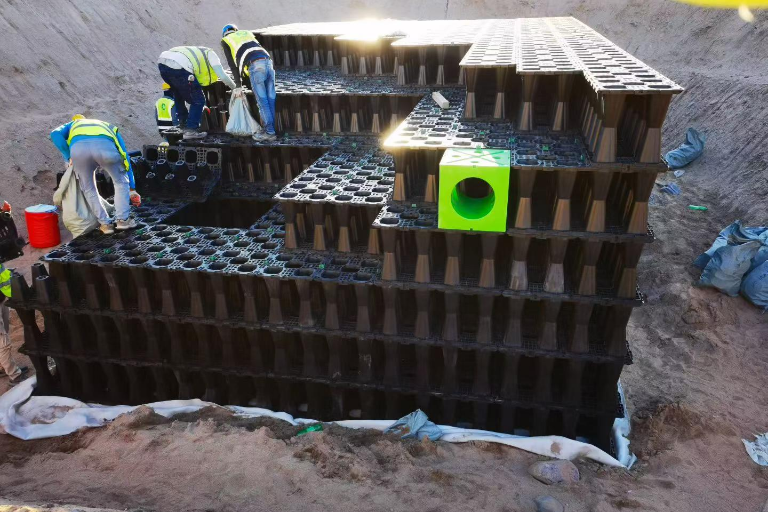
The success or failure of a soakaway crate installation hinges on how it’s executed, not on the crate itself. Storm Manage provide BRE Digest 365-informed geocellular plastic soakaway crates manufactured to a 95% void ratio, complete with detailed step-by-step installation drawings and ready-to-go supply from our Shenzhen factory base.

Soakaway Crate Installation Design

Technical Specifications

95%

Void Ratio

1000×500×500

Module Dimensions (mm)

HS-20 / D400

Load Class Range

15-30 Days

Standard Lead Time

Est. 2014

Injection Base

Full Kit

Crate + Geo + Chambers

Why Installation Accuracy Determines Soakaway Performance

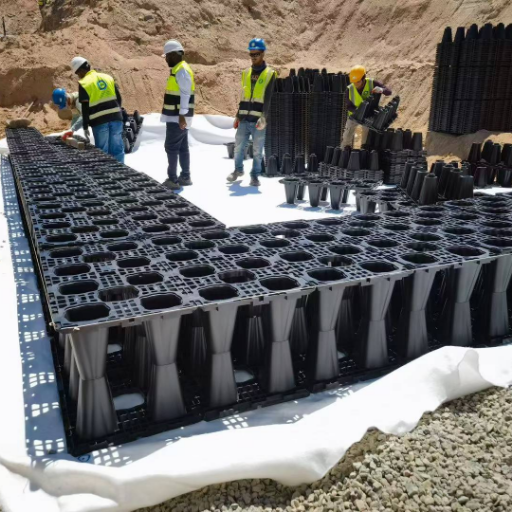
A modern soakaway crate system (also known as soakaway crates or some times, in product literature, as modular water storage cells) is a modular infiltration structure comprising a series of injection-moulded PP crates stacked on top of each other and wrapped in geotextile. It’s buried beneath the ground, where excess water (rainwater) percolates out into the surrounding soil, thus preventing waterlogging and avoiding the overloading of a sewer or drainage pipe network. As part of a larger strategy for sustainable drainage and water management, that part is fairly straightforward. However, what isn’t straightforward, and is in fact what separates a system that will last decades from one that will fail within just a few years, is installing a soakaway correctly.

Soakaway Performance Graphic

Field data: what actually happens when installation goes wrong

In the opinion of independent engineering commentators, precast concrete soakaways will cope reasonably well with movement of the ground around them; by contrast, the relatively lightweight modular crate systems aren’t nearly as accommodating. In documented cases, partially collapsing plastic crate installations have been noted to occur within five years where installation quality and/or site conditions were inadequate, not where the crate itself failed. This can occur where the ground around the crate, the compaction of the soil or the wrap used aren’t appropriate.

5 YRS Failure Window
(Poor Install)
50 YRS Design Life
(Correct Install)
Storm Manage’s role in the process is deliberately confined: we produce the crate, the connector, and the complete wrap system to a certified 95% void ratio and provide the necessary installation drawings to guide the installation crew on site – whether yours or a subcontracted one – ensuring they adhere to a defined specification rather than improvising. We don’t carry out on-site soakaways installations; our responsibility is to engineer the system and support the installation team.
Skipping the soil percolation test and making assumptions about soil permeability – this is a common risk for loam or sand that may appear free-draining but needs proper testing
Undersizing the crate volume against the actual drained area
Disregarding the legal requirement to place the soakaway pit a minimum of 5m away from the building structure and 2.5m from the property boundary
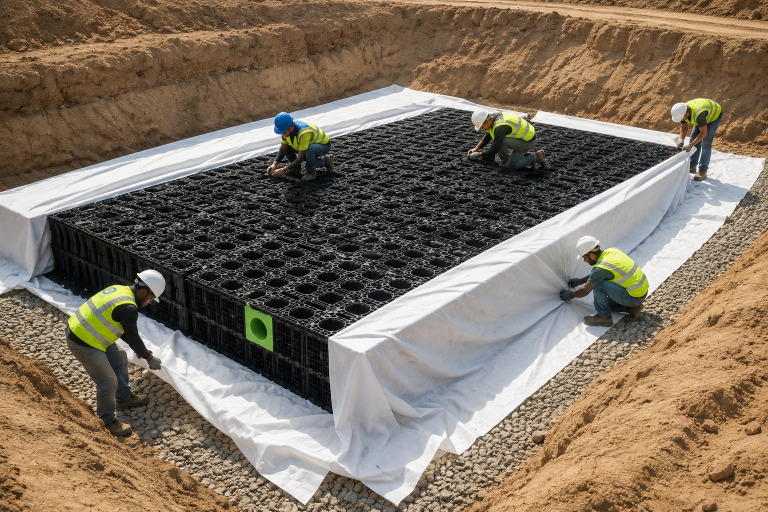
Failure to wrap the crates, or the use of an uncertified membrane, particularly if the site has a high water table
Backfilling with unsuitable materials like plaster, timber, metal debris, or silt, which can clog the void spaces and eventually damage the assembly structure over time

Storm Manage Soakaway Crate System, Design Specifications & Sizing

The starting point for any soakaway crate design is a percolation test, not a perusal of a catalogue. The BRE Digest 365 method is the standard in the UK and it’s worth understanding before you place an order for any crates.

The BRE Digest 365 percolation test, in practice

  • Excavate a trial pit or trench roughly the depth of the proposed soakaway, and approximately 0.3m-1m in width and 1m-3m in length.
  • Fill rapidly with water (the depth of which can be measured with a laser meter or tape measure), simulating a storm event
  • Measure the time for the water to drain down from 75% full to 25% full - repeat this three times, draining between runs
  • A percolation rate of some where between about 10⁻⁴ and 10⁻⁵ m/s would support a reasonably sized soakaway; below about 10⁻⁶ m/s, it’s not practical and an alternative disposal route is usually required - particularly if the water table is near the surface

Once an adequate infiltration rate - the permeability of the ground - has been confirmed, the size of the soakaway can be estimated based on the drained area and a rainfall event rate. Local authorities typically calculate this as roof or hardstanding area multiplied by a design rainfall depth, then divided by a storage factor, giving an estimate for the volume needed until the surrounding, sufficiently porous ground can disperse it.[1] We don’t offer a universal, generic worked example on this page, because design parameters - roof or hardstanding area, clay soils versus more permeable sandy ground, individual council requirements - mean the final design differ in every case.

Specification

Module dimensions 1000 × 500 × 500 mm
Void ratio 95%
Load class options HS-20 / HS-25 / SLW60 / EN 124 D400 / BS EN 1433
Material Virgin PP or Recycled PP (project-specified ratio)
Working temperature range -100°C to +80°C
Underground design life 50+ years (see honest caveat below)

Want a project-specific starting figure rather than searching how to install a soakaway from first principles?

Try our soakaway calculator tool

Where the design life claim actually depends on you

A design life of 50 years is based on correct choice of load class and accurate backfill and compaction - which are all aspects that the previous section discusses. However, it can't take account of skipped compaction layers. Load class selection should be made independently of cover depth - mistakenly combining the two is a frequent error. Typical usage examples correlated to our module range's load class specifications are shown in the table below.

Application above the soakaway Recommended load class
Garden, lawn, pedestrian-only areas HS-20
Domestic driveway, light vehicle access HS-25 / SLW60
Car park, commercial access road EN 124 D400
Highway or HGV-trafficked area EN 124 D400 with engineer-verified cover depth
Not sure which load class your application needs?
Ask our engineering team a sizing question →

The Storm Manage 6-Layer Installation Build-Up

We believe it’s easier and closer to how site inspectors would look at a cross section drawing to visualise installation in a number of stages, working from the base upwards. Many installation guides use a numbered check-list format, but we find this less practical.

  • L1 Excavation and test depth
    L1

    Excavation and test depth

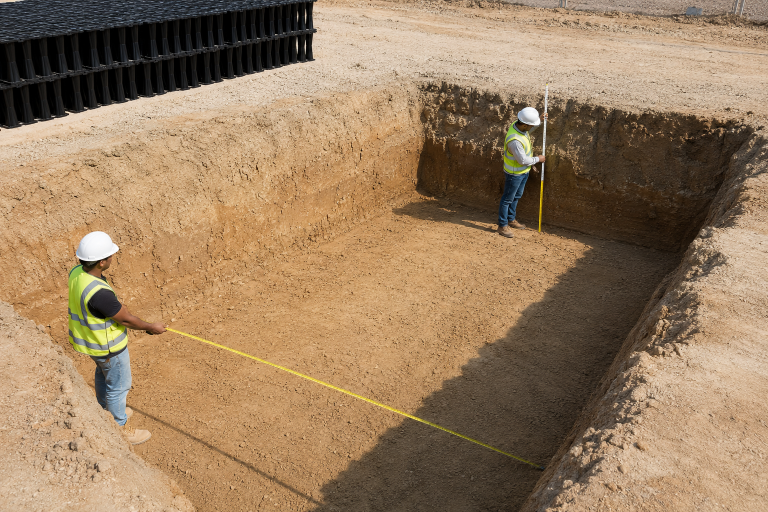
    the actual depth and size of the soakaway pit are based on your infiltration test, not some hypothetical size based on a catalogue drawing.

  • L2 Compacted Base
    L2

    150mm minimum compacted base

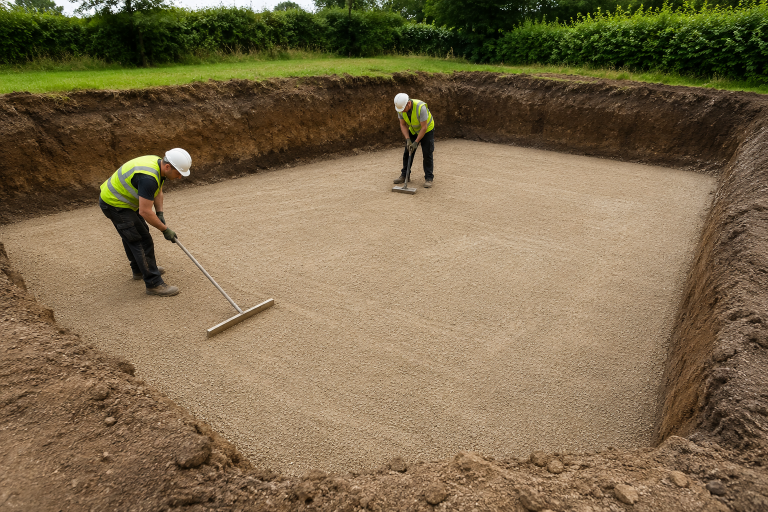
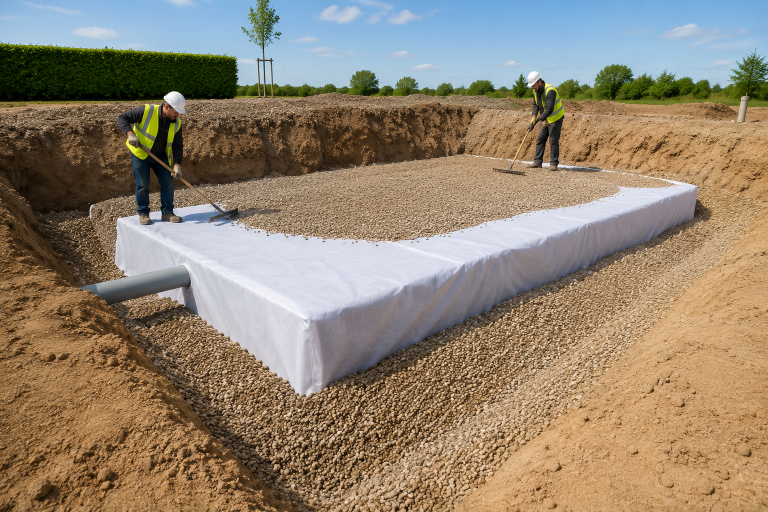
    place and compact a layer of at least 150mm of layer of sharp sand or pea gravel before introducing any soakaway module into the pit.

  • L3 Crate placement
    L3

    Crate placement & geotextile membrane

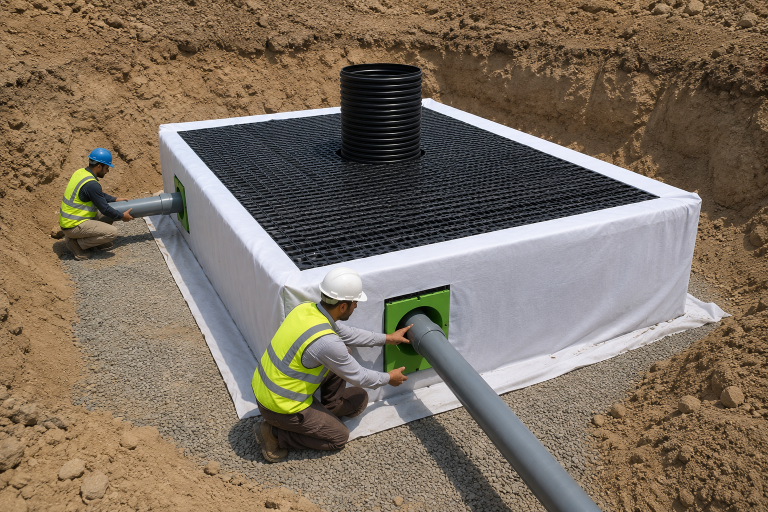
    arrange the soakaway crates within the excavated pit, tie them together with the provided clips or ties to secure and prevent movement and wrap the entire assembly with the non-woven geotextile membrane sheeting.

  • L4 Connecting pipes
    L4

    Connecting stormwater & inlet pipes

    the stormwater pipe and the incoming pipe from the property should be connected at the designated pre-cut openings and attached to the assembled soakaway unit prior to backfill work.

  • L5 Backfilling
    L5

    Backfilling and top cover

    backfill around the assembled soakaway unit using sand or pea shingle, before placing the required cover over the soakaway to achieve the specified depth.

  • L6 Site surfacing
    L6

    Site surfacing

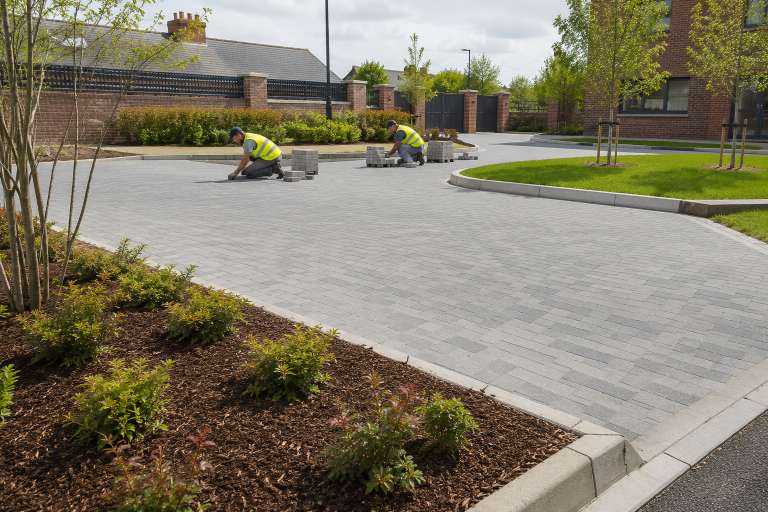
    replace turf, paving or other necessary surface topping above the completed cover depth.

"Nine times out of ten, a failed crate soakaway didn't fail because of the crate - it failed because the geotextile wrap was incomplete or the compaction was rushed at Layer 2. We tell every distributor the same thing: follow the layer sequence exactly, because the crate is only as good as what's around it."
— Senior Application Engineer, Storm Manage

The mistake we see most often

Skipping or shortcutting the geotextile wrap at Layer 3 to save time. It's the single most common cause of soil migration into the crate voids - and the least visible one, because the system still appears to work for months before storage capacity noticeably drops.
Want the layer-by-layer drawing before you schedule a crew?
Request your installation drawing →
Geotextile Wrap, Cover Depth and Backfill, Getting the Details Right

Depth and cover requirements are where most competitor guides get vague, quoting a single number regardless of application. In practice, the correct cover depth depends on what sits above the soakaway.

Application Recommended Cover Depth
Lawn, flower bed, light garden use Minimum 150mm cover
Driveway, light vehicle traffic Minimum 350mm for light traffic
Storage/void depth overall Minimum 1.0m, typically 1.3m under garden areas
Soakaway vs "drainage field" — do not confuse the two distance rules

A domestic crate soakaway is a different class of structure from a larger foul-drainage "drainage field," and the two carry different siting rules. Drainage fields for treated effluent require at least 10 metres from any building, 10 metres from a watercourse, and 50 metres from a borehole or well - figures that get mistakenly applied to ordinary surface-water soakaways.[2] If your project is a standard roof or hardstanding soakaway, the 5m/2.5m rule above is the one that applies.

Load class matters just as much when installing plastic soakaway crates under any trafficked surface - a D400 module rated to several tonnes per square metre behaves very differently under a car park than the same module under a flower bed. That's exactly why the cover-depth table is tied to application, not a single blanket figure.

Need the geotextile certification pack for a project submission?
Request Void Ratio and Compression Test Certificate Pack

Modular Crate vs Traditional Rubble-Filled Soakaway

Rubble-filled pits, and older precast concrete rings, are the traditional methods still specified on smaller residential jobs. Whether you use soakaway crates or one of these older methods, the practical difference come down to how much of the excavated volume actually stores water, and how porous the fill or structure is.

Factor Storm Manage Crate System Traditional Rubble Fill
Void ratio 95% ~30%
Excavation for equivalent storage 1m³ excavation ≈ 0.95m³ storage 1m³ excavation ≈ 0.3m³ storage
Installation labour Two-person assembly, no heavy plant for smaller systems Bulk material handling, higher plant/labour time
Structural loading Rated by module load class (HS-20 to D400) Variable, dependent on rubble grading

Source: void ratio comparison, industry-consistent figures (see References)

3.2×

approximate storage volume per m³ excavated, crate vs rubble fill (95% vs ~30% void ratio)

The trade-off worth stating plainly: rubble fill has no wrap or geotextile requirement to get wrong, which is precisely why it's more tolerant of a rushed installation - there's simply less that can be installed incorrectly. A crate system deliver roughly three times the storage per cubic metre excavated, but only realises that advantage when the installation sequence in the section above is followed.

Labour and programme time at project scale

  • Domestic-scale crate assembly: typically a single day for two workers once excavation is ready
  • Equivalent-capacity rubble pit: proportionally more excavation and bulk material handling for the same stored volume
  • At commercial/project scale (dozens to hundreds of m³), that excavation-and-labour gap compounds directly into programme time

Certifications Behind Every Storm Manage Soakaway Crate

China-sourced construction products carry a real, well-documented risk: "quality fade," where a supplier's output quietly declines after the first few approved batches. The counter to that risk isn't a marketing claim - it's a verifiable, per-batch QC process.
CE EN 1852
Rainwater module standard (UDEM, 2024)
CIRIA C737
Structural design of modular geocellular systems (2016; supersedes C680)
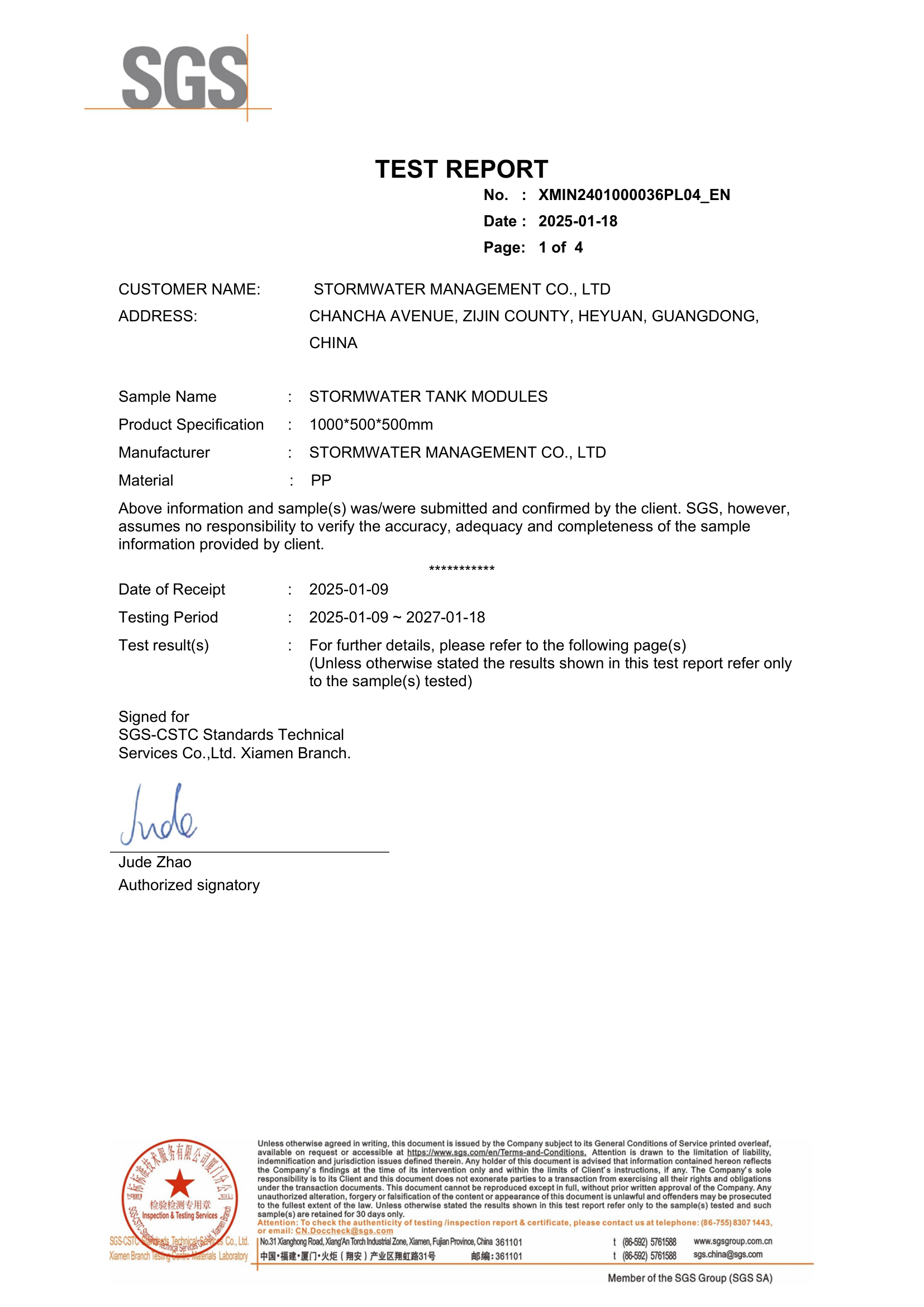
SGS Compression
Batch compression testing (2024)
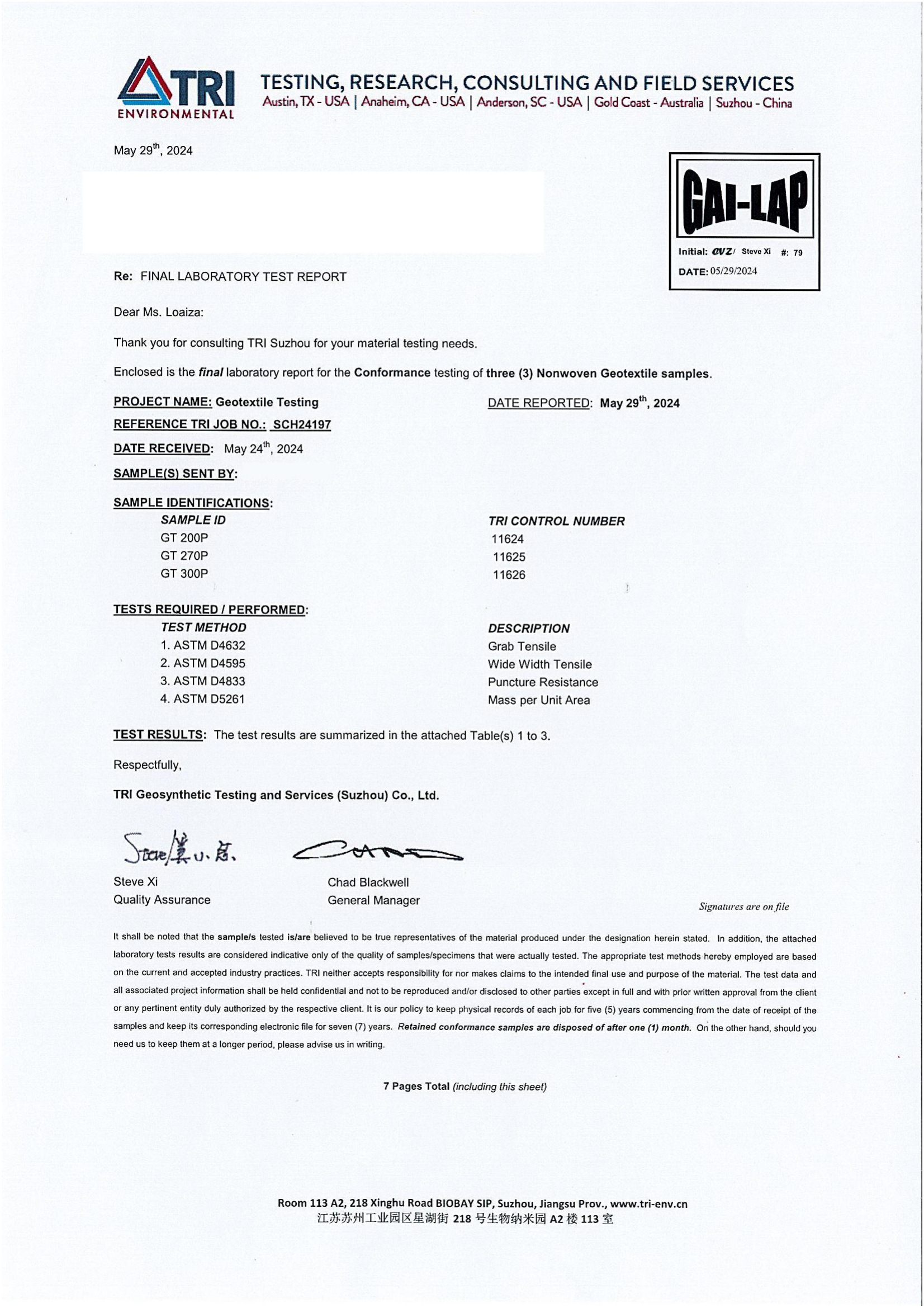
ASTM F2418
PP resin specification (TRI)
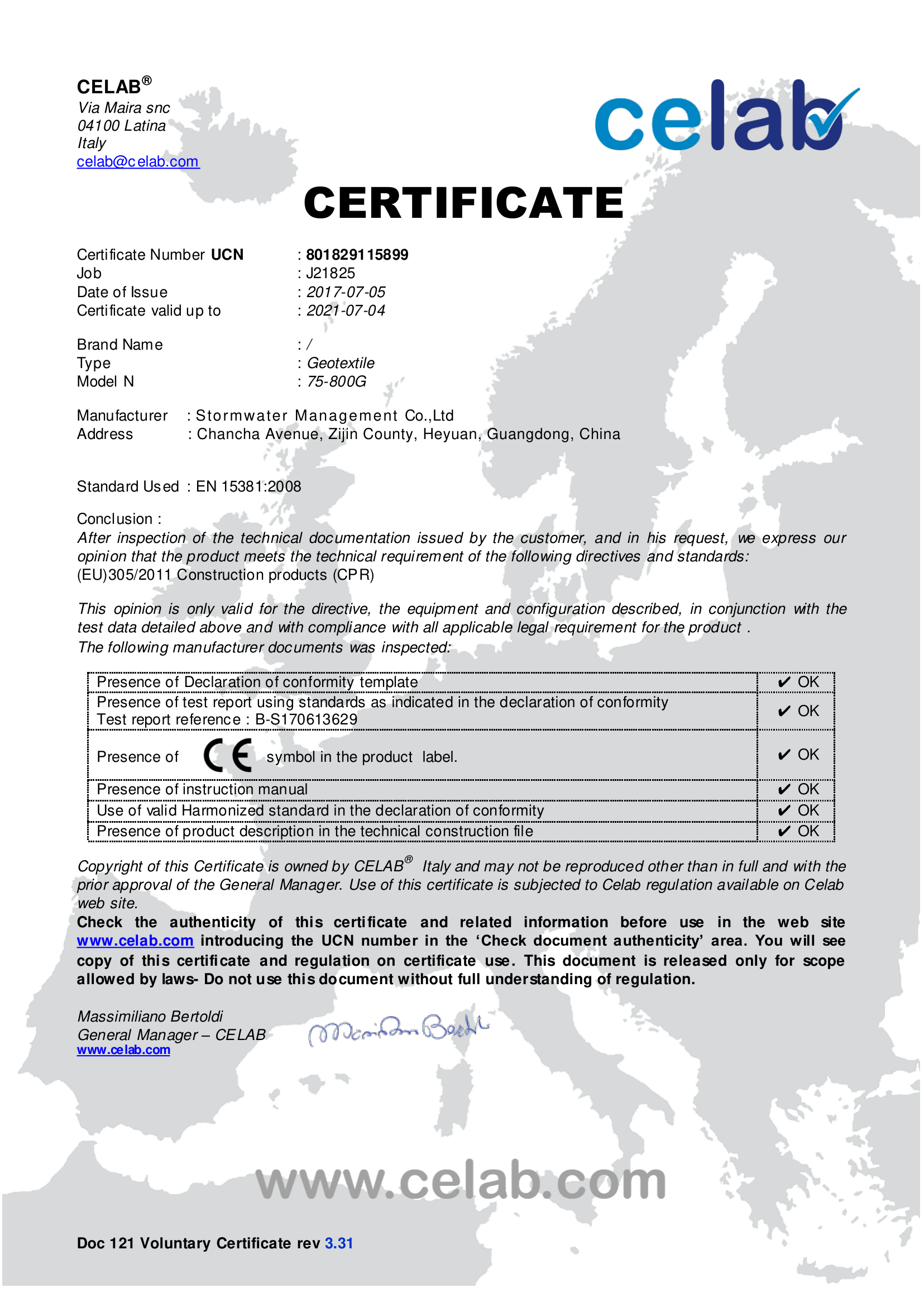
CE EN 15381 / 15382
Geotextile (CELAB) / geomembrane (SGS)
ISO 9001/14001/45001
Quality, environmental & safety management

What actually happens before a batch ships

  • Compression performance verification against the module's stated load class
  • Dimensional tolerance checks on every production run, not just first-article samples
  • Material ratio control where recycled PP content is specified alongside virgin PP
  • Per-unit weight consistency - an early indicator of wall-thickness issues
We also correct a citation error common across this industry: several suppliers still reference CIRIA C680 for structural design of geocellular systems, but that guidance was superseded by CIRIA C737 in 2016.[3] Storm Manage certifies current module families against C737, not the outdated predecessor.

Why weight consistency is the earliest QC signal

A module that's fractionally under-weight for its rated wall thickness is usually the first visible sign of a resin ratio drifting away from specification - well before it would show up in a compression test. Catching that at the batch level, rather than after installation, is the entire point of testing every production run instead of first-article samples alone.
Need documentation for a compliance submission?
Download full compliance documentation →
Sourcing Guide

Sourcing Guide, Lead Time, Container Loading & OEM Support

The UK already has several established bulk stockists selling soakaway crates with trade discounts and fast domestic delivery. Distributors and contractors who plan to install soakaway crates or install a soakaway system at project scale rightly ask why they should buy from a manufacturer in Shenzhen instead of a UK reseller with stock on the shelf.

Where factory-direct sourcing actually changes the equation

A UK reseller sells someone else's standard crate at a retail markup. Storm Manage sells at factory-direct pricing for project-scale volume, supplies technical drawings aligned to recognized LID/SuDS design practice and container-loading plans before you commit, and offers OEM/ODM cooperation for custom mould variants - none of which a reseller of third-party stock can offer.

  • CAP-01
    8 sets of 1000T-2000T injection-moulding machines, 12+ mould sets covering standard, heavy-duty, shallow-crate, connector and end-cap variants
  • CAP-02
    8,000m² factory: injection-moulding, mould development, QC and finished-goods warehousing in one site
  • CAP-03
    5,000m³ monthly output, 60,000+ m³ annual capacity
  • CAP-04
    Custom LOGO mould development available, 45-60 day lead time, flexible MOQ from single-project scale to 100,000+ m³
  • CAP-05
    Full underground drainage kit available for project-scale soakaway construction: crates, geotextile, geomembrane, connectors, silt trap and inspection chamber in one order - down to the 300mm connector fittings - rather than sourcing each part separately
  • CAP-06
    Standard lead time runs 15-30 days after order confirmation. A 40HQ container carries up to 330m³ of installed storage volume with optimised stacking, loaded FOB Shenzhen, Yantian or Shekou by default, with Qingdao or Ningbo coordinated on request.

What drives your landed price, not a number, but the real factors

  • Module count and load class specified for your project
  • Virgin vs recycled PP ratio
  • Container fill efficiency at your project's total volume
  • Custom mould tooling, if your project needs a non-standard variant

Contact Storm Manage for a project-specific quotation based on these factors.

The genuine differentiation for distributors and larger contractors is OEM/ODM cooperation, it’s not just a sales phrase. A bespoke mould can take anywhere from 45-60 days to produce. However, as Storm Manage will let you know if the site would be better suited to one of the existing mould variants (of which we've more than a dozen) rather than a new one, then this will be faster and cheaper nearly every time. We would rather ship a stock mould variant this quarter than try and sell someone a custom tooling project that they don’t need.

Request a container loading estimate Need container-loading numbers for a specific project volume?

FAQ

How deep do soakaway crates need to be buried?

Minimum storage depth 1.0m, with 1.3m typical under gardens. Crates should have at least 150mm of cover depth above for gardens/lawns, and 350mm for light vehicular use above.

Do you need to wrap soakaway crates in geotextile membrane?

Yes, a full non-woven geotextile wrapping over all sides of the assembled system is needed to prevent soil migration into the crate voids. Skipping or partially wrapping the system is the biggest single contributor to reduced storage over time.

Do soakaway crates need to be filled with gravel?

No, the crates themselves replace the need for gravel or rubble fill within the storage void. Gravel or sharp sand should be used as a base and side-fill material surrounding the wrapped crate system, not within it.

Are soakaway crates legal, and are there siting rules?

Yes, providing Building Regulations Approved Document H site distances are maintained; ie minimum 5m from any building and 2.5m from any boundary. A soakaway installed too close can be required to be moved.

How many soakaway crates do I need?

Storage volume is calculated from your drained roof or hard standing area, design rainfall rate and percolation test result - not per sq m of crates. Confirm your percolation test result first, before ordering.

How much does a soakaway crate installation typically cost?

Local UK trades guides and installer forums estimate between £1,500 - £2,500 (installed) for a typical domestic crate soakaway installation, covering local labour and materials. Storm Manage's system cost doesn't include on-site installation - that's carried out by your own team or a local contractor, using a system we supply at project-scale factory prices.

Does Storm Manage install soakaways on site?

No. We provide the modular crate, geotextile membrane, connectors and installation instructions and details. On-site installation is performed by your team or a nominated contractor in accordance with these instructions.

Are soakaway crates suitable for every soil type?

No, the soakaway crates rely on a permeable base soil to effectively infiltrate water. heavy clay soils or impermeable soils can't be effectively infiltrated with crates of any quality. That's precisely why we've stipulated the percolation test in the Design Specifications section, it isn't a formality.

What's the difference between a soakaway crate and an attenuation tank?

A soakaway is an infiltration system that discharges water into the ground - it doesn't have an outlet pipe. An attenuation tank is a detention system which stores water for a short time before discharging it at a controlled rate to an outlet, often a sewer or watercourse. Storm Manage's crate module is the base component for both; the only difference is the outlet specification. For projects in Australia needing a detention outcome rather than infiltration, the same module family underpins our on-site detention (OSD) tank design and installation range, engineered for NSW council OSD compliance.

Can Storm Manage supply a custom crate variant for a non-standard project?

Yes, by OEM/ODM cooperation, as long as the project volume support the tooling cost. We’ll first check if any of our standard range mould fits your requirement to ensure we offer the quickest, most cost effective solution before suggesting custom tooling.