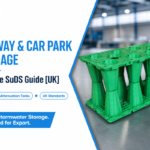
01. THE TWO TCO LEVERS
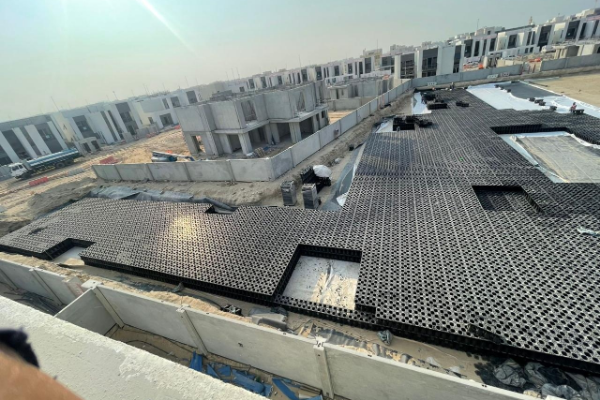
Two TCO levers matter most. First, keep silt out of the void with an inlet silt trap and inspection chambers so the stored capacity is maintained throughout the system’s life. Secondly, make sure the load class you’ve specified matches what’s driving on the surface, because under-specifying load for HGV traffic under a car park – the most common false economy – will cost far more in repair than any initial D400 upgrade.
02. MARKET TRANSPARENCY
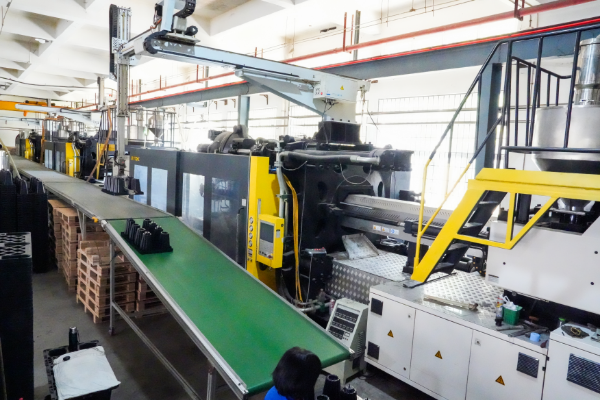
Unlike a UK merchant reselling one crate brand, we price the concrete attenuation tank line openly beside geocellular, because we mould the crates in-house and hold no shelf price to protect — and the same open ladder applies to any commercial application, from a car-park scheme to a distribution-yard job.
03. GEOCELLULAR VS. CONCRETE
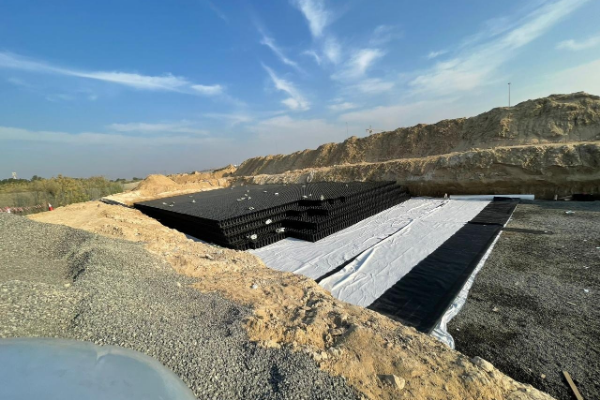
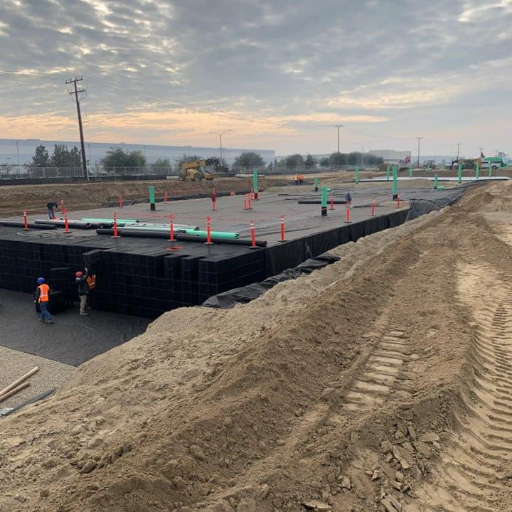
Concrete’s 100-year life span is real, but on many sites a correctly specified, 50-year PP system will represent far less over the period a developer actually plans, and with less ongoing maintenance cost. In many cases on industrial estates (500m site) not to have this is to double the installed cost – failed load-class would blow beyond the cost of the D400. Concrete under-charges installation, crane, low-loader and deeper dig – cost not often recuperated.
04. ACCREDITATION & INTEGRITY
The load-rated PP system – CIRIA C737 accredited and material BS EN 1852 (CE) certified – uses much less plant and equipment, and maintains that storage volume for 50 years. It’s in line with the Environment Agency’s own SC080039 framework – which actually ranks geocellular cheaper than concrete per metre before you factor in freight.
A crate is a crate, the material comes as stated. Unlike a merchant shipping whatever crate is in stock, we set the load class by the traffic that goes over it, not whatever’s in the warehouse, and certified ( CIRIA C737 ) vertical load capacity plus third party compression testing prevents the false economy reaching your maintenance costs.